All maps › Animal laws › Exotic pets
Are exotic pets banned in your country?
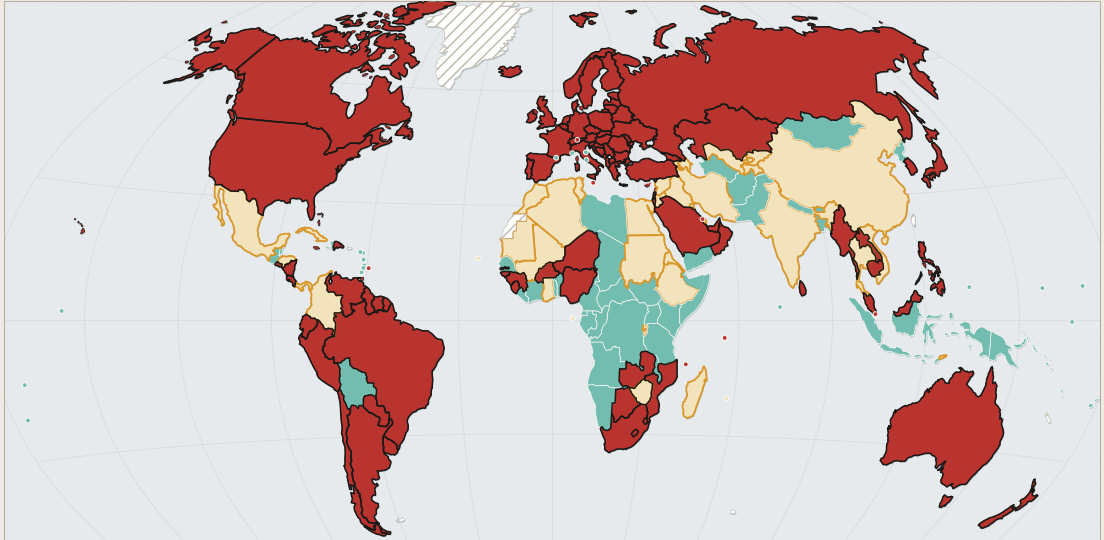
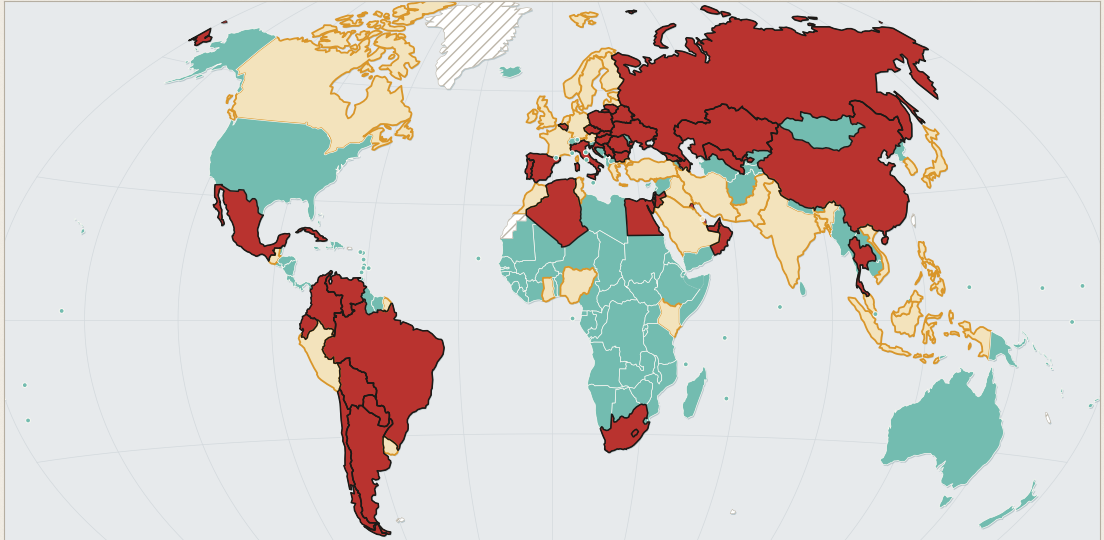
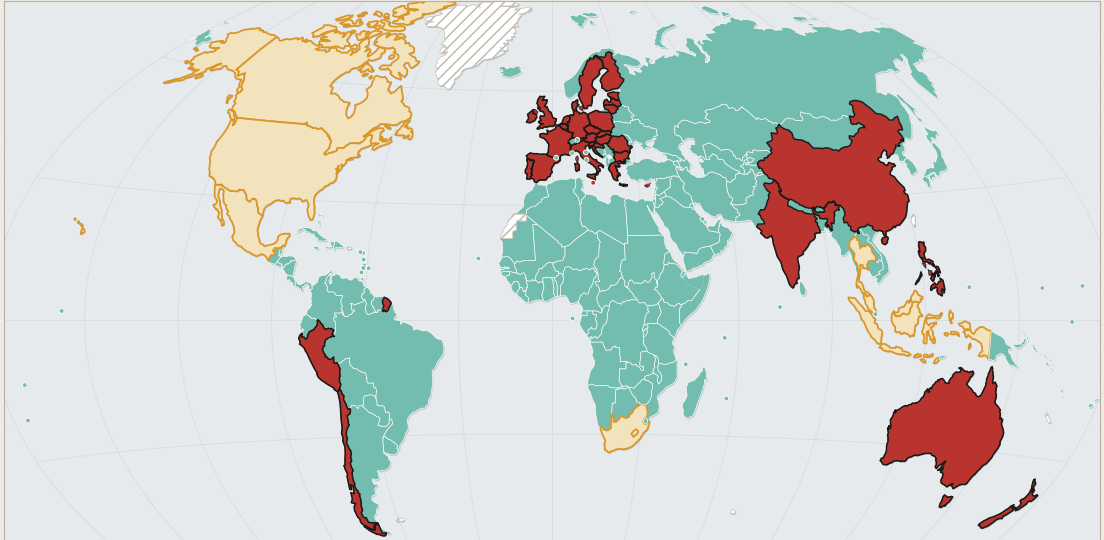
The 2026 map of where exotic pets are banned or restricted, aired Nov 4, 2026. Sources
 Watch on YouTube
The video shows the map as it aired on Nov 4, 2026. The counts on this page are kept up to date.
Sources: National positive-list texts and regulators, read Nov 2026 · Government statements and gazettes 2025-26 · Statute texts and legal press · How we rate it
Is it banned where you live? Check your countryBanned in 11 countries
Only an approved pet list: hedgehogs, sugar gliders and snakes banned.
Source: Wildlife Act; AVS pet list
Why we rate it this way
Wildlife Act (keeping wildlife without the Director-General's approval is an offence) + AVS 'Animals that can be kept as pets': only approved wildlife may be kept - red-eared slider, Malayan box turtle, green tree frog, most local invertebrates (conditions dated 1 Oct 2020); hedgehogs, sugar gliders, slow lorises, all snakes and all protected mammals are not permitted. AVS page read Nov 2026.
Wild animals of any origin are off-limits as pets; emus seized 2026.
Source: Ley 7317; MINAE Mar 2026
Why we rate it this way
Ley de Conservacion de la Vida Silvestre 7317 (as reformed by Ley 9106 of 20 Dec 2012) + Reglamento 40548-MINAE: keeping wild animals as pets is prohibited; MINAE restated it on 20 Mar 2026 when seizing emus - a non-native species 'not included in the exceptions permitted by the legislation', so 'their possession without authorisation is illegal' (Delfino, 20 Mar 2026). Covers wild animals of any origin.
A 2021 decree bans keeping any wild animal as a pet, nationwide.
Source: DS 4489 (2021) art. 5
Why we rate it this way
Decreto Supremo 4489 of 21 Apr 2021, art. 5(3): 'la tenencia de animales silvestres como mascotas' is a prohibited activity in the whole national territory; art. 2(5) defines fauna silvestre by the absence of selective breeding by humans, not by origin, so exotic wild species are covered (lexivox text). Enforced in 2025 (Sucre monkeys case, Oct 2025).
Since 2021 the only pet mammals: dogs, cats, ferrets, rabbits, rodents
Source: Pet possession regs 2021
Why we rate it this way
Regulations on the possession and sale of pets (Cabinet approval May 2020, in force Mar 2021): a positive list - only dogs, cats, ferrets, rabbits and rodents (plus farm species) as mammals; venomous and dangerous species banned; 'if it's not on the list, it's not allowed' (Cyprus Mail, 31 Aug 2022; Eurogroup for Animals, 4 Mar 2021). Existing animals grandfathered.
Since Nov 2023 only mammals on an official list may be kept or bred.
Source: Order D1-262 (2023) Annex 2
Why we rate it this way
Environment Minister's Order D1-262 of 1 Aug 2023, Wild Animal Use Rules (in force 1 Nov 2023, consolidated 18 Jul 2024): wild mammals may not be kept, bred or acquired in captivity except species on the Annex 2 list of wild animals permitted to be kept and bred; Annex 1 lists domesticated mammals. Replaced the 2011 negative list (D1-533).
Only listed species may be kept; anything else needs a minister's OK.
Source: Law 27 Jun 2018; RGD 16 Nov
Why we rate it this way
Law of 27 June 2018 on the protection of animals (Memorial A 537): apart from animals on a list, all keeping of animals is prohibited; Reglement grand-ducal of 16 Nov 2018 fixes the lists (mammals; ornamental fish, ornamental birds and poultry among non-mammals) and the procedure to ask the minister for an unlisted species (gouvernement.lu, 11 Feb 2020).
White list since 14 Dec 2025: unlisted wild species may not be owned.
Source: Wildlife Act am. 14 Dec 2025
Why we rate it this way
Wildlife Protection and Management Act as amended, in force 14 Dec 2025: a 'white list' (888 species designated by the Ministry of Environment, 11 Dec 2025) of species that may be traded and kept; every other animal not already a legally managed or companion species is 'designated management wildlife' whose import, transfer, acquisition and possession are prohibited; existing owners keep theirs for life after reporting within 6 months, no breeding (Korea Herald; dailyvet.co.kr; kyeongin.com).
Exotic mammals, reptiles and amphibians banned; 19 reptiles allowed.
Source: FOR-2017-05-11-597
Why we rate it this way
Regulation on the prohibition of importing, trading and keeping exotic animals (FOR-2017-05-11-597, in force 15 Aug 2017): general ban on exotic mammals, reptiles and amphibians - species not living wild in Norway and not traditional farm, sport or family animals; exception only for the 19 captive-bred reptile species in the annex (Mattilsynet page, current).
Exotic reptiles and frogs banned in every state; most mammals too.
Source: EPBC Live Import List; QLD
Why we rate it this way
EPBC Act Live Import List: only dogs, cats, rabbits, horses and selected birds may be imported as pets - 'no other vertebrate animals are approved for import into Australia as pets' (agriculture.gov.au, current). Keeping is barred too: Queensland lists all introduced reptiles and amphibians as prohibited pets (DAF), NSW generally disallows exotic reptiles and amphibians (DPI), SA bans corn snakes (Landscape SA Act 2019); exotic mammals beyond ferrets/rabbits are not kept legally in any state.
First positive list in Europe: only listed mammals and reptiles.
Source: Royal Decree 16 Jul 2009
Why we rate it this way
Royal Decree of 16 July 2009 (Animal Welfare Act 1986 art. 3bis): only mammals on the positive list may be kept by private persons; the first positive list dates from 2001 and was upheld by the EU Court of Justice in 2008 (Andibel); the three regions apply it and have added reptile lists (Flanders 2019; Wallonia and Brussels) (Eurogroup for Animals; Test-Achats, current).
Since 1 Jul 2024 only 30 mammal species may be kept as pets.
Source: Huis- en hobbydierenlijst
Why we rate it this way
Besluit of 25 Apr 2024 (Stb. 2024, 117) under the Wet dieren: since 1 July 2024 only the 30 mammal species on the huis- en hobbydierenlijst may be bought, kept or sold; servals, meerkats, capybaras and armadillos are out; animals held before 1 Jul 2024 may be kept for life but not bred (RVO and Rijksoverheid pages, current).
Everywhere not listed here, exotic pets are allowed.
Restricted in 48 countries
Dangerous species need a council licence; the rest are legal.
Source: DWAA 1976
Why we rate it this way
Dangerous Wild Animals Act 1976: listed species (big cats, primates, venomous snakes...) only with a council licence; everything off the schedule is legal; 2,727 animals licensed (Born Free FOI). Positive-list campaign, no law.
Permit regime; the 2021 positive list still has no published decree.
Source: Arrete 8 Oct 2018; L.413-1 A
Why we rate it this way
Arrete of 8 Oct 2018: non-domestic species beyond set thresholds need a declaration or a certificat de capacite. Law 2021-1539 art. 14 created a positive list (Code env. L.413-1 A) but the arrete was still unpublished on 21 Jul 2026 (ministerial answer to QE 15318).
Rules vary by state; no national ban or list.
Source: Lander Gefahrtier rules
Why we rate it this way
No federal rule; some Lander ban or license dangerous wild animals (Gefahrtierverordnungen), others have none. A national positive list is debated (BMEL consultation 2024; Tierschutzbund), not law.
Positive list in the 2023 law, but the species decree is a draft.
Source: Ley 7/2023; RD draft 2026
Why we rate it this way
Ley 7/2023 de bienestar animal created a positive list of companion animals, but the Real Decreto fixing it was only put to public hearing on 16-17 Apr 2026 (DSCA) - not approved. Until then exotic pets stay legal subject to invasive-species and CITES rules.
2022 ban framework, but the species decree is still unsigned.
Source: D.Lgs. 135/2022; DM 1996
Why we rate it this way
D.Lgs. 135/2022 bans keeping wild and exotic animals subject to ministerial species lists; LAV said the ban decree was still unsigned on 22 Jan 2026 and L'Espresso (22 Oct 2026) describes owners keeping exotics under a training duty (DM 3 Apr 2025). DM 19 Apr 1996 bans dangerous species only.
Banned-species list plus licences for dangerous animals.
Source: DL 121/2017; DL 315/2009
Why we rate it this way
Decreto-Lei 121/2017 art. 13: a ministerial list of species whose live specimens may not be kept (zoos/science excepted); DL 315/2009 as amended by Lei 46/2013: dangerous and potentially dangerous animals as pets need a licence. No general positive list.
Dangerous species banned; CITES pets must be registered.
Source: Nature Cons. Act art. 73
Why we rate it this way
Ustawa o ochronie przyrody (2004) art. 73: possessing, keeping or importing live animals of species dangerous to human life and health is prohibited (ministerial list, two categories; art. 128 penalty); CITES animals must be registered with the starosta.
Dangerous animals need a permit; the most dangerous are zoo-only.
Source: 85/2015 FM rendelet
Why we rate it this way
Decree 85/2015 (XII. 17.) FM on dangerous animals: three categories; moderately dangerous species may be licensed to a private adult, especially dangerous ones only to zoos/circuses; unlisted exotics are free.
Wild animals only with a veterinary-directorate authorisation.
Source: Law 205/2004 art. 11
Why we rate it this way
Legea 205/2004 privind protectia animalelor art. 11 (consolidated 16 Jan 2025): keepers may hold wild animals only if authorised by the county sanitary-veterinary directorate; conditions set by ministerial order on ANSVSA's proposal.
A banned-species list, not a positive list.
Source: BEK 1261/2015 bilag 1
Why we rate it this way
Bekendtgorelse om forbud mod hold af saerlige dyr (BEK 1261 of 17 Nov 2015, in force 1 Jan 2016): the species in Annex 1 may not be kept privately (negative list: primates, carnivores, marsupials etc.); animals held lawfully before are grandfathered.
No apes, carnivores or birds of prey as pets; others allowed.
Source: Djurskyddsforordning 2019:66
Why we rate it this way
Animal Welfare Ordinance (2019:66) and Jordbruksverket rules: apes, carnivores (except dogs, cats, ferrets), birds of prey and wild-cat/wild-dog hybrids may not be kept as pets; other exotics must be captive-born. Negative list only.
Positive lists for farm and circus animals; the pet list is pending.
Source: Animal Welfare Act 693/2023
Why we rate it this way
Laki elainten hyvinvoinnista 693/2023 (in force 1 Jan 2024): positive lists in the annex for production animals and for circus/travelling-show animals; the pet and hobby-animal list was left to a later decree and is still pending (MTK 2023 briefing; hankeikkuna working-group decision 30 Sep 2025).
Listed dangerous animals banned as pets since 2016.
Source: LN 46 of 2016
Why we rate it this way
Owning and Keeping of Dangerous Animals Regulations, 2016 (LN 46/2016, Gazette 5 Feb 2016): listed dangerous and exotic animals may not be imported or kept as pets; existing animals registered; zoos and licensed breeders excepted. Negative list.
Positive list in the law since 2021, species lists still unadopted.
Source: ZZZiv 2021 am.; ZZZiv-G
Why we rate it this way
Animal Protection Act amendment of Oct 2021: the veterinary minister is to set a list of prohibited and a list of permitted species; draft rulebooks went to consultation May 2023; ZZZiv-G (Uradni list 60/2025, 5 Aug 2025) adds a commission to update the permitted list - no final list found in force.
Every animal import needs a permit; reptiles are refused.
Source: Act 54/1990; MAST
Why we rate it this way
Act 54/1990 on the import of animals: no animal may be imported without MAST permission (plus Environment Agency for exotics); MAST says reptiles and tarantulas are generally refused (Grapevine, 27 Oct 2021). Keeping animals already in Iceland is not banned by a positive list.
Listed wild animals need a cantonal permit.
Source: TSchV art. 89
Why we rate it this way
Animal Protection Ordinance (TSchV) art. 89: private keeping of listed wild animals (e.g. big cats, primates, venomous snakes, large reptiles) needs a cantonal permit with proof of competence; unlisted exotics are free. Consolidated text; not re-searched this run.
Dangerous species need a veterinary permit.
Source: Act 246/1992 s.13
Why we rate it this way
Animal Protection Act 246/1992 s.13 and Decree 411/2008: keeping animals of species requiring special care (dangerous species) needs a permit from the veterinary administration; other exotics are legal. Consolidated text; not re-searched this run.
Big cats, bears, primates and venomous reptiles banned at home.
Source: Mindovkillia Order 541
Why we rate it this way
Law on the Protection of Animals from Cruelty + Ministry of Environment Order 541 list of species banned from private keeping: big cats, bears, primates, venomous reptiles, crocodiles, Red Book species; other exotics with documents (24tv.ua, telegraf, 2025).
A list of wild species is banned in homes; others allowed.
Source: Animals Law 2025; MNR list
Why we rate it this way
Law 'On responsible treatment of animals' (main provisions in force 1 Jan 2025, rest 1 Jan 2026) and the Ministry of Natural Resources list of wild animals banned in flats and houses (e.g. king cobra, pythons over 4 m) (zerkalo.io; pravo.by, Jul 2024).
121 kinds of animals banned at home since Sep 2025; others legal.
Source: Order 1163-r (1 Sep 2025)
Why we rate it this way
Law 498-FZ on responsible treatment of animals; Government order 1163-r of 8 May 2025 (in force 1 Sep 2025, replacing Decree 795/2019): 121 kinds of animals banned from flats and houses (big cats, bears, primates, crocodiles, venomous snakes...); Decree 681 of 19 May 2025 sets exceptions.
Wild animals need a possession certificate from the ministry.
Source: Law 4915; DKMP permit
Why we rate it this way
Land Hunting Law 4915 and its regulation: keeping game and wild animals needs an 'Av ve Yaban Hayvani Bulundurma Belgesi' from the DKMP provincial directorate; macaque keeping fined (Kayseri). Law 5199 as amended 2021 bans 'dangerous' animals, so far dog breeds (Circular 2021-48).
Federal ban on pet big cats since 2022; the rest is state law.
Source: Big Cat Public Safety Act
Why we rate it this way
Big Cat Public Safety Act (Pub. L. 117-243, signed 20 Dec 2022): private possession of lions, tigers, leopards, cheetahs, jaguars, cougars and hybrids is prohibited nationwide (existing cats registered by 18 Jun 2023). No other federal ban; all else is state law.
Rules vary by province; Ontario leaves it to town bylaws.
Source: Provincial wildlife acts
Why we rate it this way
No federal exotic-pet law; provinces differ - some license or list species, Ontario has no provincial rule and leaves it to municipal bylaws (Zoocheck analysis, Nov 2025).
Native wildlife banned without IBAMA; foreign exotics are legal.
Source: Lei 9.605/1998; IBAMA
Why we rate it this way
Lei 9.605/1998 art. 29: keeping native wild animals without IBAMA authorisation is a crime; exotic (non-Brazilian) species such as cockatiels, iguanas, ferrets and ball pythons are legal with a nota fiscal from a licensed breeder (IBAMA; 2025 press).
Native wildlife banned as pets; exotics depend on the province.
Source: Ley 22.421; provinces
Why we rate it this way
Ley 22.421 (1981) on fauna conservation: capturing, trading and keeping native wild fauna banned without authorisation, enforced by provinces; exotic species regulated provincially.
Native wild fauna banned as pets; fines and seizures.
Source: Ley 1801 art. 101; Ley 2111
Why we rate it this way
Police Code (Ley 1801/2016) art. 101 fines keeping wild fauna as pets; Ley 2111/2021 criminalises trafficking; Decreto 1076/2015 permits. Native species are the target; exotic animals need import permits.
Native species protected; exotics legal with import papers.
Source: Ley de Caza 19.473; SAG
Why we rate it this way
Hunting Law 19.473 (1996) and regulation: native wildlife may not be captured or kept without SAG permits; SAG says exotic fauna may be kept as pets if legally imported with CITES papers and proof of origin.
Wild fauna at home is illegal without SERFOR authorisation.
Source: Ley 29763; SERFOR
Why we rate it this way
Forestry and Wildlife Law 29763 and DS 019-2015-MINAGRI: possessing wildlife specimens without authorisation is a very serious infraction (10-5000 UIT); captive wildlife only via licensed centres; SERFOR warns even parrots at home are illegal (2025).
Possessing protected wild fauna is a crime; fines up to $92,000.
Source: COIP art. 247; COA
Why we rate it this way
Penal Code (COIP) art. 247: possessing listed wild fauna (threatened, protected, CITES) is a crime (1-3 years); Codigo Organico del Ambiente fines. Targets protected/native species.
Native wildlife banned as pets; exotics need a permit.
Source: Ley 24/1995; MiAmbiente
Why we rate it this way
Ley 24 of 7 Jun 1995 (Wildlife Law): keeping native wild fauna as pets is prohibited (MiAmbiente, Nov 2025); non-native species such as budgerigars need a permit (MiAmbiente Panama Oeste).
Dangerous 'specified animals' banned as pets since June 2020.
Source: Animal Welfare Act (2020)
Why we rate it this way
Act on Welfare and Management of Animals as amended (in force 1 Jun 2020): keeping 'specified animals' (c. 650 dangerous species - big cats, primates, crocodiles, pythons...) for pet purposes is prohibited; pre-2020 permits grandfathered. Other exotics legal (Invasive Alien Species Act aside).
Protected and CITES species need licences; others are legal.
Source: Wildlife Protection Law 2023
Why we rate it this way
Wildlife Protection Law (revised, in force 1 May 2023): state-protected and CITES-listed species need licences; common non-protected exotics are legal. No general pet ban.
Native wildlife banned; CITES exotics must be registered.
Source: WPA 1972; s.49M (2023)
Why we rate it this way
Wild Life (Protection) Act 1972: native scheduled species may not be kept; the 2022 amendment (in force 1 Apr 2023) added Schedule IV (CITES species) and s.49M registration via PARIVESH (Rules of 28 Feb 2024). Non-CITES exotics legal.
A list of dangerous species is banned in homes; others allowed.
Source: MEGNR order (2022) list
Why we rate it this way
Law on responsible treatment of animals (2021) + Ministry of Ecology order approving the list of animals banned from dwellings (adilet V2200027220, 2022): venomous snakes, tarantulas, scorpions, Komodo dragon etc.; ministry says no plan to ban private collections (2025).
66+ wild species banned at home since 2025; others allowed.
Source: Fauna Law art. 43; list 2024
Why we rate it this way
Law on protection and use of fauna art. 43 + government-approved list (gov.uz, 7 Nov 2024; in force 1 Jan 2025): over 66 wild species banned for individuals (bears, big cats, crocodiles, venomous snakes, apes...); Administrative Code art. 92-1 fines. Category list, not a positive list.
Wild animals only under INPA permit or its allowed-species list.
Source: Wildlife Protection Law 1955
Why we rate it this way
Wildlife Protection Law 1955: holding wild animals needs an Israel Nature and Parks Authority permit; INPA publishes a general permit listing species allowed for private keeping and trade; monkeys, crocodiles, anacondas seized (INPA/JPost 2024-25).
Predators banned; 2026 order to surrender them.
Source: Law 17/2010 art. 9
Why we rate it this way
Wild Animals Protection Law 17 of 2010 art. 9: acquiring predators is punishable (3 years, 3m dinars); Ministry of Environment ordered owners of predatory and protected wild animals to surrender them within 10 days (Shafaq, Jul 2026). Category ban.
Dangerous animals must be registered; big cats off the streets.
Source: Law 10/2019
Why we rate it this way
Law No. 10 of 2019 regulating possession of dangerous animals and creatures: listed dangerous species (big cats, 28 dog breeds...) need registration/licence, display and trade banned; MoECC registration deadline 22 Apr 2025. Category rule.
Predatory animals banned: up to 10 years and SR 30m.
Source: Environment Law 2020; NCW
Why we rate it this way
Environment Law (2020) and executive regulations: keeping predatory wild animals is banned - up to 10 years and SR 30m (National Center for Wildlife; Special Forces for Environmental Security, 2021-24). Predators only.
Dangerous and predatory animals banned for private owners.
Source: Federal Law 22/2016
Why we rate it this way
Federal Law 22 of 2016 on predatory, dangerous and semi-dangerous animals (Cabinet Res. 15/2019 annexes): private ownership banned, zoos/research only; fines Dh10,000-700,000 (u.ae). Annex-based category ban.
Listed dangerous animals banned as pets since 2023.
Source: Law 29/2023
Why we rate it this way
Law 29 of 2023 regulating possession of dangerous animals and dogs: listed wild species (big cats, primates, crocodiles, venomous snakes, bears...) banned as pets; 2025 cabinet amendment cut banned dog breeds to three. Category ban.
Punjab banned pet big cats at home in 2025; no national rule.
Source: Punjab Wildlife Act 1974
Why we rate it this way
Punjab only: big cats added to the Punjab Wildlife Act 1974 schedule - home keeping of lions, tigers, pumas, cheetahs and jaguars phased out, registration Rs 50,000, residential keeping banned (Feb-Jul 2025; review Jan 2026). No federal rule.
Scheduled wildlife needs a PERHILITAN licence or permit.
Source: Wildlife Cons. Act 2010
Why we rate it this way
Wildlife Conservation Act 2010 (amended 2022): protected species in the First Schedule need a PERHILITAN licence or special permit; 'wildlife aren't pets; ministerial approval required' (NST, Dec 2025); unscheduled exotics legal.
Exotic pets legal only with a DENR wildlife registration.
Source: RA 9147; DENR CWR
Why we rate it this way
Wildlife Act RA 9147 (2001): any wildlife pet, native or exotic, must be legally sourced and covered by a DENR Certificate of Wildlife Registration; threatened species off-limits (DENR; Manila Bulletin, 19 Mar 2025).
Listed wild species need registration and permits.
Source: Decree 06/2019; 84/2021
Why we rate it this way
Decree 06/2019/ND-CP as amended by Decree 84/2021: keeping listed wild species (otters, monkeys, pythons, turtles, crocodiles) needs registration/permits with the forest ranger authority; a replacement decree was in draft Feb 2025.
Controlled species legal if registered; ~500 pet lions.
Source: WARPA 2019; DNP
Why we rate it this way
Wild Animal Conservation and Protection Act B.E. 2562 (2019): 'controlled wild animals' (CITES species incl. lions) may be kept if registered and microchipped with the DNP; nearly 500 lions registered (Aug 2025).
No new exotic species since 1998; those already here are legal.
Source: HSNO Act 1996
Why we rate it this way
Hazardous Substances and New Organisms Act 1996: any species not in New Zealand before 29 Jul 1998 is a 'new organism' and may not be imported or kept without EPA approval; snakes banned outright; exotic species already present (some reptiles, birds) remain legal (MPI).
No national rule; provinces and towns decide.
Source: Provincial ordinances
Why we rate it this way
NEMBA/TOPS do not regulate exotic pets; provinces differ - Gauteng, North West, Mpumalanga and Limpopo need no permit, others license; municipal bylaws vary (Daily Maverick, Mar 2023; Lopes Attorneys).
Show the 136 countries where it is allowed
No qualifying national law was found for these countries in the sources under Sources.
All 195 countries: are exotic pets banned?
 AfghanistanAllowed
 AlbaniaAllowed
 AlgeriaAllowed
 AndorraAllowed
 AngolaAllowed
 Antigua & BarbudaAllowed
 ArgentinaRestricted
 ArmeniaAllowed
 AustraliaBanned
 AustriaAllowed
 AzerbaijanAllowed
 BahamasAllowed
 BahrainAllowed
 BangladeshAllowed
 BarbadosAllowed
 BelarusRestricted
 BelgiumBanned
 BelizeAllowed
 BeninAllowed
 BhutanAllowed
 BoliviaBanned
 Bosnia & HerzegovinaAllowed
 BotswanaAllowed
 BrazilRestricted
 BruneiAllowed
 BulgariaAllowed
 Burkina FasoAllowed
 BurundiAllowed
 CambodiaAllowed
 CameroonAllowed
 CanadaRestricted
 Cape VerdeAllowed
 Central African RepublicAllowed
 ChadAllowed
 ChileRestricted
 ChinaRestricted
 ColombiaRestricted
 ComorosAllowed
 Congo - BrazzavilleAllowed
 Congo - KinshasaAllowed
 Costa RicaBanned
 CroatiaAllowed
 CubaAllowed
 CyprusBanned
 CzechiaRestricted
 Côte d’IvoireAllowed
 DenmarkRestricted
 DjiboutiAllowed
 DominicaAllowed
 Dominican RepublicAllowed
 EcuadorRestricted
 EgyptRestricted
 El SalvadorAllowed
 Equatorial GuineaAllowed
 EritreaAllowed
 EstoniaAllowed
 EswatiniAllowed
 EthiopiaAllowed
 FijiAllowed
 FinlandRestricted
 FranceRestricted
 GabonAllowed
 GambiaAllowed
 GeorgiaAllowed
 GermanyRestricted
 GhanaAllowed
 GreeceAllowed
 GrenadaAllowed
 GuatemalaAllowed
 GuineaAllowed
 Guinea-BissauAllowed
 GuyanaAllowed
 HaitiAllowed
 HondurasAllowed
 HungaryRestricted
 IcelandRestricted
 IndiaRestricted
 IndonesiaAllowed
 IranAllowed
 IraqRestricted
 IrelandAllowed
 IsraelRestricted
 ItalyRestricted
 JamaicaAllowed
 JapanRestricted
 JordanAllowed
 KazakhstanRestricted
 KenyaAllowed
 KiribatiAllowed
 KuwaitAllowed
 KyrgyzstanAllowed
 LaosAllowed
 LatviaAllowed
 LebanonAllowed
 LesothoAllowed
 LiberiaAllowed
 LibyaAllowed
 LiechtensteinAllowed
 LithuaniaBanned
 LuxembourgBanned
 MadagascarAllowed
 MalawiAllowed
 MalaysiaRestricted
 MaldivesAllowed
 MaliAllowed
 MaltaRestricted
 Marshall IslandsAllowed
 MauritaniaAllowed
 MauritiusAllowed
 MexicoAllowed
 MicronesiaAllowed
 MoldovaAllowed
 MonacoAllowed
 MongoliaAllowed
 MontenegroAllowed
 MoroccoAllowed
 MozambiqueAllowed
 Myanmar (Burma)Allowed
 NamibiaAllowed
 NauruAllowed
 NepalAllowed
 NetherlandsBanned
 New ZealandRestricted
 NicaraguaAllowed
 NigerAllowed
 NigeriaAllowed
 North KoreaAllowed
 North MacedoniaAllowed
 NorwayBanned
 OmanAllowed
 PakistanRestricted
 PalauAllowed
 Palestinian TerritoriesAllowed
 PanamaRestricted
 Papua New GuineaAllowed
 ParaguayAllowed
 PeruRestricted
 PhilippinesRestricted
 PolandRestricted
 PortugalRestricted
 QatarRestricted
 RomaniaRestricted
 RussiaRestricted
 RwandaAllowed
 SamoaAllowed
 San MarinoAllowed
 Saudi ArabiaRestricted
 SenegalAllowed
 SerbiaAllowed
 SeychellesAllowed
 Sierra LeoneAllowed
 SingaporeBanned
 SlovakiaAllowed
 SloveniaRestricted
 Solomon IslandsAllowed
 SomaliaAllowed
 South AfricaRestricted
 South KoreaBanned
 South SudanAllowed
 SpainRestricted
 Sri LankaAllowed
 St. Kitts & NevisAllowed
 St. LuciaAllowed
 St. Vincent & GrenadinesAllowed
 SudanAllowed
 SurinameAllowed
 SwedenRestricted
 SwitzerlandRestricted
 SyriaAllowed
 São Tomé & PríncipeAllowed
 TajikistanAllowed
 TanzaniaAllowed
 ThailandRestricted
 Timor-LesteAllowed
 TogoAllowed
 TongaAllowed
 Trinidad & TobagoAllowed
 TunisiaAllowed
 TurkmenistanAllowed
 TuvaluAllowed
 TürkiyeRestricted
 UgandaAllowed
 UkraineRestricted
 United Arab EmiratesRestricted
 United KingdomRestricted
 United StatesRestricted
 UruguayAllowed
 UzbekistanRestricted
 VanuatuAllowed
 Vatican CityAllowed
 VenezuelaAllowed
 VietnamRestricted
 YemenAllowed
 ZambiaAllowed
 ZimbabweAllowed
Sources
Red means a national law bans keeping wild or exotic animals as pets by default: either only an approved list of species may be kept (a positive list) or all wild animals are off-limits. Amber means a partial rule: a licence or permit route, a ban on one group only (big cats, primates, venomous animals), a ban on native wildlife only, or a list that is written into law but not yet in force. Green means we found no national rule of that kind; protected-species and invasive-species rules alone do not count.
- National positive-list texts and regulators, read Nov 2026: RVO huis- en hobbydierenlijst (1 Jul 2024); Lithuania Order D1-262 (1 Aug 2023, cons. 18 Jul 2024); Norway FOR-2017-05-11-597 / Mattilsynet; Luxembourg gouvernement.lu (11 Feb 2020); AVS Singapore approved-pets page (cond. 1 Oct 2020); Korea Herald + dailyvet on the 14 Dec 2025 white list (888 species)
- Government statements and gazettes 2025-26: MINAE Costa Rica via Delfino (20 Mar 2026); Bolivia DS 4489 (lexivox); Russia order 1163-r (8 May 2025, in force 1 Sep 2025); Spain DSCA consultation (17 Apr 2026); France ministerial answer QE 15318 (21 Jul 2026); Punjab Wildlife Dept (Feb-Jul 2025); Qatar MoECC registration deadline (22 Apr 2025); gov.uz list (7 Nov 2024)
- Statute texts and legal press: Cyprus Mail (31 Aug 2022) on the Mar 2021 regulations; Eurogroup for Animals (4 Mar 2021); Big Cat Public Safety Act Pub. L. 117-243; DPI NSW + DAF Qld prohibited pets; agriculture.gov.au unique/exotic pets; Egypt Law 29/2023 (Ahram); Korea Times (26 Oct 2026); L'Espresso (22 Oct 2026) on Italy D.Lgs. 135/2022
Each country in the lists names the source for its rule; countries not listed had no qualifying national law in these sources. Laws as of Nov 3, 2026. We map the law on the books, not how well it is enforced.
Free for articles, lessons and videos. Just credit One Map with a link.
Press, teachers & creators →