All maps › Child Car Seat
Is a Child Car Seat mandatory in your country?
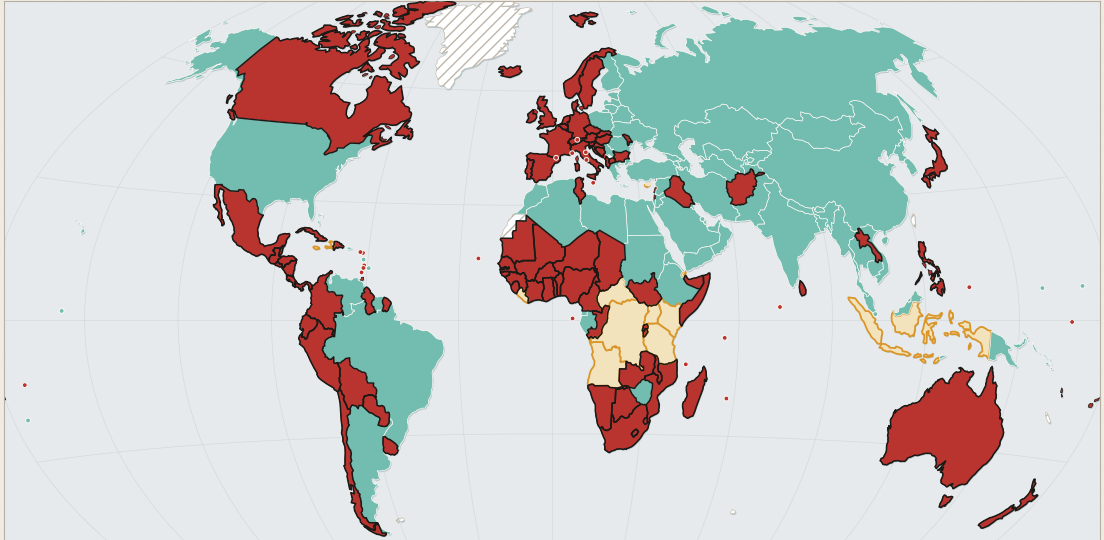
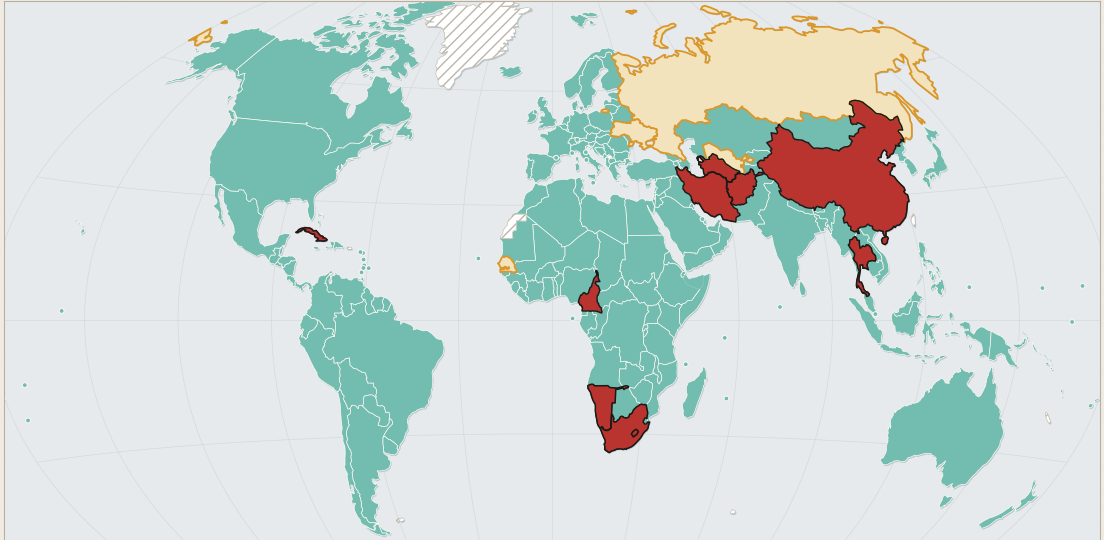
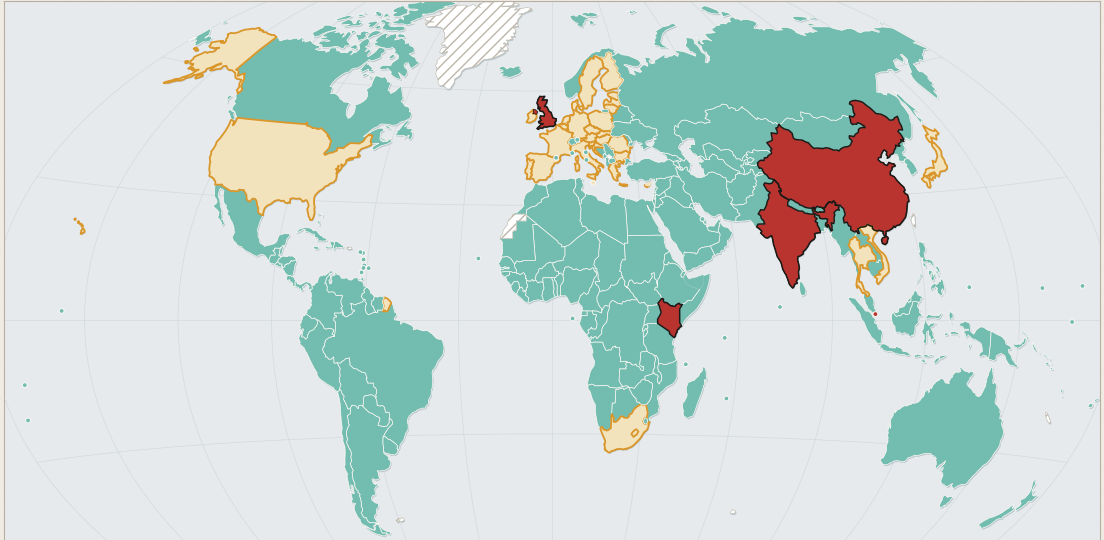
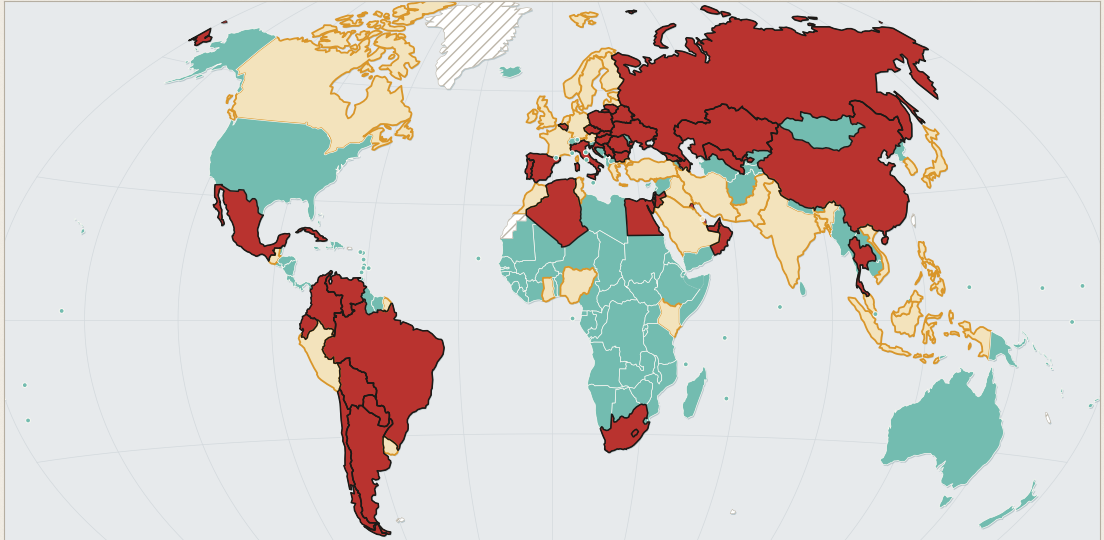
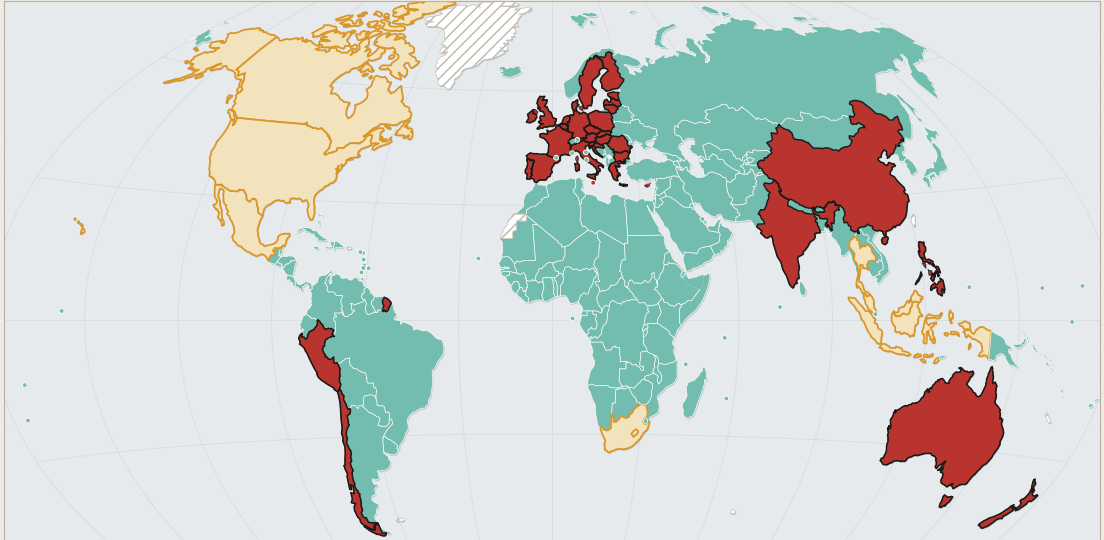
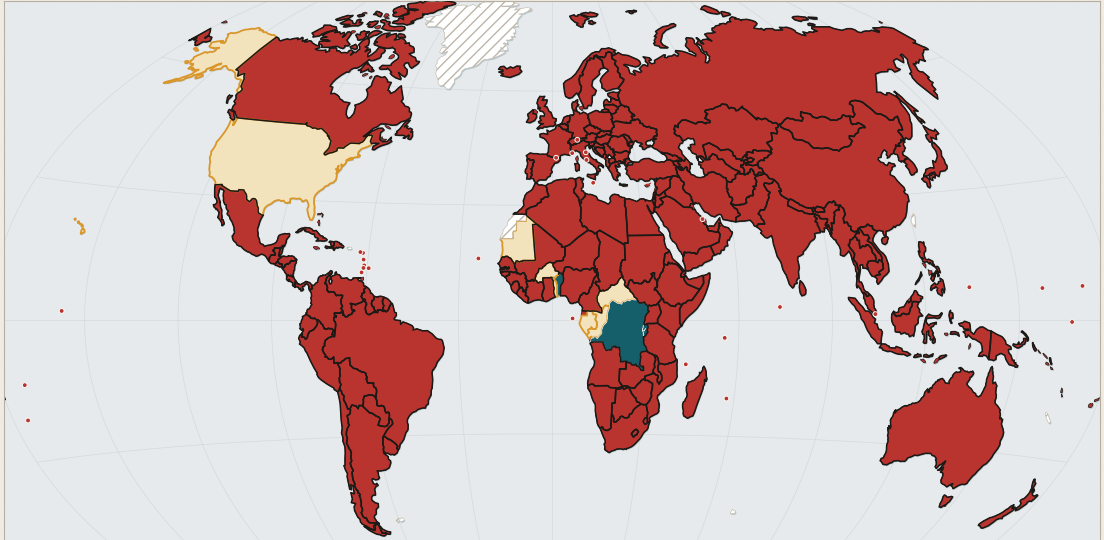
The 2026 map of where a Child Car Seat is mandatory or partly required, aired Nov 8, 2026. Sources
Sources: WHO Global status report on road safety 2023: country and territory profiles (legislation reviewed by WHO) · NHTSA / IIHS child passenger safety laws by state · Gov.uk - Child car seats: the law · VietnamNet - New traffic rules to require child safety restraints from August 15 (Decree 238/2026) · VietnamPlus - Tu ngay 15/8, cho tre em tren o to khong co thiet bi an toan · THE STANDARD - Car seat for under 6 years old enforced (Thai police alternatives) · Bernama - Five years on, why are child car seats still not widely used? (Malaysia) · Inquirer / PNA - RA 11229 Child Safety in Motor Vehicles Act rollout and deferral · Kuwait Times - New traffic law goes into effect from April 22 · El Financiero - Multa por no usar sillas de coche en Jalisco (Mexico, state-level fines) · PakWheels - 2026 and still no child seat law (Pakistan) · National statutes: CTB art. 64 + CONTRAN 819/2021 (BR), Road Traffic Act art. 50 (KR), art. 71-3 (JP), StVO s.21 (DE), Code de la route R412-2 (FR), RGC art. 117 (ES), PDR 21.11 (UA), MV Act s.194B (IN), Minors Protection Law art. 18 (CN) · How we rate it
Is it mandatory where you live? Check your countryMandatory in 96 countries
Kids under 4 must ride in a child seat by law.
Source: WHO GSRRS 2023 profile
Why we rate it this way
WHO Global status report on road safety 2023, country profile (legislation reviewed by WHO lawyers, data 2022-23): national child restraint use law = Yes; age/height = 4 y; children in front seat restricted = Yes. No repeal found in 2025-26 searches.
Kids under 10 must ride in a child seat by law.
Source: WHO GSRRS 2023 profile
Why we rate it this way
WHO Global status report on road safety 2023, country profile (legislation reviewed by WHO lawyers, data 2022-23): national child restraint use law = Yes; age/height = 10 y; children in front seat restricted = Yes. No repeal found in 2025-26 searches.
Kids under 7 must use an approved child restraint.
Source: Australian Road Rules r.266
Why we rate it this way
Australian Road Rules r.266, adopted in every state and territory: children under 7 in an approved child restraint (rear-facing under 6 months); fines + 3 demerit points. Red because ALL states require it. WHO 2023: Yes, 7 y.
Kids under 150 cm must ride in a child seat by law.
Source: WHO GSRRS 2023 profile
Why we rate it this way
WHO Global status report on road safety 2023, country profile (legislation reviewed by WHO lawyers, data 2022-23): national child restraint use law = Yes; age/height = 14 y / 150 cm; children in front seat restricted = Yes. No repeal found in 2025-26 searches.
Young kids must ride in a child restraint by law.
Source: WHO GSRRS 2023 profile
Why we rate it this way
WHO Global status report on road safety 2023, country profile (legislation reviewed by WHO lawyers, data 2022-23): national child restraint use law = Yes; age/height = -; children in front seat restricted = No. No repeal found in 2025-26 searches.
Young kids must ride in a child restraint by law.
Source: WHO GSRRS 2023 profile
Why we rate it this way
WHO Global status report on road safety 2023, country profile (legislation reviewed by WHO lawyers, data 2022-23): national child restraint use law = Yes; age/height = -; children in front seat restricted = Yes. No repeal found in 2025-26 searches.
Kids under 4 must ride in a child seat by law.
Source: WHO GSRRS 2023 profile
Why we rate it this way
WHO Global status report on road safety 2023, country profile (legislation reviewed by WHO lawyers, data 2022-23): national child restraint use law = Yes; age/height = 4 y; children in front seat restricted = Yes. No repeal found in 2025-26 searches.
Kids under 5 must ride in a child seat by law.
Source: WHO GSRRS 2023 profile
Why we rate it this way
WHO Global status report on road safety 2023, country profile (legislation reviewed by WHO lawyers, data 2022-23): national child restraint use law = Yes; age/height = 5 y; children in front seat restricted = Yes. No repeal found in 2025-26 searches.
Kids under 135 cm must ride in a child seat by law.
Source: WHO GSRRS 2023 profile
Why we rate it this way
WHO Global status report on road safety 2023, country profile (legislation reviewed by WHO lawyers, data 2022-23): national child restraint use law = Yes; age/height = 18 y / 135 cm; children in front seat restricted = Yes. No repeal found in 2025-26 searches.
Kids under 12 must ride in a child seat by law.
Source: WHO GSRRS 2023 profile
Why we rate it this way
WHO Global status report on road safety 2023, country profile (legislation reviewed by WHO lawyers, data 2022-23): national child restraint use law = Yes; age/height = 12 y; children in front seat restricted = Yes. No repeal found in 2025-26 searches.
Kids under 5 must ride in a child seat by law.
Source: WHO GSRRS 2023 profile
Why we rate it this way
WHO Global status report on road safety 2023, country profile (legislation reviewed by WHO lawyers, data 2022-23): national child restraint use law = Yes; age/height = 5 y; children in front seat restricted = Yes. No repeal found in 2025-26 searches.
Kids under 150 cm must ride in a child seat by law.
Source: WHO GSRRS 2023 profile
Why we rate it this way
WHO Global status report on road safety 2023, country profile (legislation reviewed by WHO lawyers, data 2022-23): national child restraint use law = Yes; age/height = 150 cm; children in front seat restricted = Yes. No repeal found in 2025-26 searches.
Kids under 8 must ride in a child seat by law.
Source: WHO GSRRS 2023 profile
Why we rate it this way
WHO Global status report on road safety 2023, country profile (legislation reviewed by WHO lawyers, data 2022-23): national child restraint use law = Yes; age/height = 8 y; children in front seat restricted = Yes. No repeal found in 2025-26 searches.
Kids under 4 must ride in a child seat by law.
Source: WHO GSRRS 2023 profile
Why we rate it this way
WHO Global status report on road safety 2023, country profile (legislation reviewed by WHO lawyers, data 2022-23): national child restraint use law = Yes; age/height = 4 y; children in front seat restricted = Yes. No repeal found in 2025-26 searches.
Every province requires car seats for young kids.
Source: Provincial traffic acts
Why we rate it this way
Every province and territory requires child car seats for young children under its highway traffic act (Transport Canada child car seat guidance); booster rules vary and are missing in a few. Red because ALL provinces/territories require seats. WHO 2023: Yes, 8 y.
Kids under 8 or 135 cm must use a child seat by law.
Source: WHO GSRRS 2023 profile
Why we rate it this way
WHO Global status report on road safety 2023, country profile (legislation reviewed by WHO lawyers, data 2022-23): national child restraint use law = Yes; age/height = 8 y / 135 cm; children in front seat restricted = Yes. No repeal found in 2025-26 searches.
Kids under 10 must ride in a child seat by law.
Source: WHO GSRRS 2023 profile
Why we rate it this way
WHO Global status report on road safety 2023, country profile (legislation reviewed by WHO lawyers, data 2022-23): national child restraint use law = Yes; age/height = 10 y; children in front seat restricted = Yes. No repeal found in 2025-26 searches.
Kids under 12 or 145 cm must use a child seat by law.
Source: WHO GSRRS 2023 profile
Why we rate it this way
WHO Global status report on road safety 2023, country profile (legislation reviewed by WHO lawyers, data 2022-23): national child restraint use law = Yes; age/height = 12 y / 145 cm; children in front seat restricted = Yes. No repeal found in 2025-26 searches.
Kids under 135 cm must ride in a child seat by law.
Source: WHO GSRRS 2023 profile
Why we rate it this way
WHO Global status report on road safety 2023, country profile (legislation reviewed by WHO lawyers, data 2022-23): national child restraint use law = Yes; age/height = 135 cm; children in front seat restricted = Yes. No repeal found in 2025-26 searches.
Kids under 150 cm must ride in a child seat by law.
Source: WHO GSRRS 2023 profile
Why we rate it this way
WHO Global status report on road safety 2023, country profile (legislation reviewed by WHO lawyers, data 2022-23): national child restraint use law = Yes; age/height = 150 cm; children in front seat restricted = Yes. No repeal found in 2025-26 searches.
Kids under 135 cm must ride in a child seat by law.
Source: WHO GSRRS 2023 profile
Why we rate it this way
WHO Global status report on road safety 2023, country profile (legislation reviewed by WHO lawyers, data 2022-23): national child restraint use law = Yes; age/height = 135 cm; children in front seat restricted = Yes. No repeal found in 2025-26 searches.
Kids under 6 must ride in a child seat by law.
Source: WHO GSRRS 2023 profile
Why we rate it this way
WHO Global status report on road safety 2023, country profile (legislation reviewed by WHO lawyers, data 2022-23): national child restraint use law = Yes; age/height = 6 y; children in front seat restricted = Yes. No repeal found in 2025-26 searches.
Young kids must ride in a child restraint by law.
Source: WHO GSRRS 2023 profile
Why we rate it this way
WHO Global status report on road safety 2023, country profile (legislation reviewed by WHO lawyers, data 2022-23): national child restraint use law = Yes; age/height = -; children in front seat restricted = Yes. No repeal found in 2025-26 searches.
Kids under 5 must use a child seat. Fines since Dec 2025.
Source: Ley de Transporte 2025
Why we rate it this way
WHO 2023: Yes, 2 y. The new land transport and road safety law (Dec 2025) requires child seats for under-5s, fines from 29 Dec 2025 (El Diario de Hoy, Dec 2025).
Young kids must ride in a child restraint by law.
Source: WHO GSRRS 2023 profile
Why we rate it this way
WHO Global status report on road safety 2023, country profile (legislation reviewed by WHO lawyers, data 2022-23): national child restraint use law = Yes; age/height = -; children in front seat restricted = No. No repeal found in 2025-26 searches.
Young kids must ride in a child restraint by law.
Source: WHO GSRRS 2023 profile
Why we rate it this way
WHO Global status report on road safety 2023, country profile (legislation reviewed by WHO lawyers, data 2022-23): national child restraint use law = Yes; age/height = -; children in front seat restricted = No. No repeal found in 2025-26 searches.
Kids under 135 cm must ride in a child seat by law.
Source: WHO GSRRS 2023 profile
Why we rate it this way
WHO Global status report on road safety 2023, country profile (legislation reviewed by WHO lawyers, data 2022-23): national child restraint use law = Yes; age/height = 135 cm; children in front seat restricted = Yes. No repeal found in 2025-26 searches.
Kids under 10 must ride in a child seat. Fine: EUR 135.
Source: Code de la route R412-2
Why we rate it this way
Code de la route R412-2: children under 10 in an approved child restraint; 4th-class fine EUR 135 (securite-routiere.gouv.fr leaflet 2024). WHO 2023: Yes, 10 y.
Kids under 5 must ride in a child seat by law.
Source: WHO GSRRS 2023 profile
Why we rate it this way
WHO Global status report on road safety 2023, country profile (legislation reviewed by WHO lawyers, data 2022-23): national child restraint use law = Yes; age/height = 5 y; children in front seat restricted = Yes. No repeal found in 2025-26 searches.
Kids under 3 must ride in a child seat by law.
Source: WHO GSRRS 2023 profile
Why we rate it this way
WHO Global status report on road safety 2023, country profile (legislation reviewed by WHO lawyers, data 2022-23): national child restraint use law = Yes; age/height = 3 y; children in front seat restricted = Yes. No repeal found in 2025-26 searches.
Kids under 12 (below 150 cm) must use a child seat.
Source: StVO s.21(1a)
Why we rate it this way
StVO s.21(1a): children under 12 and below 150 cm must use an approved child seat; fine EUR 30-70 + points (Bussgeldkatalog 2026). WHO 2023: 12 y / 150 cm.
Kids under 135 cm must ride in a child seat by law.
Source: WHO GSRRS 2023 profile
Why we rate it this way
WHO Global status report on road safety 2023, country profile (legislation reviewed by WHO lawyers, data 2022-23): national child restraint use law = Yes; age/height = 135 cm; children in front seat restricted = Yes. No repeal found in 2025-26 searches.
Babies under 18 months must ride in a child seat by law.
Source: WHO GSRRS 2023 profile
Why we rate it this way
WHO Global status report on road safety 2023, country profile (legislation reviewed by WHO lawyers, data 2022-23): national child restraint use law = Yes; age/height = 1.5 y; children in front seat restricted = Yes. No repeal found in 2025-26 searches.
Kids under 12 or 135 cm must use a child seat by law.
Source: WHO GSRRS 2023 profile
Why we rate it this way
WHO Global status report on road safety 2023, country profile (legislation reviewed by WHO lawyers, data 2022-23): national child restraint use law = Yes; age/height = 12 y / 135 cm; children in front seat restricted = Yes. No repeal found in 2025-26 searches.
Young kids must ride in a child restraint by law.
Source: WHO GSRRS 2023 profile
Why we rate it this way
WHO Global status report on road safety 2023, country profile (legislation reviewed by WHO lawyers, data 2022-23): national child restraint use law = Yes; age/height = -; children in front seat restricted = No. No repeal found in 2025-26 searches.
Kids under 135 cm must ride in a child seat by law.
Source: WHO GSRRS 2023 profile
Why we rate it this way
WHO Global status report on road safety 2023, country profile (legislation reviewed by WHO lawyers, data 2022-23): national child restraint use law = Yes; age/height = 135 cm; children in front seat restricted = Yes. No repeal found in 2025-26 searches.
Kids under 150 cm must ride in a child seat by law.
Source: WHO GSRRS 2023 profile
Why we rate it this way
WHO Global status report on road safety 2023, country profile (legislation reviewed by WHO lawyers, data 2022-23): national child restraint use law = Yes; age/height = 150 cm; children in front seat restricted = Yes. No repeal found in 2025-26 searches.
Kids under 8 must ride in a car seat or booster.
Source: Traffic Regulations 83B
Why we rate it this way
Traffic Regulations 83B: children under 8 in a child seat/booster (rear-facing under 1). WHO 2023: Yes, 8 y.
Kids under 150 cm must use a child seat by law.
Source: Codice della strada art. 172
Why we rate it this way
Codice della strada art. 172: children below 150 cm must use a child seat; fine from EUR 83 + 5 points; anti-abandonment device for under-4s since 2019. WHO 2023: 150 cm.
Young kids must ride in a child restraint by law.
Source: WHO GSRRS 2023 profile
Why we rate it this way
WHO Global status report on road safety 2023, country profile (legislation reviewed by WHO lawyers, data 2022-23): national child restraint use law = Yes; age/height = -; children in front seat restricted = No. No repeal found in 2025-26 searches.
Kids under 6 must ride in a child seat by law.
Source: Road Traffic Act art. 71-3
Why we rate it this way
Road Traffic Act art. 71-3(3): drivers must put children under 6 in a child seat; penalty = 1 licence demerit point (no fine). WHO 2023: Yes, 6 y.
Kids under 12 must use a child restraint by law.
Source: PDD RK; KoAP RK
Why we rate it this way
Rules of the Road of Kazakhstan: children under 12 must use a child restraint; taxis must carry seats (MVD via Kazpravda); fine under the Administrative Code. WHO 2023: Yes.
Young kids must ride in a child restraint by law.
Source: WHO GSRRS 2023 profile
Why we rate it this way
WHO Global status report on road safety 2023, country profile (legislation reviewed by WHO lawyers, data 2022-23): national child restraint use law = Yes; age/height = -; children in front seat restricted = No. No repeal found in 2025-26 searches.
Kids under 150 cm must ride in a child seat by law.
Source: WHO GSRRS 2023 profile
Why we rate it this way
WHO Global status report on road safety 2023, country profile (legislation reviewed by WHO lawyers, data 2022-23): national child restraint use law = Yes; age/height = 150 cm; children in front seat restricted = Yes. No repeal found in 2025-26 searches.
Kids under 5 must ride in a child seat by law.
Source: WHO GSRRS 2023 profile
Why we rate it this way
WHO Global status report on road safety 2023, country profile (legislation reviewed by WHO lawyers, data 2022-23): national child restraint use law = Yes; age/height = 5 y; children in front seat restricted = Yes. No repeal found in 2025-26 searches.
Kids under 12 (below 150 cm) must use a child seat.
Source: Landespolizei LI; LGBl
Why we rate it this way
Liechtenstein road traffic rules (EU-conform since 2006, gesetze.li consolidated 2024): children under 12 and below 150 cm must use an approved child restraint (Landespolizei). No WHO 2023 profile.
Kids under 135 cm must ride in a child seat by law.
Source: WHO GSRRS 2023 profile
Why we rate it this way
WHO Global status report on road safety 2023, country profile (legislation reviewed by WHO lawyers, data 2022-23): national child restraint use law = Yes; age/height = 135 cm; children in front seat restricted = Yes. No repeal found in 2025-26 searches.
Kids under 150 cm must ride in a child seat by law.
Source: WHO GSRRS 2023 profile
Why we rate it this way
WHO Global status report on road safety 2023, country profile (legislation reviewed by WHO lawyers, data 2022-23): national child restraint use law = Yes; age/height = 17 y / 150 cm; children in front seat restricted = Yes. No repeal found in 2025-26 searches.
Kids under 3 must ride in a child seat by law.
Source: WHO GSRRS 2023 profile
Why we rate it this way
WHO Global status report on road safety 2023, country profile (legislation reviewed by WHO lawyers, data 2022-23): national child restraint use law = Yes; age/height = 3 y; children in front seat restricted = Yes. No repeal found in 2025-26 searches.
Young kids must ride in a child restraint by law.
Source: WHO GSRRS 2023 profile
Why we rate it this way
WHO Global status report on road safety 2023, country profile (legislation reviewed by WHO lawyers, data 2022-23): national child restraint use law = Yes; age/height = -; children in front seat restricted = Yes. No repeal found in 2025-26 searches.
Kids under 5 must ride in a child seat by law.
Source: WHO GSRRS 2023 profile
Why we rate it this way
WHO Global status report on road safety 2023, country profile (legislation reviewed by WHO lawyers, data 2022-23): national child restraint use law = Yes; age/height = 5 y; children in front seat restricted = Yes. No repeal found in 2025-26 searches.
Kids under 12 must ride in a child seat by law.
Source: WHO GSRRS 2023 profile
Why we rate it this way
WHO Global status report on road safety 2023, country profile (legislation reviewed by WHO lawyers, data 2022-23): national child restraint use law = Yes; age/height = 12 y; children in front seat restricted = Yes. No repeal found in 2025-26 searches.
Kids under 10 must ride in a child seat by law.
Source: WHO GSRRS 2023 profile
Why we rate it this way
WHO Global status report on road safety 2023, country profile (legislation reviewed by WHO lawyers, data 2022-23): national child restraint use law = Yes; age/height = 10 y; children in front seat restricted = No. No repeal found in 2025-26 searches.
Kids under 135 cm must ride in a child seat by law.
Source: WHO GSRRS 2023 profile
Why we rate it this way
WHO Global status report on road safety 2023, country profile (legislation reviewed by WHO lawyers, data 2022-23): national child restraint use law = Yes; age/height = 18 y / 135 cm; children in front seat restricted = Yes. No repeal found in 2025-26 searches.
Kids under 7 must use an approved child restraint.
Source: Land Transport Rule 7.10
Why we rate it this way
Land Transport (Road User) Rule 7.10: children under 7 must use an approved child restraint. WHO 2023: Yes, 7 y.
Young kids must ride in a child restraint by law.
Source: WHO GSRRS 2023 profile
Why we rate it this way
WHO Global status report on road safety 2023, country profile (legislation reviewed by WHO lawyers, data 2022-23): national child restraint use law = Yes; age/height = -; children in front seat restricted = Yes. No repeal found in 2025-26 searches.
Kids under 7 must ride in a child seat by law.
Source: WHO GSRRS 2023 profile
Why we rate it this way
WHO Global status report on road safety 2023, country profile (legislation reviewed by WHO lawyers, data 2022-23): national child restraint use law = Yes; age/height = 7 y; children in front seat restricted = Yes. No repeal found in 2025-26 searches.
Child restraints are compulsory. Fine: N3,000.
Source: NRTR 2012; FRSC fines
Why we rate it this way
National Road Traffic Regulations 2012 reg. 125: child restraints for children (WHO 2023: Yes, 7 y); FRSC offence schedule: N3,000 + points (Within Nigeria, Aug 2026).
Kids under 5 must ride in a child seat by law.
Source: WHO GSRRS 2023 profile
Why we rate it this way
WHO Global status report on road safety 2023, country profile (legislation reviewed by WHO lawyers, data 2022-23): national child restraint use law = Yes; age/height = 5 y; children in front seat restricted = Yes. No repeal found in 2025-26 searches.
Kids under 135 cm must ride in a child seat by law.
Source: WHO GSRRS 2023 profile
Why we rate it this way
WHO Global status report on road safety 2023, country profile (legislation reviewed by WHO lawyers, data 2022-23): national child restraint use law = Yes; age/height = 135 cm; children in front seat restricted = Yes. No repeal found in 2025-26 searches.
Kids under 4 must ride in a child seat by law.
Source: ROP Traffic Law
Why we rate it this way
Royal Oman Police: child seats mandatory for young children since March 2017 (Gulf News, 2017). WHO 2023: Yes, 4 y.
Kids under 14 must use a child restraint by law.
Source: WHO GSRRS 2023 profile
Why we rate it this way
WHO Global status report on road safety 2023, country profile (legislation reviewed by WHO lawyers, data 2022-23): national child restraint use law = Yes; age/height = 14 y; children in front seat restricted = Yes. No repeal found in 2025-26 searches.
Kids under 5 must ride in a child seat by law.
Source: WHO GSRRS 2023 profile
Why we rate it this way
WHO Global status report on road safety 2023, country profile (legislation reviewed by WHO lawyers, data 2022-23): national child restraint use law = Yes; age/height = 5 y; children in front seat restricted = Yes. No repeal found in 2025-26 searches.
Kids under 3 must ride in a child seat by law.
Source: WHO GSRRS 2023 profile
Why we rate it this way
WHO Global status report on road safety 2023, country profile (legislation reviewed by WHO lawyers, data 2022-23): national child restraint use law = Yes; age/height = 3 y; children in front seat restricted = Yes. No repeal found in 2025-26 searches.
Kids under 135 cm must ride in a child seat by law.
Source: WHO GSRRS 2023 profile
Why we rate it this way
WHO Global status report on road safety 2023, country profile (legislation reviewed by WHO lawyers, data 2022-23): national child restraint use law = Yes; age/height = 135 cm; children in front seat restricted = Yes. No repeal found in 2025-26 searches.
Kids under 12 or 135 cm must use a child seat by law.
Source: WHO GSRRS 2023 profile
Why we rate it this way
WHO Global status report on road safety 2023, country profile (legislation reviewed by WHO lawyers, data 2022-23): national child restraint use law = Yes; age/height = 12 y / 135 cm; children in front seat restricted = Yes. No repeal found in 2025-26 searches.
Kids under 135 cm must ride in a child seat by law.
Source: OUG 195/2002; EU 2003/20
Why we rate it this way
EU Directive 2003/20/EC (child restraints below 135 cm) transposed by OUG 195/2002 on road traffic + HG 1391/2006 regulations: children under 135 cm in a child restraint, fine + penalty points. No WHO 2023 profile.
Kids under 7 must ride in a child seat. Fine: 3,000 rubles.
Source: PDD 22.9; KoAP 12.23(3)
Why we rate it this way
Rules of the Road 22.9: under 7 in a child restraint, 7-11 restraint or belt in the back (restraint in front); KoAP 12.23(3) fine 3,000 rub. WHO 2023: Yes, 7 y.
No child seat is a traffic offence. Fine up to SR500.
Source: Saudi Traffic Law
Why we rate it this way
Not using a child seat is a traffic violation, fine SR300-500; under-10s barred from the front seat (Gulf News 2023; Muroor). WHO 2023: Yes.
Young kids must ride in a child restraint by law.
Source: WHO GSRRS 2023 profile
Why we rate it this way
WHO Global status report on road safety 2023, country profile (legislation reviewed by WHO lawyers, data 2022-23): national child restraint use law = Yes; age/height = -; children in front seat restricted = Yes. No repeal found in 2025-26 searches.
Young kids must ride in a child restraint by law.
Source: WHO GSRRS 2023 profile
Why we rate it this way
WHO Global status report on road safety 2023, country profile (legislation reviewed by WHO lawyers, data 2022-23): national child restraint use law = Yes; age/height = -; children in front seat restricted = No. No repeal found in 2025-26 searches.
Kids under 135 cm must ride in a child seat by law.
Source: RTA seat belt rules
Why we rate it this way
Road Traffic (Motor Vehicles, Wearing of Seat Belts) Rules: children below 1.35 m must use a child restraint. WHO 2023: Yes, 135 cm.
Kids under 150 cm must ride in a child seat by law.
Source: WHO GSRRS 2023 profile
Why we rate it this way
WHO Global status report on road safety 2023, country profile (legislation reviewed by WHO lawyers, data 2022-23): national child restraint use law = Yes; age/height = 150 cm; children in front seat restricted = Yes. No repeal found in 2025-26 searches.
Kids under 3 or 140 cm must use a child seat by law.
Source: WHO GSRRS 2023 profile
Why we rate it this way
WHO Global status report on road safety 2023, country profile (legislation reviewed by WHO lawyers, data 2022-23): national child restraint use law = Yes; age/height = 3 y / 140 cm; children in front seat restricted = Yes. No repeal found in 2025-26 searches.
Kids under 3 must ride in a child restraint by law.
Source: NRTA reg. 213(4)
Why we rate it this way
National Road Traffic Regulations reg. 213(4) (2015 amendment): children under 3 must use a child restraint. WHO 2023: Yes, 3 y.
Kids under 6 must ride in a car seat. Fine: 60,000 won.
Source: Road Traffic Act art. 50
Why we rate it this way
Road Traffic Act art. 50(1): infants under 6 must ride in an infant/child safety seat; fine (gwataeryo) 60,000 won, doubled from 30,000 in 2016 (Seoul Shinmun, 23 Nov 2016); all-seat belt rule 2018. WHO 2023 coded "No" - statute overrides (KOTSA 2024 traffic culture index still measures under-6 car seat use: 66.1% on highways).
Kids 135 cm or shorter must use a child seat. Fine: EUR 200.
Source: Reglamento Circulacion art. 117
Why we rate it this way
Reglamento General de Circulacion art. 117: minors 135 cm or shorter must use a child restraint; fine EUR 200, serious offence (RACE 2025). WHO 2023: 135 cm.
Young kids must ride in a child restraint by law.
Source: WHO GSRRS 2023 profile
Why we rate it this way
WHO Global status report on road safety 2023, country profile (legislation reviewed by WHO lawyers, data 2022-23): national child restraint use law = Yes; age/height = -; children in front seat restricted = No. No repeal found in 2025-26 searches.
Kids under 10 must ride in a child seat by law.
Source: WHO GSRRS 2023 profile
Why we rate it this way
WHO Global status report on road safety 2023, country profile (legislation reviewed by WHO lawyers, data 2022-23): national child restraint use law = Yes; age/height = 10 y; children in front seat restricted = Yes. No repeal found in 2025-26 searches.
Kids under 135 cm must ride in a child seat by law.
Source: WHO GSRRS 2023 profile
Why we rate it this way
WHO Global status report on road safety 2023, country profile (legislation reviewed by WHO lawyers, data 2022-23): national child restraint use law = Yes; age/height = 135 cm; children in front seat restricted = Yes. No repeal found in 2025-26 searches.
Kids under 150 cm must ride in a child seat by law.
Source: WHO GSRRS 2023 profile
Why we rate it this way
WHO Global status report on road safety 2023, country profile (legislation reviewed by WHO lawyers, data 2022-23): national child restraint use law = Yes; age/height = 150 cm; children in front seat restricted = Yes. No repeal found in 2025-26 searches.
Kids under 5 must ride in a child seat by law.
Source: WHO GSRRS 2023 profile
Why we rate it this way
WHO Global status report on road safety 2023, country profile (legislation reviewed by WHO lawyers, data 2022-23): national child restraint use law = Yes; age/height = 5 y; children in front seat restricted = Yes. No repeal found in 2025-26 searches.
Kids under 135 cm must ride in a child seat by law.
Source: Trafik Yonetmeligi m.150
Why we rate it this way
Highway Traffic Regulation art. 150: children below 135 cm / 36 kg must use a child seat; fine under KTK art. 78. WHO 2023: Yes, 135 cm.
Kids under 150 cm must use a child seat. Fine: 510 hryvnia.
Source: PDR 21.11; KUpAP 121
Why we rate it this way
Rules of the Road 21.11: children below 150 cm must use a special restraint (no front seat under 12 without one); KUpAP art. 121 fine 510 UAH, 850 repeat (Fakty, 2 Mar 2026). No WHO 2023 profile.
Kids up to 4 must ride in a child seat. Fine: AED 400.
Source: UAE Federal Traffic Law
Why we rate it this way
Federal traffic law: children up to 4 in a child seat; fine AED 400 (Sharjah Police via Gulf News); under-10s / 145 cm barred from front. WHO 2023: Yes, 4 y.
Kids under 12 or 150 cm must use a child seat by law.
Source: WHO GSRRS 2023 profile
Why we rate it this way
WHO Global status report on road safety 2023, country profile (legislation reviewed by WHO lawyers, data 2022-23): national child restraint use law = Yes; age/height = 12 y / 150 cm; children in front seat restricted = Yes. No repeal found in 2025-26 searches.
Babies under 1 must ride in a child seat by law.
Source: WHO GSRRS 2023 profile
Why we rate it this way
WHO Global status report on road safety 2023, country profile (legislation reviewed by WHO lawyers, data 2022-23): national child restraint use law = Yes; age/height = 1 y; children in front seat restricted = Yes. No repeal found in 2025-26 searches.
Kids under 3 must ride in a child seat by law.
Source: WHO GSRRS 2023 profile
Why we rate it this way
WHO Global status report on road safety 2023, country profile (legislation reviewed by WHO lawyers, data 2022-23): national child restraint use law = Yes; age/height = 3 y; children in front seat restricted = Yes. No repeal found in 2025-26 searches.
No federal law, but all 50 states + DC require car seats.
Source: NHTSA / IIHS state laws
Why we rate it this way
No federal car seat law, but every one of the 50 states + DC has a child passenger safety law with fines (NHTSA / IIHS state law tables, 2025-26); booster ages run to 4-9 by state. Red because ALL subnational units require it. WHO 2023: Yes, 8 y.
Kids need a car seat until age 12 or 135 cm. Fine up to £500.
Source: Gov.uk child car seat rules
Why we rate it this way
Motor Vehicles (Wearing of Seat Belts) Regulations (as amended 2006): children must use a child car seat until age 12 or 135 cm, whichever first; fine up to GBP 500 (gov.uk "Child car seats: the law", current 2026). WHO 2023: 12 y / 135 cm.
Kids under 10 (below 145 cm) need a car seat. 7 licence points.
Source: CTB art. 64; Contran 819/21
Why we rate it this way
Codigo de Transito Brasileiro art. 64 + CONTRAN Res. 819/2021 (in force 2021): under 10 in the back; child seat/booster until 10 y or 145 cm; breach = art. 168 very serious offence (fine BRL 293.47 + 7 points). WHO 2023: Yes, 10 y / 145 cm.
Car seats required since 2020 for kids under 12 (below 135 cm).
Source: Motor Vehicles (Seatbelt & CRS) Rules
Why we rate it this way
Road Transport Act - Motor Vehicles (Seatbelt and Child Restraint System) (Amendment) Rules 2019, in force 1 Jan 2020: children under 12, below 135 cm / 36 kg must use a UN R44/R129 child restraint in private cars; RM300 fine (Bernama, 19 Nov 2025). Enforcement phased in, education first (Bernama 2025). WHO 2023: Yes, 12 y / 135 cm.
Kids 12 and under (below 150 cm) must ride in a car seat by law.
Source: RA 11229 (2019, in force 2021)
Why we rate it this way
Child Safety in Motor Vehicles Act RA 11229 (signed 22 Feb 2019; in force 2 Feb 2021): children 12 and under must use a child restraint in private cars unless at least 150 cm and belted, and may not sit in front; fines P1,000 / P2,000 / P5,000 + 1-year licence suspension (LTO via Inquirer, Feb 2021). The Palace deferred FULL enforcement in Feb 2021 (COVID, cost); a House committee said suspending the law needs a new law, and none was passed - statute unchanged in 2026. WHO 2023: Yes, 12 y / 150 cm.
Everywhere not listed here, a Child Car Seat is not required.
Partly mandatory in 38 countries
Kids cannot ride up front, but no car seat law.
Source: WHO GSRRS 2023 profile
Why we rate it this way
WHO Global status report on road safety 2023, country profile (legislation reviewed by WHO lawyers, data 2022-23): national child restraint use law = No; age/height = -; children in front seat restricted = Yes. No repeal found in 2025-26 searches. Front-seat ban only, no child seat requirement -> amber.
The law tells parents to use car seats, but sets no national fine.
Source: Minors Protection Law art. 18
Why we rate it this way
Minors Protection Law (rev. 2020, in force 1 Jun 2021) art. 18 tells guardians to fit child safety seats, but sets no penalty; the Road Traffic Safety Law has no child seat rule; only local rules fine it (e.g. Fujian from 1 Jan 2022: warning or up to 100 yuan for under-4s, The Paper). WHO 2023: Yes, no age, no front-seat rule. Only some regions -> amber.
Under-10s must ride in back; only babies need a seat.
Source: Ley 769/2002 art. 82
Why we rate it this way
Codigo Nacional de Transito art. 82: under-10s must ride in the back; a child seat only for under-2s riding alone with the driver; the "Ley de Sillas Seguras" bill stalled before its last debate (Portafolio; Infobae, Apr 2026). WHO 2023: no law, front-seat rule Yes. Partial (infants only) -> amber.
Kids cannot ride up front, but no car seat law.
Source: WHO GSRRS 2023 profile
Why we rate it this way
WHO Global status report on road safety 2023, country profile (legislation reviewed by WHO lawyers, data 2022-23): national child restraint use law = No; age/height = -; children in front seat restricted = Yes. No repeal found in 2025-26 searches. Front-seat ban only, no child seat requirement -> amber.
Young kids cannot ride up front, but no car seat law.
Source: Traffic Law 66/1973 (am.)
Why we rate it this way
WHO 2023: no national child restraint use law; front-seat restriction. 2025-26 search (Arabic + English) found no new child seat rule; Law 161/2021 amendments add none we could confirm.
Kids cannot ride up front, but no car seat law.
Source: WHO GSRRS 2023 profile
Why we rate it this way
WHO Global status report on road safety 2023, country profile (legislation reviewed by WHO lawyers, data 2022-23): national child restraint use law = No; age/height = -; children in front seat restricted = Yes. No repeal found in 2025-26 searches. Front-seat ban only, no child seat requirement -> amber.
Under-14s need a seat belt OR a child seat. Fine: 1,000 rupees.
Source: MV Act s.194B(2)
Why we rate it this way
Motor Vehicles Act s.194B(2) (2019 amendment): a child under 14 must be secured by a safety belt OR a child restraint system, fine Rs 1,000. An ordinary belt satisfies it, so it is not a car seat requirement. WHO 2023: Yes, 14 y, no front-seat rule.
Kids cannot ride up front, but no car seat law.
Source: WHO GSRRS 2023 profile
Why we rate it this way
WHO Global status report on road safety 2023, country profile (legislation reviewed by WHO lawyers, data 2022-23): national child restraint use law = No; age/height = -; children in front seat restricted = Yes. No repeal found in 2025-26 searches. Front-seat ban only, no child seat requirement -> amber.
Under-10s cannot ride in front. Fine: KD 50.
Source: Decree-Law 5/2025
Why we rate it this way
Traffic law Decree-Law 5/2025 (in force 22 Apr 2025): MOI says KD 50 for seating a child under 10 in the front seat, or keeping them unbuckled or unattended in the back (Kuwait Times, 23 Jan 2025). Front-seat + belting rule, no child seat duty found. WHO 2023: front-seat rule only.
Kids cannot ride up front, but no car seat law.
Source: WHO GSRRS 2023 profile
Why we rate it this way
WHO Global status report on road safety 2023, country profile (legislation reviewed by WHO lawyers, data 2022-23): national child restraint use law = No; age/height = -; children in front seat restricted = Yes. No repeal found in 2025-26 searches. Front-seat ban only, no child seat requirement -> amber.
A 2022 law says kids under 12 need a seat, but fines vary by state.
Source: LGMSV (DOF 17 May 2022)
Why we rate it this way
Ley General de Movilidad y Seguridad Vial (DOF 17 May 2022) sets child restraints for under-12s in the back as a national MINIMUM rule, but the general law has no fine: penalties are set by each state's traffic rules (e.g. Jalisco began fining 4 Aug 2024, El Financiero 24 Jun 2024). Not every state code verified -> amber (only some states). WHO 2023: Yes, 12 y.
Kids cannot ride up front, but no car seat law.
Source: WHO GSRRS 2023 profile
Why we rate it this way
WHO Global status report on road safety 2023, country profile (legislation reviewed by WHO lawyers, data 2022-23): national child restraint use law = No; age/height = -; children in front seat restricted = Yes. No repeal found in 2025-26 searches. Front-seat ban only, no child seat requirement -> amber.
Kids cannot ride up front. A 2025 car seat bill was vetoed.
Source: WHO 2023; Bill 52 veto 2025
Why we rate it this way
WHO 2023: front-seat restriction only. Bill 52 (child seats below 135 cm, fines) passed its third debate in 2025 (La Prensa PDF, 31 Mar 2025) and was vetoed by President Mulino (Panama America / TVN 2025).
Under-10s cannot ride in front. Fine: QR 500.
Source: Qatar Traffic Law 19/2007
Why we rate it this way
Traffic Law 19/2007: children under 10 may not ride in the front seat, fine QR 500 (MOI reminders: Al Sharq 13 Apr 2025; The Peninsula Dec 2025); no child seat requirement found. WHO 2023: front-seat rule only.
Kids cannot ride up front, but no car seat law.
Source: WHO GSRRS 2023 profile
Why we rate it this way
WHO Global status report on road safety 2023, country profile (legislation reviewed by WHO lawyers, data 2022-23): national child restraint use law = No; age/height = -; children in front seat restricted = Yes. No repeal found in 2025-26 searches. Front-seat ban only, no child seat requirement -> amber.
Car seat law for 6 and under, but a minder or lap belt also counts.
Source: Land Traffic Act No.13 s.123
Why we rate it this way
Land Traffic Act (No. 13) B.E. 2565, in force 5 Sep 2022: children 6 and under must use a child seat, fine up to 2,000 baht. But the Royal Thai Police announcement in force 17 Aug 2023 lets drivers skip the seat if they drive slowly, seat the child in the back, and have a minder hold the child OR use a lap belt (THE STANDARD and PPTV, 18 Aug 2023). The seat is avoidable by law -> amber. WHO 2023: Yes, 6 y / 135 cm.
Kids cannot ride up front, but no car seat law.
Source: WHO GSRRS 2023 profile
Why we rate it this way
WHO Global status report on road safety 2023, country profile (legislation reviewed by WHO lawyers, data 2022-23): national child restraint use law = No; age/height = -; children in front seat restricted = Yes. No repeal found in 2025-26 searches. Front-seat ban only, no child seat requirement -> amber.
Car seat law since July 2026, but the penalty is just a warning.
Source: Law 36/2024 art. 10(3); Decree 238/2026
Why we rate it this way
Law on Road Traffic Order and Safety 36/2024 art. 10(3): children under 10 and below 1.35 m must use a suitable child restraint and may not sit in the driver's row. Start moved from 1 Jan 2026 to 1 Jul 2026 by Law 118/2025/QH15. Decree 238/2026/ND-CP (26 Jun 2026, in force 15 Aug 2026) cut the no-seat penalty for private cars from a VND 0.8-1M fine to a WARNING only (VietnamPlus / VietnamNet, 1 Jul 2026; VOV). A law with a warning-only sanction = amber (less dramatic reading).
Kids cannot ride up front, but no car seat law.
Source: WHO GSRRS 2023 profile
Why we rate it this way
WHO Global status report on road safety 2023, country profile (legislation reviewed by WHO lawyers, data 2022-23): national child restraint use law = No; age/height = -; children in front seat restricted = Yes. No repeal found in 2025-26 searches. Front-seat ban only, no child seat requirement -> amber.
Show the 61 countries where it is not required
No qualifying national law was found for these countries in the sources under Sources.
All 195 countries: is a child car seat mandatory?
 AfghanistanNot required
 AlbaniaMandatory
 AlgeriaPartly
 AndorraNot required
 AngolaNot required
 Antigua & BarbudaNot required
 ArgentinaMandatory
 ArmeniaPartly
 AustraliaMandatory
 AustriaMandatory
 AzerbaijanPartly
 BahamasMandatory
 BahrainMandatory
 BangladeshNot required
 BarbadosMandatory
 BelarusMandatory
 BelgiumMandatory
 BelizeNot required
 BeninNot required
 BhutanNot required
 BoliviaNot required
 Bosnia & HerzegovinaMandatory
 BotswanaMandatory
 BrazilMandatory
 BruneiNot required
 BulgariaMandatory
 Burkina FasoMandatory
 BurundiPartly
 CambodiaMandatory
 CameroonNot required
 CanadaMandatory
 Cape VerdePartly
 Central African RepublicNot required
 ChadNot required
 ChileMandatory
 ChinaPartly
 ColombiaPartly
 ComorosMandatory
 Congo - BrazzavilleNot required
 Congo - KinshasaNot required
 Costa RicaMandatory
 CroatiaMandatory
 CubaPartly
 CyprusMandatory
 CzechiaMandatory
 Côte d’IvoireNot required
 DenmarkMandatory
 DjiboutiNot required
 DominicaNot required
 Dominican RepublicMandatory
 EcuadorMandatory
 EgyptPartly
 El SalvadorMandatory
 Equatorial GuineaNot required
 EritreaPartly
 EstoniaMandatory
 EswatiniMandatory
 EthiopiaPartly
 FijiNot required
 FinlandMandatory
 FranceMandatory
 GabonNot required
 GambiaMandatory
 GeorgiaMandatory
 GermanyMandatory
 GhanaPartly
 GreeceMandatory
 GrenadaNot required
 GuatemalaNot required
 GuineaMandatory
 Guinea-BissauMandatory
 GuyanaMandatory
 HaitiNot required
 HondurasPartly
 HungaryMandatory
 IcelandMandatory
 IndiaPartly
 IndonesiaNot required
 IranPartly
 IraqPartly
 IrelandMandatory
 IsraelMandatory
 ItalyMandatory
 JamaicaMandatory
 JapanMandatory
 JordanPartly
 KazakhstanMandatory
 KenyaNot required
 KiribatiNot required
 KuwaitPartly
 KyrgyzstanPartly
 LaosMandatory
 LatviaMandatory
 LebanonMandatory
 LesothoNot required
 LiberiaNot required
 LibyaNot required
 LiechtensteinMandatory
 LithuaniaMandatory
 LuxembourgMandatory
 MadagascarPartly
 MalawiNot required
 MalaysiaMandatory
 MaldivesNot required
 MaliPartly
 MaltaMandatory
 Marshall IslandsNot required
 MauritaniaPartly
 MauritiusPartly
 MexicoPartly
 MicronesiaNot required
 MoldovaMandatory
 MonacoNot required
 MongoliaNot required
 MontenegroMandatory
 MoroccoPartly
 MozambiqueMandatory
 Myanmar (Burma)Mandatory
 NamibiaNot required
 NauruNot required
 NepalNot required
 NetherlandsMandatory
 New ZealandMandatory
 NicaraguaMandatory
 NigerMandatory
 NigeriaMandatory
 North KoreaNot required
 North MacedoniaMandatory
 NorwayMandatory
 OmanMandatory
 PakistanNot required
 PalauNot required
 Palestinian TerritoriesMandatory
 PanamaPartly
 Papua New GuineaNot required
 ParaguayMandatory
 PeruMandatory
 PhilippinesMandatory
 PolandMandatory
 PortugalMandatory
 QatarPartly
 RomaniaMandatory
 RussiaMandatory
 RwandaPartly
 SamoaNot required
 San MarinoNot required
 Saudi ArabiaMandatory
 SenegalNot required
 SerbiaMandatory
 SeychellesMandatory
 Sierra LeoneMandatory
 SingaporeMandatory
 SlovakiaMandatory
 SloveniaMandatory
 Solomon IslandsNot required
 SomaliaNot required
 South AfricaMandatory
 South KoreaMandatory
 South SudanNot required
 SpainMandatory
 Sri LankaMandatory
 St. Kitts & NevisNot required
 St. LuciaNot required
 St. Vincent & GrenadinesNot required
 SudanPartly
 SurinameMandatory
 SwedenMandatory
 SwitzerlandMandatory
 SyriaPartly
 São Tomé & PríncipePartly
 TajikistanPartly
 TanzaniaNot required
 ThailandPartly
 Timor-LestePartly
 TogoNot required
 TongaNot required
 Trinidad & TobagoMandatory
 TunisiaPartly
 TurkmenistanNot required
 TuvaluNot required
 TürkiyeMandatory
 UgandaNot required
 UkraineMandatory
 United Arab EmiratesMandatory
 United KingdomMandatory
 United StatesMandatory
 UruguayMandatory
 UzbekistanPartly
 VanuatuNot required
 Vatican CityNot required
 VenezuelaMandatory
 VietnamPartly
 YemenNot required
 ZambiaMandatory
 ZimbabwePartly
Sources
Red means the law makes young kids ride in a car seat or booster (by age or height), with a fine or penalty. Amber means only part of that: kids just can't sit up front, a normal seat belt also counts, fines exist only in some regions, or the penalty is only a warning. Green means no national car seat law.
- WHO Global status report on road safety 2023: country and territory profiles (legislation reviewed by WHO)
- NHTSA / IIHS child passenger safety laws by state
- Gov.uk - Child car seats: the law
- VietnamNet - New traffic rules to require child safety restraints from August 15 (Decree 238/2026)
- VietnamPlus - Tu ngay 15/8, cho tre em tren o to khong co thiet bi an toan
- THE STANDARD - Car seat for under 6 years old enforced (Thai police alternatives)
- Bernama - Five years on, why are child car seats still not widely used? (Malaysia)
- Inquirer / PNA - RA 11229 Child Safety in Motor Vehicles Act rollout and deferral
- Kuwait Times - New traffic law goes into effect from April 22
- El Financiero - Multa por no usar sillas de coche en Jalisco (Mexico, state-level fines)
- PakWheels - 2026 and still no child seat law (Pakistan)
- National statutes: CTB art. 64 + CONTRAN 819/2021 (BR), Road Traffic Act art. 50 (KR), art. 71-3 (JP), StVO s.21 (DE), Code de la route R412-2 (FR), RGC art. 117 (ES), PDR 21.11 (UA), MV Act s.194B (IN), Minors Protection Law art. 18 (CN)
Each country in the lists names the source for its rule; countries not listed had no qualifying national law in these sources. Laws as of Nov 2, 2026. We map the law on the books, not how well it is enforced.
96 of the 134 countries listed rely on WHO GSRRS 2023 profile, the newest worldwide data we found. Countries with a newer source were checked against current law.
Free for articles, lessons and videos. Just credit One Map with a link.
Press, teachers & creators →