All maps › Required by law › Leaving your kids an inheritance
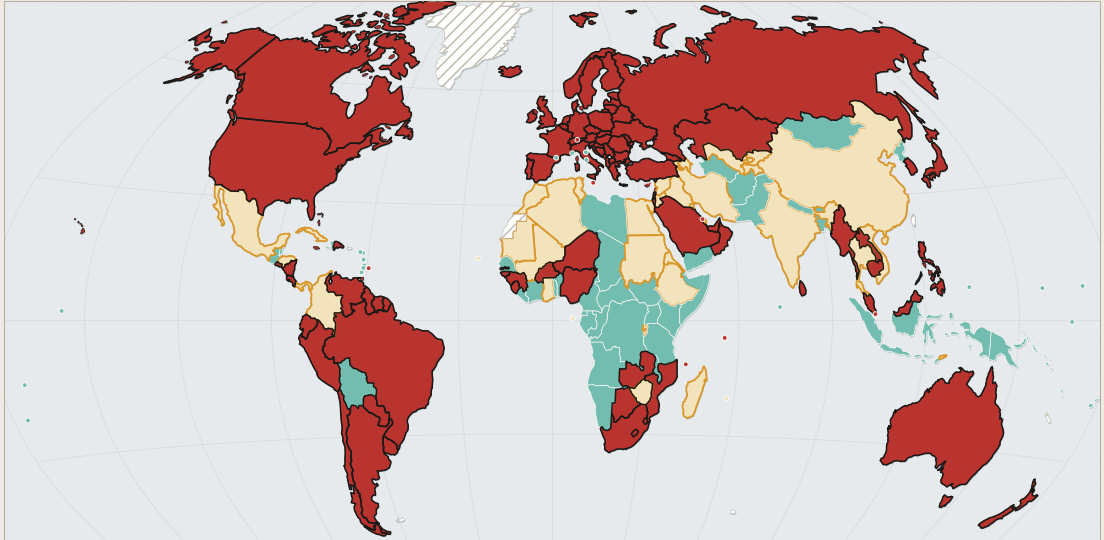
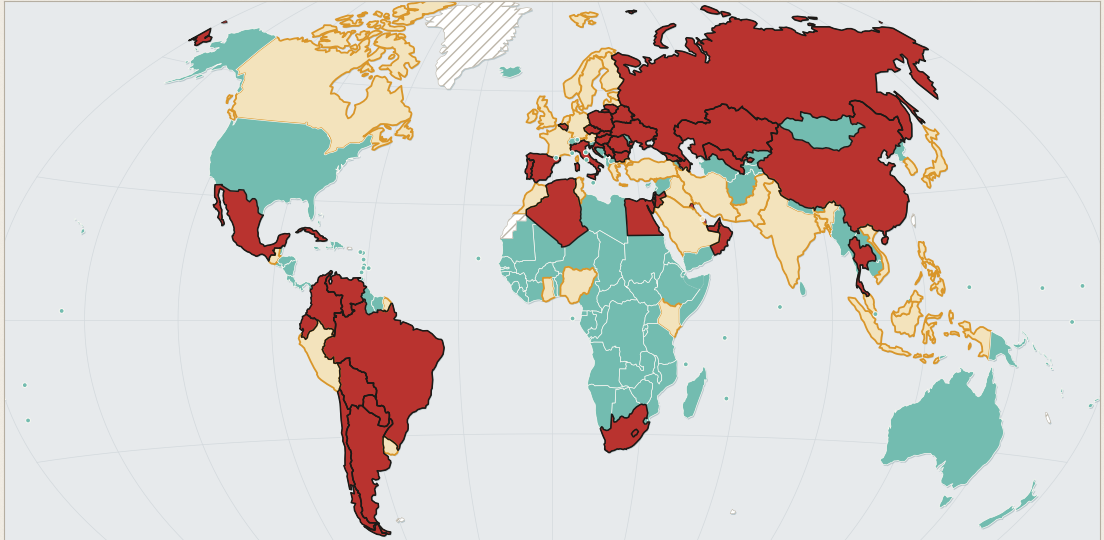
Is leaving your kids an inheritance required by law in your country?
The 2026 map of where leaving your kids an inheritance is mandatory or partly required, aired Nov 4, 2026. Sources
 Watch on TikTok
The video shows the map as it aired on Nov 4, 2026. The counts on this page are kept up to date.
Sources: Civil codes and current law-firm/notary guides, 2025-26 · Reform reporting 2024-26 · Chambers Private Wealth 2025 / Succession 2026 · How we rate it
Is it mandatory where you live? Check your countryMandatory in 38 countries
Kids keep 1/4 of their legal share, capped at DKK 1.58m each.
Source: Arveloven s. 5
Why we rate it this way
Inheritance Act s.5: tvangsarv = 1/4 of a child's statutory share; testator may cap each child's tvangsarv at DKK 1,580,000 in 2026 (Bekendtgoerelse 1416 of 24 Nov 2025; Lovguiden).
Kids are owed 2/3 of the estate, capped per child at 15 G.
Source: Arveloven 2019 s. 50
Why we rate it this way
Inheritance Act 2019 s.50: pliktdelsarv = 2/3 of the estate to children, capped at 15 times the National Insurance basic amount (G) per child (Chambers Private Wealth 2025).
Children's laglott is half their legal share, whatever the will.
Source: Aervdabalken 7:1
Why we rate it this way
Inheritance Code ch.7 s.1: laglott = half the arvslott; a child disinherited by will can claim it (Realtid 2026: proposal to abolish it is only a proposal).
Children can claim half their legal share, whatever the will says.
Source: Perintoekaari 7:1
Why we rate it this way
Code of Inheritance (40/1965) ch.7 s.1: lakiosa = half the value of the intestate share of a direct descendant (HE 77/2000; unchanged).
Disinherited kids can still claim half their legal share in cash.
Source: BW 4:64
Why we rate it this way
Civil Code Book 4 art. 64: legitieme portie = half the intestate share, a money claim against the heirs since 2003 (e-Justice NL page, KNB).
Kids keep a cash claim to half their legal share.
Source: ABGB s. 759
Why we rate it this way
ABGB s.757-759 (Erbrechts-Aenderungsgesetz 2015, in force 1 Jan 2017): descendants' Pflichtteil = half the intestate share, a money claim; parents lost theirs in 2017 (rulecalc, recordinglaw 2025).
Since 2023 kids' reserve is half their legal share (was 3/4).
Source: ZGB art. 471
Why we rate it this way
ZGB art. 471 as revised 1 Jan 2023: descendants' Pflichtteil cut from 3/4 to 1/2 of the statutory share; parents' Pflichtteil abolished (Vontobel, Swiss Life, Beobachter).
Since 2018 kids together keep at least half the estate.
Source: Civil Code (2018 reform)
Why we rate it this way
Inheritance reform in force 1 Sep 2018: children together are reserved 50% of the estate regardless of number (Chambers Succession & Estate Planning 2026, Belgium).
1 kid: half the estate. 3 or more kids: 3/4 is theirs.
Source: Code civil art. 913
Why we rate it this way
Code civil art. 913: reserve 1/2 (one child), 2/3 (two), 3/4 (three or more) (Expatica Luxembourg 2025).
Minors keep 3/4 of their legal share, adult kids 1/4.
Source: Civil Code s. 1643
Why we rate it this way
Civil Code (89/2012) s.1643: children are forced heirs; a minor gets at least 3/4 of the intestate share, an adult at least 1/4 (text in force 1 Jan 2026, podnikatel.cz).
All three legal systems give kids half their legal share.
Source: FBiH, RS, Brcko Acts 2009-17
Why we rate it this way
Inheritance is entity law, and all three legal systems covering the whole country set the same rule: children are forced heirs with half their intestate share, which a will cannot touch. FBiH Inheritance Law (80/14, 32/19) art. 28-29; Republika Srpska Inheritance Law (1/09 ... 82/19) art. 30-31; Brcko District Inheritance Law (36/17) art. 32-33 (texts on paragraf.ba, read 5 Nov 2026). Red, not amber: amber is for a rule in only one of a country's systems (GB).
Kids keep one-third of their legal share; a will can't cut it.
Source: Civil Code Ptk. 7:76
Why we rate it this way
Civil Code (2013) s.7:75-7:76: koteles resz = 1/3 of the intestate share (cut from 1/2 in 2014); disinheritance only on listed grounds (Kozjegyzok Kozlonye 2025 articles).
Kids can claim half their legal share in cash; minors 2/3.
Source: Civil Code art. 991
Why we rate it this way
Civil Code art. 991: zachowek = 1/2 of the intestate share, 2/3 for a minor or permanently incapable descendant; a money claim (prawnik.cc; court-assistant exam materials 2025).
Kids' reserve: half of what they'd inherit with no will.
Source: Civil Code art. 1088
Why we rate it this way
New Civil Code art. 1086-1088: descendants are reserved heirs; reserve = half the intestate share; a disinherited only child still gets 1/2 (notari.pro, Capital.ro).
Kids keep half their legal share; disinheriting needs a legal reason.
Source: Civil Code art. 1825
Why we rate it this way
Civil Code art. 1825: nomimi moira = half the intestate share; art. 1840 lists the only grounds to disinherit a descendant (taxheaven, odigostoupoliti).
Children keep half their legal share; disinheriting needs a reason.
Source: Civil Code TMK art. 506
Why we rate it this way
Turkish Civil Code art. 506: descendants' sakli pay = half the statutory share; disinheritance only on art. 510 grounds; tenkis action to recover (Kadim Hukuk, Harbiye Hukuk 2025).
One child keeps half the estate; two or more keep two-thirds.
Source: Civil Code art. 2159
Why we rate it this way
Civil Code art. 2159: with a spouse, legitima = 2/3; with no spouse 1/2 (one child) or 2/3 (two or more); applied by Relacao de Coimbra 23 Apr 2024.
Kids keep 1/2 (one child) or 2/3 (two or more) of the estate.
Source: Codice civile art. 537
Why we rate it this way
Civil Code art. 537: legittima 1/2 for one child, 2/3 for two or more (no spouse). Legge 182/2025 (in force 18 Dec 2025) turned recovery of donated property into a money claim; the quota stands (Brocardi 2026).
Two-thirds of the estate goes to the kids (some regions differ).
Source: Codigo Civil art. 808
Why we rate it this way
Civil Code art. 806-808: legitima of children = 2/3 (1/3 strict + 1/3 mejora). Regional law differs: Catalonia/Galicia 1/4, Aragon 1/2, Navarra almost free (Legalitas, Consumer). National rule = red.
Two-thirds of the estate is reserved for the kids.
Source: CCyC art. 2445
Why we rate it this way
Civil and Commercial Code art. 2445: descendants' legitima = 2/3; disinheritance only on statutory grounds (compilation dated Jul 2026; Cronista).
Half the estate is reserved for the kids.
Source: Civil Code art. 1242
Why we rate it this way
Civil Code art. 1240-1242 as amended by Ley 1934 de 2018: with legitimarios, half the estate is divided among them; the other half is free (Rama Judicial text, RSM).
Half the estate goes to forced heirs, a quarter more to family.
Source: Civil Code art. 1184
Why we rate it this way
Civil Code art. 1184: estate split into 4 - two quarters legitimas rigorosas, one quarter mejoras (spouse/descendants/ascendants), one quarter free (leyes-cl.com; no 2025 change found).
With kids, a will can only freely give away one-third.
Source: Codigo Civil art. 725
Why we rate it this way
Civil Code art. 725: whoever has children or descendants or a spouse may freely dispose of up to 1/3 (Casacion 856-2009); PL 3569/2022-CR to raise it to 1/2 not passed (LP Derecho, Peru Gestiona 2026).
1 kid keeps half the estate; 3 or more kids keep three-quarters.
Source: Civil Code art. 887
Why we rate it this way
Civil Code art. 887 as replaced by Ley 15.855 (1987): porcion legitimaria 1/2 (one child), 2/3 (two), 3/4 (three or more) (IMPO / Justia).
Kids keep half their legal share, whatever the will says.
Source: Codigo Civil art. 883
Why we rate it this way
Civil Code art. 883-884: legitima = half the intestate rights of descendants, of public order (TSJ Sala de Casacion Civil, Acceso a la Justicia).
Wills capped at one-third; children's shares are fixed by law.
Source: Family Code (Moudawana)
Why we rate it this way
Family Code (Law 70-03) book on wills: a will may not exceed 1/3 and no will to an heir without the heirs' consent; Book 6 fixes heirs' shares. Applies to Moroccans (Jewish Moroccans follow Hebrew law).
Wills max one-third; the rest follows fixed legal shares.
Source: Personal Status Code
Why we rate it this way
Code of Personal Status: a bequest may only cover 1/3 of the estate and not go to an heir unless the other heirs approve (FIDH inheritance report).
Wills over one-third need the heirs' consent.
Source: Personal Status Law 32/97
Why we rate it this way
Royal Decree 32/97 (Personal Status Law): a bequest may not exceed 1/3 after funeral costs and debts; more needs the heirs' consent (Times of Oman).
Wills max one-third; each child's share is fixed by law.
Source: Wills Law 71/1946
Why we rate it this way
Inheritance Law 77/1943 fixes heirs' shares; Wills Law 71/1946 caps wills at 1/3 without heirs' consent (Tamimi: Inheritance Law applies to all Egyptians; Andersen 2025, Dar al-Ifta).
Wills max one-third; heirs' fixed shares can't be overridden.
Source: Personal Status Law 2022
Why we rate it this way
Personal Status Law (Royal Decree M/73, in force 18 Jun 2022): will limited to 1/3 to a non-heir; more, or to an heir, needs heirs' consent (Al Tamimi, Commoner Law 2026).
A will over one-third needs the heirs' consent.
Source: Civil Code art. 843
Why we rate it this way
Civil Code art. 843: a will over 1/3 of the estate is valid only with heirs' consent (Filodiritto, IAU journal articles); heirs' shares fixed in arts. 861-949.
Wills max one-third; children inherit by fixed shares.
Source: Personal Status Law 188/1959
Why we rate it this way
Personal Status Law 188/1959: optional will capped at 1/3, inheritance by fixed shares; applies to all Iraqis except exempted Christian/Jewish minorities (Emory profile, TIU 2025 paper).
Disinherited kids still get half their legal share - in cash.
Source: BGB s. 2303
Why we rate it this way
BGB s.2303: a child excluded by will can demand the Pflichtteil = half the value of the intestate share, a money claim; withdrawal only for grave misconduct (s.2333) (advocado 2026, bgb.kommentar.de).
Kids keep half their legal share, even if a will cuts them out.
Source: Civil Code art. 1112
Why we rate it this way
Civil Code art. 1112(1): children's yuryubun = 1/2 of the statutory share. Constitutional Court 25 Apr 2024 (2020Hun-Ga4) struck only siblings' yuryubun and ordered loss grounds for abusive heirs; legislature amended in 2026 (Hankyung Feb 2026, Lawtimes). Children's share stands.
Kids together can claim half the estate in cash.
Source: Civil Code art. 1042
Why we rate it this way
Civil Code art. 1042: when children inherit, iryubun = 1/2 of the estate shared by statutory shares; since 1 Jul 2019 a money claim (iryubun shingaigaku seikyu) (mc-law.jp, office-tree.jp).
3 or more kids? 3/4 of your estate is reserved for them.
Source: Code civil art. 913
Why we rate it this way
Code civil art. 913: reserve 1/2 (one child), 2/3 (two), 3/4 (three or more); quotite disponible 1/4 with 3+ (notaires.fr, Actu-Juridique, Bourse Inside 2026). Law of 24 Aug 2021 added a clawback against foreign laws.
By law, half of everything goes to forced heirs like your kids.
Source: Codigo Civil art. 1.846
Why we rate it this way
Civil Code art. 1.845-1.846: descendants, ascendants and spouse are herdeiros necessarios and own half the estate (a legitima); art. 1.789 limits wills to the other half. PL 4/2025 (Civil Code reform, in the Senate Jan 2026) keeps descendants as forced heirs (Mattos Filho, CNB/SP Dec 2025).
Kids get half the estate by law; a will can't cut them out.
Source: Civil Code art. 888
Why we rate it this way
Civil Code art. 887-888: legitimate children's legitime = 1/2 of the estate; disinheritance only for causes in art. 919; SC Macalinao v. Macalinao (2024): legitimes come first (Respicio 2025, NDV Law).
Everywhere not listed here, leaving your kids an inheritance is not required.
Partly mandatory in 14 countries
England: free to will. Scotland: kids can claim 1/3-1/2 of movables.
Source: Succession (Scotland) Act
Why we rate it this way
England, Wales and NI: freedom of testation (only a discretionary Inheritance (Provision for Family and Dependants) Act 1975 claim). Scotland: children's legal rights (legitim) = 1/3 of the moveable estate with a surviving spouse, 1/2 without, will or no will (Thorntons/Weightmans 2025; Scottish Government dropped reform). One of the UK's three legal systems = amber.
Only minor or disabled kids keep half their legal share.
Source: Civil Code art. 1149
Why we rate it this way
Civil Code art. 1149: minor children and disabled adult children inherit at least half their intestate share regardless of the will; able adult children can be fully disinherited. No 2025 change found (Gosuslugi guidance live 2026). Minors/disabled only = amber.
Minor and disabled adult kids keep half their legal share.
Source: Civil Code art. 1241
Why we rate it this way
Civil Code art. 1241: minor children, disabled adult children (and disabled spouse/parents) get half their intestate share regardless of the will; court may reduce it. No wartime/martial-law change found (7eminar, dtkt.ua, court.gov.ua 2025). Minors/disabled only = amber.
Only minor or disabled kids keep half their legal share.
Source: Civil Code art. 1069
Why we rate it this way
Civil Code art. 1069: minor or disabled children (and disabled spouse/parents) inherit at least half their intestate share regardless of the will; Supreme Court ruling 14 Aug 2024 (6001-24-00-3gp/320) on its purpose. Minors/disabled only = amber.
Minor or disabled adult kids still get 2/3 of a legal share.
Source: Civil Code 2015 art. 644
Why we rate it this way
Civil Code 2015 art. 644: minor children, adult children unable to work, parents and spouse receive 2/3 of an intestate share even if the will omits them (thuvienphapluat, luatvietnam). Able adult children can be left out = amber.
Only heirs unable to work and with no income must get a share.
Source: Civil Code art. 1141
Why we rate it this way
Civil Code art. 1141: a will must reserve a necessary share for heirs who lack the ability to work AND have no source of income; courts apply it to minor children (Shanghai case, 160,000 yuan reserved for a minor). Otherwise free testation = amber.
Muslims: wills max one-third. Hindus and others can will freely.
Source: Muslim personal law
Why we rate it this way
Indian Succession Act 1925 / Hindu Succession Act: free testation for Hindus, Christians, Parsis etc. Muslim personal law caps a will at 1/3 without heirs' consent; Supreme Court issued notice on a 2025 petition challenging the cap (LiveLaw 2025). Applies to one community = amber.
Muslim estates: fixed shares, wills max one-third.
Source: Shariat Application Act
Why we rate it this way
Muslim Personal Law (Shariat) Application Act 1962: Muslim succession follows fixed Islamic shares, wills capped at 1/3 to non-heirs; Christians and Hindus fall under the Succession Act 1925 (free testation). Applies to the Muslim community only = amber.
Muslim estates: fixed shares; other faiths follow other laws.
Source: Muslim personal law
Why we rate it this way
Muslim Personal Law (Shariat) Application Act 1937 (still applied): fixed shares, wills max 1/3 for Muslims; Hindu law and the Succession Act 1925 for others. One community = amber.
Muslims: faraid shares, wills max 1/3. Others can will freely.
Source: State Islamic law; Wills Act
Why we rate it this way
Muslim estates follow faraid under state Islamic law (wasiat capped at 1/3; Muslim Wills enactments, e.g. Selangor 1999); non-Muslims under the Wills Act 1959 have free testation (only a Distribution/Family provision claim). One community = amber.
Muslim estates: wills max one-third, rest by fixed shares.
Source: Kompilasi Hukum Islam
Why we rate it this way
Kompilasi Hukum Islam (Inpres 1/1991) art. 195: a will may not exceed 1/3 without heirs' consent, applied by religious courts to Muslims; non-Muslims follow the civil code (BW) or adat law. Plural system, one community = amber.
Muslim estates: wills max 1/3; state wills laws bow to custom.
Source: Wills laws; Islamic law
Why we rate it this way
Wills Act 1837 / state Wills Laws give broad freedom 'subject to' customary and Islamic law; for Muslims a will is limited to 1/3 with the rest by fixed shares (Mondaq 2025, LawPavilion). Community/state-dependent = amber.
Muslims: wills max one-third; non-Muslims may follow own rules.
Source: Family Law 22/2006
Why we rate it this way
Law No. 22 of 2006 (Family Law): Islamic succession and the 1/3 will limit for Muslims; art. 4 lets non-Muslims apply their own rules. One community = amber.
Muslims: wills max one-third. Non-Muslims can opt for free wills.
Source: Decree-Law 41/2024; 41/2022
Why we rate it this way
Federal Decree-Law 41/2024 (Personal Status, in force 15 Apr 2025): Islamic shares and the 1/3 will limit for Muslims; Federal Decree-Law 41/2022 on Civil Personal Status lets non-Muslims will freely. One community = amber.
Show the 143 countries where it is not required
No qualifying national law was found for these countries in the sources under Sources.
All 195 countries: is leaving your kids an inheritance required by law?
 AfghanistanNot required
 AlbaniaNot required
 AlgeriaNot required
 AndorraNot required
 AngolaNot required
 Antigua & BarbudaNot required
 ArgentinaMandatory
 ArmeniaNot required
 AustraliaNot required
 AustriaMandatory
 AzerbaijanNot required
 BahamasNot required
 BahrainNot required
 BangladeshPartly
 BarbadosNot required
 BelarusNot required
 BelgiumMandatory
 BelizeNot required
 BeninNot required
 BhutanNot required
 BoliviaNot required
 Bosnia & HerzegovinaMandatory
 BotswanaNot required
 BrazilMandatory
 BruneiNot required
 BulgariaNot required
 Burkina FasoNot required
 BurundiNot required
 CambodiaNot required
 CameroonNot required
 CanadaNot required
 Cape VerdeNot required
 Central African RepublicNot required
 ChadNot required
 ChileMandatory
 ChinaPartly
 ColombiaMandatory
 ComorosNot required
 Congo - BrazzavilleNot required
 Congo - KinshasaNot required
 Costa RicaNot required
 CroatiaNot required
 CubaNot required
 CyprusNot required
 CzechiaMandatory
 Côte d’IvoireNot required
 DenmarkMandatory
 DjiboutiNot required
 DominicaNot required
 Dominican RepublicNot required
 EcuadorNot required
 EgyptMandatory
 El SalvadorNot required
 Equatorial GuineaNot required
 EritreaNot required
 EstoniaNot required
 EswatiniNot required
 EthiopiaNot required
 FijiNot required
 FinlandMandatory
 FranceMandatory
 GabonNot required
 GambiaNot required
 GeorgiaNot required
 GermanyMandatory
 GhanaNot required
 GreeceMandatory
 GrenadaNot required
 GuatemalaNot required
 GuineaNot required
 Guinea-BissauNot required
 GuyanaNot required
 HaitiNot required
 HondurasNot required
 HungaryMandatory
 IcelandNot required
 IndiaPartly
 IndonesiaPartly
 IranMandatory
 IraqMandatory
 IrelandNot required
 IsraelNot required
 ItalyMandatory
 JamaicaNot required
 JapanMandatory
 JordanNot required
 KazakhstanPartly
 KenyaNot required
 KiribatiNot required
 KuwaitNot required
 KyrgyzstanNot required
 LaosNot required
 LatviaNot required
 LebanonNot required
 LesothoNot required
 LiberiaNot required
 LibyaNot required
 LiechtensteinNot required
 LithuaniaNot required
 LuxembourgMandatory
 MadagascarNot required
 MalawiNot required
 MalaysiaPartly
 MaldivesNot required
 MaliNot required
 MaltaNot required
 Marshall IslandsNot required
 MauritaniaNot required
 MauritiusNot required
 MexicoNot required
 MicronesiaNot required
 MoldovaNot required
 MonacoNot required
 MongoliaNot required
 MontenegroNot required
 MoroccoMandatory
 MozambiqueNot required
 Myanmar (Burma)Not required
 NamibiaNot required
 NauruNot required
 NepalNot required
 NetherlandsMandatory
 New ZealandNot required
 NicaraguaNot required
 NigerNot required
 NigeriaPartly
 North KoreaNot required
 North MacedoniaNot required
 NorwayMandatory
 OmanMandatory
 PakistanPartly
 PalauNot required
 Palestinian TerritoriesNot required
 PanamaNot required
 Papua New GuineaNot required
 ParaguayNot required
 PeruMandatory
 PhilippinesMandatory
 PolandMandatory
 PortugalMandatory
 QatarPartly
 RomaniaMandatory
 RussiaPartly
 RwandaNot required
 SamoaNot required
 San MarinoNot required
 Saudi ArabiaMandatory
 SenegalNot required
 SerbiaNot required
 SeychellesNot required
 Sierra LeoneNot required
 SingaporeNot required
 SlovakiaNot required
 SloveniaNot required
 Solomon IslandsNot required
 SomaliaNot required
 South AfricaNot required
 South KoreaMandatory
 South SudanNot required
 SpainMandatory
 Sri LankaNot required
 St. Kitts & NevisNot required
 St. LuciaNot required
 St. Vincent & GrenadinesNot required
 SudanNot required
 SurinameNot required
 SwedenMandatory
 SwitzerlandMandatory
 SyriaNot required
 São Tomé & PríncipeNot required
 TajikistanNot required
 TanzaniaNot required
 ThailandNot required
 Timor-LesteNot required
 TogoNot required
 TongaNot required
 Trinidad & TobagoNot required
 TunisiaMandatory
 TurkmenistanNot required
 TuvaluNot required
 TürkiyeMandatory
 UgandaNot required
 UkrainePartly
 United Arab EmiratesPartly
 United KingdomPartly
 United StatesNot required
 UruguayMandatory
 UzbekistanNot required
 VanuatuNot required
 Vatican CityNot required
 VenezuelaMandatory
 VietnamPartly
 YemenNot required
 ZambiaNot required
 ZimbabweNot required
Sources
Red means national law reserves part of a parent's estate for the children and a will can't take it away. Amber means only minor or disabled children are protected, only one region, or only one religious community. Green means you can leave everything to anyone.
- Civil codes and current law-firm/notary guides, 2025-26: Code civil 913, BGB 2303, ZGB 471 (2023), CC 1042 (JP), CC 1112 (KR), Civil Code 888 (PH), CC 1.846 (BR)
- Reform reporting 2024-26: KR Constitutional Court 25 Apr 2024 + 2026 amendment; IT Legge 182/2025; BR PL 4/2025; DK amount 2026
- Chambers Private Wealth 2025 / Succession 2026: Belgium, Norway and comparative forced-heirship chapters
Each country in the lists names the source for its rule; countries not listed had no qualifying national law in these sources. Laws as of Nov 5, 2026. We map the law on the books, not how well it is enforced.
Free for articles, lessons and videos. Just credit One Map with a link.
Press, teachers & creators →