All maps › Made-Up Baby Names
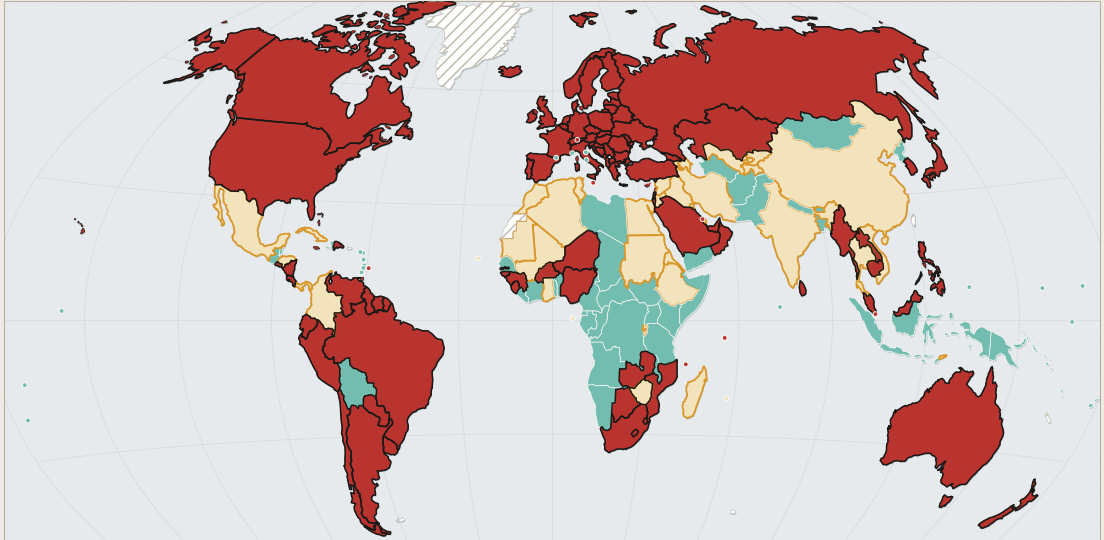
Are made-Up Baby Names banned in your country?
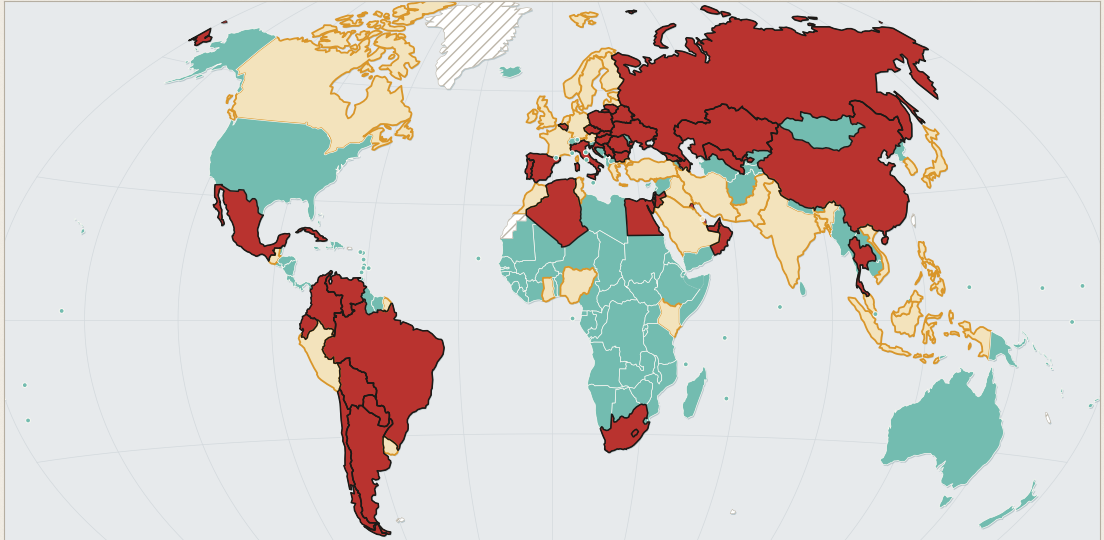
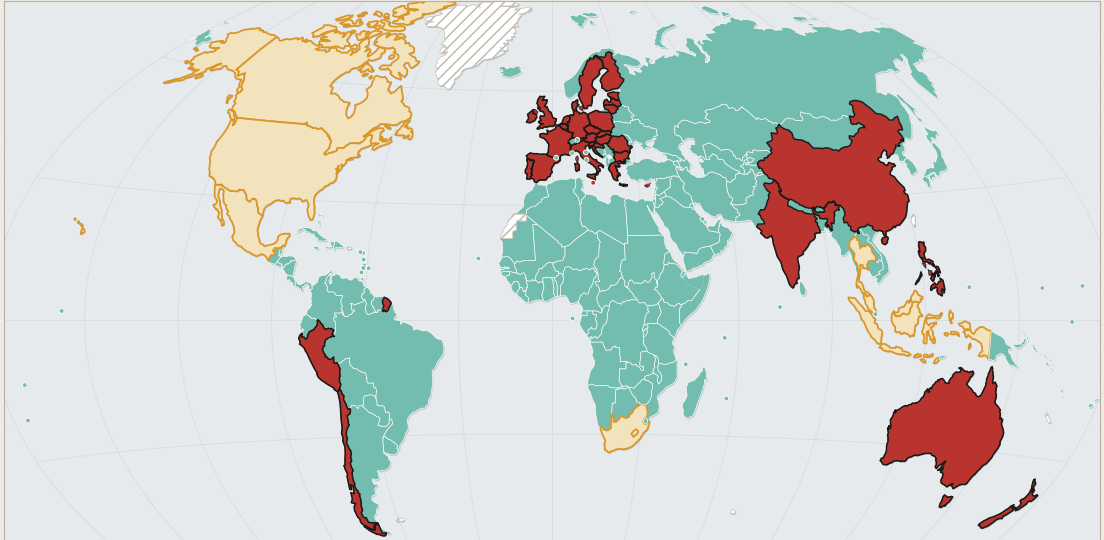
The 2026 map of where made-Up Baby Names are banned or restricted, aired Nov 8, 2026. Sources
Sources: National statutes and registries · RFE/RL, Daily News Hungary, Arecenze · Taadol, Iran International · How we rate it
Is it banned where you live? Check your countryBanned in 7 countries
Names come from a permitted list; others need committee approval.
Source: Sabt-e Ahval list, 2025
Why we rate it this way
Civil Registration Organisation keeps a list of permitted names; names off it go to a naming committee; Law of 1996 bans foreign names. Taadol, 6 Aug 2025: 'Kourosh' confirmed on the permitted list. April 2025: newborn 'Guntay' refused (HRANA via Iran International).
Names must be on the state list; 1,745 cut in the 2026 revision.
Source: RFE/RL, 21 Jun 2026
Why we rate it this way
Registry of Tajik National Names (2016 amendments to Family and Civil Registration laws): a registrar refused a name off the list; families must apply to the State Language Committee. RFE/RL 21 Jun 2026: revision approved in Feb removes 1,745 of 4,056 names and adds 965.
New names must be approved by a state Naming Committee.
Source: Althingi bill 158/81, 2026
Why we rate it this way
Personal Names Act 45/1996: a given name must be on the Personal Names Register or approved by the Naming Committee (Mannanafnanefnd). Bill 81 (158th session, filed 14 Sep 2026, in committee) keeps the committee - its sponsor said on 17 Sep 2026 he is not proposing to abolish it.
Names must be Portuguese names held in the civil registry database.
Source: IRN, read Oct 2026
Why we rate it this way
Codigo do Registo Civil art. 103(2)(a): names of Portuguese children must be Portuguese, from national onomastics or adapted to Portuguese. IRN's live page (read Oct 2026): parents 'must choose Portuguese names that are in the Civil Registry database'. Foreign-parent exceptions.
Since Sept 2025 babies need a name from a 4,703-name state list.
Source: Ministerial decree, Sep 2025
Why we rate it this way
Ministerial decree in force 11 Sep 2025: parents must choose from 4,703 names (2,691 female, 2,012 male) incl. 13 minority lists (Daily News Hungary 10 Sep 2025). 13 Sep 2026: list still based on that decree; new ministry plans to return decisions to linguists.
Only names that already exist may be registered.
Source: Zakon 301/2000 s62; 2026
Why we rate it this way
Act 301/2000 s62(1): only an existing name may be registered; in doubt parents must bring an expert opinion. Arecenze 10 Oct 2026: a name invented from scratch may not be registered; the Czech Language Institute issued 366 opinions in 2025.
Names must be on the approved list or get state approval first.
Source: Navneloven; BEK 1753/2024
Why we rate it this way
Name Act (LBK 1074 of 9 Aug 2023): a first name must be on Familieretshuset's approved list or be approved on application; newly coined names go to Familieretshuset (Order BEK 1753 of 30 Dec 2024). Familieretshuset annual report 2025 lists name approvals as a task.
Everywhere not listed here, made-Up Baby Names are allowed.
Restricted in 35 countries
No list, but names that would burden the child are refused.
Source: Navneloven 2002
Why we rate it this way
Name Act 2002 (Skatteetaten applies it): a first name that could be a significant disadvantage to the bearer, or that is a surname, is refused; no approved-names list (snl.no, uib.no fornavnslister, read Oct 2026).
Tax agency can refuse offensive or unsuitable first names.
Source: Lag 2016:1013 s28
Why we rate it this way
Personal Names Act 2016:1013 s28 (in force 1 Jul 2017): Skatteverket refuses first names that can offend, cause discomfort or are otherwise unsuitable; HFD 2019 ref. 57 approved Ford, Prins and J. No list.
Registrar refuses improper names; a court has the final say.
Source: BW 1:4; government.nl
Why we rate it this way
Civil Code art. 1:4: the registrar refuses an improper (ongepast) given name or one equal to an existing surname, then the court decides (government.nl FAQ on given names, read Oct 2026).
Names that clearly harm the child are refused; no list.
Source: ZStV art. 37c
Why we rate it this way
Civil Status Ordinance (ZStV) art. 37c: the registrar refuses first names that clearly harm the child's interests; no approved list.
Free choice, but a judge can strike a name that harms the child.
Source: Code civil art. 57
Why we rate it this way
Code civil art. 57 (since law 93-22 of 8 Jan 1993): free choice; if a name seems against the child's interest the registrar tells the prosecutor, who can ask a family judge to delete it. Douai appeal ruling 3 Jul 2025 applied it.
Ridiculous or shameful names and a living father's name are banned.
Source: DPR 396/2000 art. 34
Why we rate it this way
DPR 396/2000 art. 34: a child may not get the name of a living father or living sibling, a surname as first name, or a ridiculous or shameful name.
Free choice; only names against the child's dignity are refused.
Source: Ley 20/2011 art. 51
Why we rate it this way
Ley 20/2011 del Registro Civil art. 51: free choice, limits read restrictively; no names against the person's dignity or that confuse identity; max two simple or one compound name. No official list (consumer.es, esdiario Dec 2025).
No list. Registrars refuse only names that endanger the child.
Source: Standesamt; Bundestag WD
Why we rate it this way
No statute or list: registry offices refuse a first name only if it endangers the child's welfare (Kindeswohl), per case law and customary law (Bundestag research service, as reported by infranken.de 2024). Parents need not justify unusual names.
Names must be 'in use' as first names; harmful ones refused.
Source: PStG 2013 s13(2)
Why we rate it this way
Personenstandsgesetz 2013 s13(2): names not in use as first names (nicht gebraeuchlich) or harmful to the child must be refused; no approved list and practice is lax (derstandard; jusline). No 2025-26 source found, so amber - possible red, see recheck.
Ridiculous, indecent or pet-form names are refused.
Source: Dz.U. 2025 poz. 594
Why we rate it this way
Civil Status Records Act 2014, consolidated text Dz.U. 2025 poz. 594 (24 Mar 2025): registrar refuses ridiculous, indecent or diminutive names or ones that do not show sex (prawo.pl).
Derogatory or impersonal names may not be given.
Source: Zakon 300/1993 s2
Why we rate it this way
Name and Surname Act 300/1993 s2: a name may not be derogatory or impersonal, a living sibling's first name, or of the other sex; foreign names allowed (slov-lex version from 1 Jan 2023).
Registrars must refuse indecent or ridiculous first names.
Source: Legea 119/1996 art. 18
Why we rate it this way
Legea 119/1996 art. 18(2) and Civil Code art. 84(2): the registrar must refuse indecent or ridiculous first names; max three words since Legea 105/2022 (capital.ro, playtech.ro 2025).
Names with digits, symbols, ranks or swear words are refused.
Source: Family Code art. 58
Why we rate it this way
Family Code art. 58 and civil-status law art. 18 as amended: names made of digits, symbols, ranks, titles or obscene words are refused (consultant.ru, read Oct 2026).
Names against 'national culture' or morals cannot be given.
Source: Law 5490 art. 39
Why we rate it this way
Population Services Law 5490 art. 39 (amended by Law 7039, 2017): no name contrary to national culture or moral rules, or insulting, may be given; no list (hukukihaber, NVI circulars).
A state list bans names; others are still allowed.
Source: Name commission lists
Why we rate it this way
A state commission drew up green/yellow/red name lists; over 200 names were proscribed by 2015 (Caucasian Knot 2010; naming-law summaries). No 2025-26 confirmation found.
Minister can refuse names that would mislead or offend.
Source: Names Law 1956
Why we rate it this way
Names Law 1956: the interior minister may refuse a name that could mislead or harm the public or its feelings (Kol Zchut; Library of Congress blog 2017). No list.
No fixed list, but titles and names against Sharia are refused.
Source: Civil Affairs criteria
Why we rate it this way
Civil Affairs says there is no fixed banned list but criteria: titles (e.g. Al-Sayyid) and names against Sharia are not registered (Gulf News; Okaz). The 2014 50-name list is not current policy.
Offensive names banned; compound names max two words.
Source: Fed. Law 10/2022
Why we rate it this way
Federal Law 3/2016 (Wadeema) bars offensive names; Federal Law 10/2022: a compound name may not exceed two words (Indian Embassy Abu Dhabi advisory, 26 Nov 2025).
Names against public norms, or compound names, are refused.
Source: Law 3/2016
Why we rate it this way
Birth and death registration Law 3/2016: the name may not be a sibling's or a compound name and may not be against public norms (Gulf Times).
Names insulting the child or religion are banned; no list.
Source: Law 143/1994
Why we rate it this way
Civil Status Law 143/1994 and the Child Law bar names that insult the child or offend religion, with a fine; a bill to toughen penalties was reported 2 Aug 2026 (Parlmany).
Ironic or immoral names and titles are refused; no list.
Source: Law 36-21
Why we rate it this way
Civil Status Law 36-21: names may not offend morals or public order, be ironic, a surname, a place or tribe; titles Moulay/Sidi/Lalla barred. Decree 2.22.04: registrars must accept and refer disputes to a High Commission (TelQuel 14 Jul 2023).
Names must 'sound Algerian'; a national lexicon guides registrars.
Source: Ord. 70-20; Decree 81-26
Why we rate it this way
Ordinance 70-20: names must sound Algerian and be consecrated by usage or tradition (non-Muslim parents exempt); Decree 81-26 sets a national names lexicon. HCA (24H Algerie, 11 Jan 2024): some communes refuse names off the list. No 2025-26 source -> amber, see recheck.
Offensive names, titles and very long names are declined.
Source: BDMRR Act 2021
Why we rate it this way
Births, Deaths, Marriages and Relationships Registration Act 2021: the Registrar-General declines offensive names, titles and over-long names; declined names for 2024 published (SunLive, 9 Oct 2025).
'Extravagant' names are refused; no official list.
Source: CCyC art. 63
Why we rate it this way
Codigo Civil y Comercial art. 63(b): no extravagant first names, no more than three, no surnames as names; indigenous and foreign names allowed (Mendoza registrars' manual, Jun 2025).
Registrars refuse names that expose the child to ridicule.
Source: Lei 6.015 art. 55
Why we rate it this way
Lei 6.015/1973 art. 55 s1 (text from Lei 14.382/2022): the registrar will not register first names that expose the bearer to ridicule; disputes go to a judge. No list (Migalhas, Arpen-SP).
Extravagant or ridiculous names can be blocked by a judge.
Source: Ley 4.808 art. 31
Why we rate it this way
Ley 4.808 art. 31 (added by Ley 17.344, 1970): no extravagant, ridiculous or sexually ambiguous names; the registrar sends disputes to a judge (iura.cl).
Officials may refuse names that degrade the child.
Source: Registraduria 2021
Why we rate it this way
Registraduria Nacional (Sep 2021 notice): officials may decline names that offend the child's dignity, e.g. Miperro, Satanas, Judas; no symbols or numerals (El Universal, El Espectador).
Names that harm dignity or confuse sex can be refused.
Source: Ley 4-23 art. 74
Why we rate it this way
Ley Organica 4-23 de Actos del Estado Civil (Gaceta 11096, 20 Jan 2023) art. 74: officers may refuse names that harm dignity or confuse identity or sex (El Nuevo Diario).
Titles are banned; fruit, colour and animal names discouraged.
Source: JPN; The Star Jul 2026
Why we rate it this way
Births and Deaths Registration Act 1957 s16: Registrar-General may reject names; JPN guidelines bar titles and honorifics and discourage fruit, colour and animal names (The Star fact-check, 31 Jul 2026).
Names need two words, max 60 letters, and no bad meaning.
Source: Permendagri 73/2022
Why we rate it this way
Home Affairs Regulation 73/2022 (from 21 Apr 2022): names at least two words, max 60 characters, no abbreviations or negative meaning; Dukcapil restated it Jul 2025 (detik.com).
Names must be in Vietnamese or a minority language; no digits.
Source: Civil Code art. 26
Why we rate it this way
Civil Code 2015 art. 26(3): a Vietnamese citizen's name must be in Vietnamese or an ethnic-minority language, with no numbers or symbols; MoJ letter 6350/BTP-PLDSKT, 9 Oct 2025.
Names may not resemble royal titles or have rude meanings.
Source: Personal Names Act 1962
Why we rate it this way
Personal Names Act B.E. 2505: names may not resemble royal names or titles or carry rude meanings; registrar discretion (Library of Congress blog, Jul 2025; Khaosod 2014).
Names must use characters the police database can store.
Source: Hukou database rules
Why we rate it this way
Public security household registration only records characters its database holds, so rare characters are refused; no names list (Naming laws in China; CS Monitor 2010). Xinjiang's 2017 religious-name ban is regional.
Hanja in names must come from an official list; Hangul is free.
Source: Const. Court May 2026
Why we rate it this way
Family Relationship Registration Act: given names must use Hangul or Supreme Court name hanja (about 9,389 characters); Constitutional Court upheld the limit (Herald, 2 May 2026). Hangul names are free.
Name kanji must come from an approved list; readings are checked.
Source: Koseki Act; Al Jazeera
Why we rate it this way
Family Register Act: name kanji must be joyo or jinmeiyo characters; since 26 May 2025 the register records a reading that must be generally recognised (Al Jazeera 3 Jun 2025; Inagi City). Invented readings face questions, not a list of names.
Show the 153 countries where it is allowed
No qualifying national law was found for these countries in the sources under Sources.
All 195 countries: are made-up baby names banned?
 AfghanistanAllowed
 AlbaniaAllowed
 AlgeriaRestricted
 AndorraAllowed
 AngolaAllowed
 Antigua & BarbudaAllowed
 ArgentinaRestricted
 ArmeniaAllowed
 AustraliaAllowed
 AustriaRestricted
 AzerbaijanRestricted
 BahamasAllowed
 BahrainAllowed
 BangladeshAllowed
 BarbadosAllowed
 BelarusAllowed
 BelgiumAllowed
 BelizeAllowed
 BeninAllowed
 BhutanAllowed
 BoliviaAllowed
 Bosnia & HerzegovinaAllowed
 BotswanaAllowed
 BrazilRestricted
 BruneiAllowed
 BulgariaAllowed
 Burkina FasoAllowed
 BurundiAllowed
 CambodiaAllowed
 CameroonAllowed
 CanadaAllowed
 Cape VerdeAllowed
 Central African RepublicAllowed
 ChadAllowed
 ChileRestricted
 ChinaRestricted
 ColombiaRestricted
 ComorosAllowed
 Congo - BrazzavilleAllowed
 Congo - KinshasaAllowed
 Costa RicaAllowed
 CroatiaAllowed
 CubaAllowed
 CyprusAllowed
 CzechiaBanned
 Côte d’IvoireAllowed
 DenmarkBanned
 DjiboutiAllowed
 DominicaAllowed
 Dominican RepublicRestricted
 EcuadorAllowed
 EgyptRestricted
 El SalvadorAllowed
 Equatorial GuineaAllowed
 EritreaAllowed
 EstoniaAllowed
 EswatiniAllowed
 EthiopiaAllowed
 FijiAllowed
 FinlandAllowed
 FranceRestricted
 GabonAllowed
 GambiaAllowed
 GeorgiaAllowed
 GermanyRestricted
 GhanaAllowed
 GreeceAllowed
 GrenadaAllowed
 GuatemalaAllowed
 GuineaAllowed
 Guinea-BissauAllowed
 GuyanaAllowed
 HaitiAllowed
 HondurasAllowed
 HungaryBanned
 IcelandBanned
 IndiaAllowed
 IndonesiaRestricted
 IranBanned
 IraqAllowed
 IrelandAllowed
 IsraelRestricted
 ItalyRestricted
 JamaicaAllowed
 JapanRestricted
 JordanAllowed
 KazakhstanAllowed
 KenyaAllowed
 KiribatiAllowed
 KuwaitAllowed
 KyrgyzstanAllowed
 LaosAllowed
 LatviaAllowed
 LebanonAllowed
 LesothoAllowed
 LiberiaAllowed
 LibyaAllowed
 LiechtensteinAllowed
 LithuaniaAllowed
 LuxembourgAllowed
 MadagascarAllowed
 MalawiAllowed
 MalaysiaRestricted
 MaldivesAllowed
 MaliAllowed
 MaltaAllowed
 Marshall IslandsAllowed
 MauritaniaAllowed
 MauritiusAllowed
 MexicoAllowed
 MicronesiaAllowed
 MoldovaAllowed
 MonacoAllowed
 MongoliaAllowed
 MontenegroAllowed
 MoroccoRestricted
 MozambiqueAllowed
 Myanmar (Burma)Allowed
 NamibiaAllowed
 NauruAllowed
 NepalAllowed
 NetherlandsRestricted
 New ZealandRestricted
 NicaraguaAllowed
 NigerAllowed
 NigeriaAllowed
 North KoreaAllowed
 North MacedoniaAllowed
 NorwayRestricted
 OmanAllowed
 PakistanAllowed
 PalauAllowed
 Palestinian TerritoriesAllowed
 PanamaAllowed
 Papua New GuineaAllowed
 ParaguayAllowed
 PeruAllowed
 PhilippinesAllowed
 PolandRestricted
 PortugalBanned
 QatarRestricted
 RomaniaRestricted
 RussiaRestricted
 RwandaAllowed
 SamoaAllowed
 San MarinoAllowed
 Saudi ArabiaRestricted
 SenegalAllowed
 SerbiaAllowed
 SeychellesAllowed
 Sierra LeoneAllowed
 SingaporeAllowed
 SlovakiaRestricted
 SloveniaAllowed
 Solomon IslandsAllowed
 SomaliaAllowed
 South AfricaAllowed
 South KoreaRestricted
 South SudanAllowed
 SpainRestricted
 Sri LankaAllowed
 St. Kitts & NevisAllowed
 St. LuciaAllowed
 St. Vincent & GrenadinesAllowed
 SudanAllowed
 SurinameAllowed
 SwedenRestricted
 SwitzerlandRestricted
 SyriaAllowed
 São Tomé & PríncipeAllowed
 TajikistanBanned
 TanzaniaAllowed
 ThailandRestricted
 Timor-LesteAllowed
 TogoAllowed
 TongaAllowed
 Trinidad & TobagoAllowed
 TunisiaAllowed
 TurkmenistanAllowed
 TuvaluAllowed
 TürkiyeRestricted
 UgandaAllowed
 UkraineAllowed
 United Arab EmiratesRestricted
 United KingdomAllowed
 United StatesAllowed
 UruguayAllowed
 UzbekistanAllowed
 VanuatuAllowed
 Vatican CityAllowed
 VenezuelaAllowed
 VietnamRestricted
 YemenAllowed
 ZambiaAllowed
 ZimbabweAllowed
Sources
Red means the law makes a baby's first name come from an approved list or get state approval first, so invented names are refused nationwide. Amber means registrars can only refuse offensive or harmful names, or a few banned ones. State and provincial rules do not count.
- National statutes and registries: Althingi, retsinformation/lovguiden, IRN, Czech Act 301/2000, Familieretshuset, read Oct 2026
- RFE/RL, Daily News Hungary, Arecenze: 2025-26 reporting on the Tajik, Hungarian and Czech name rules
- Taadol, Iran International: Iran's permitted-names list (Aug 2025) and a 2025 refusal
Each country in the lists names the source for its rule; countries not listed had no qualifying national law in these sources. Laws as of October 2026. We map the law on the books, not how well it is enforced.
Free for articles, lessons and videos. Just credit One Map with a link.
Press, teachers & creators →