All maps › Family & kids › Charging a 10-year-old
Is charging a 10-year-old banned in your country?
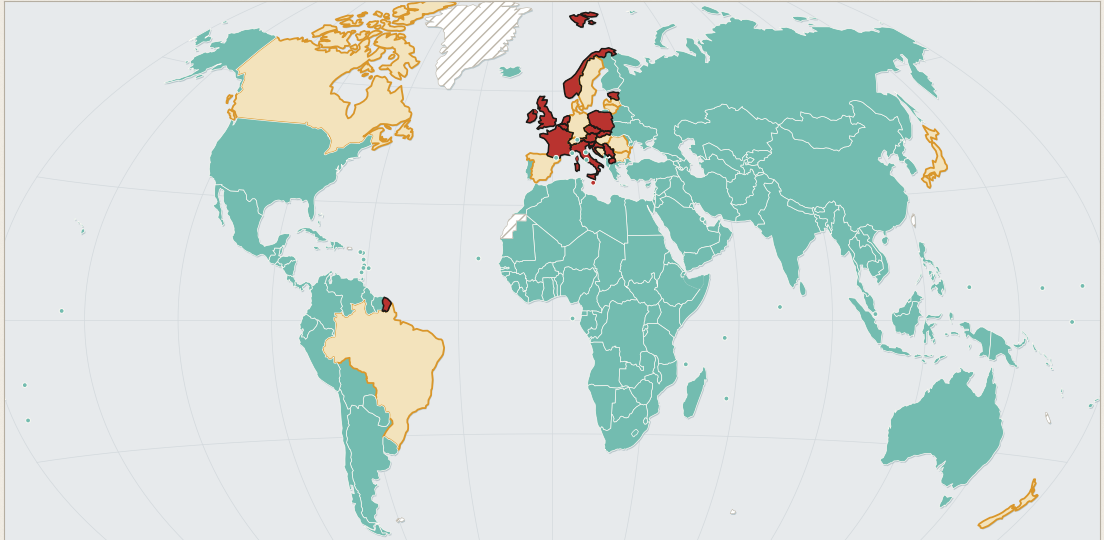
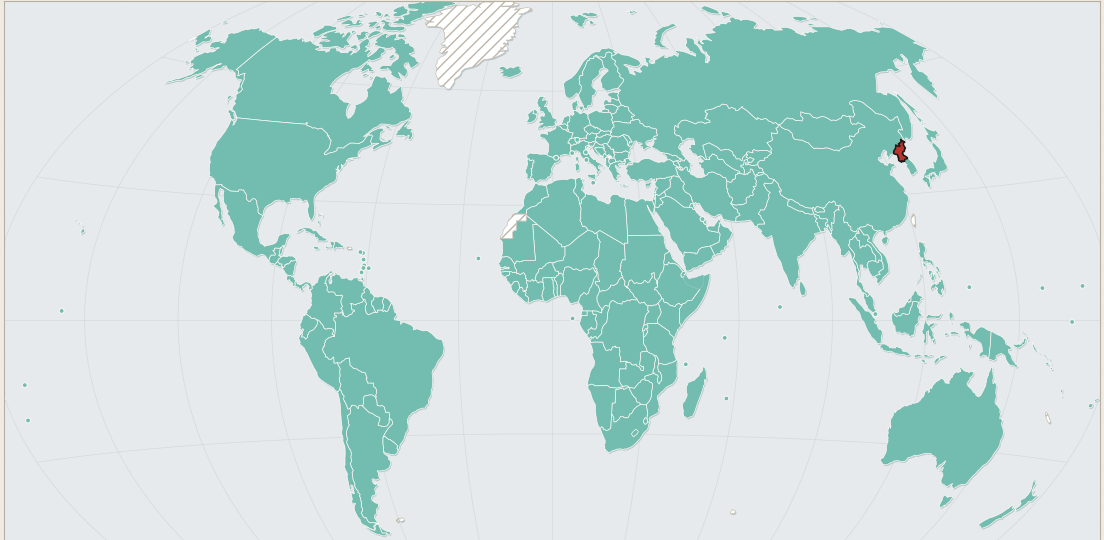
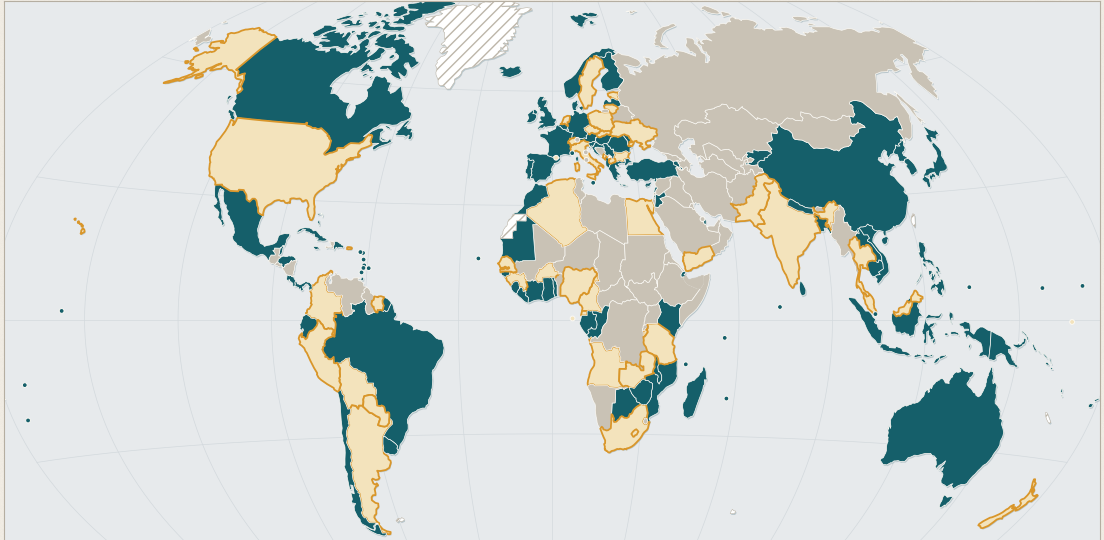
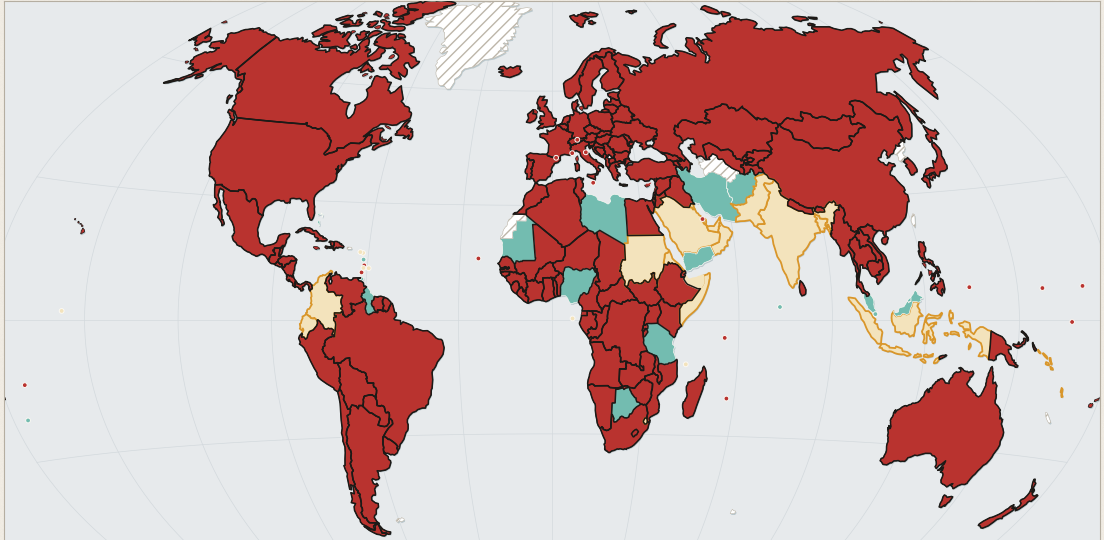
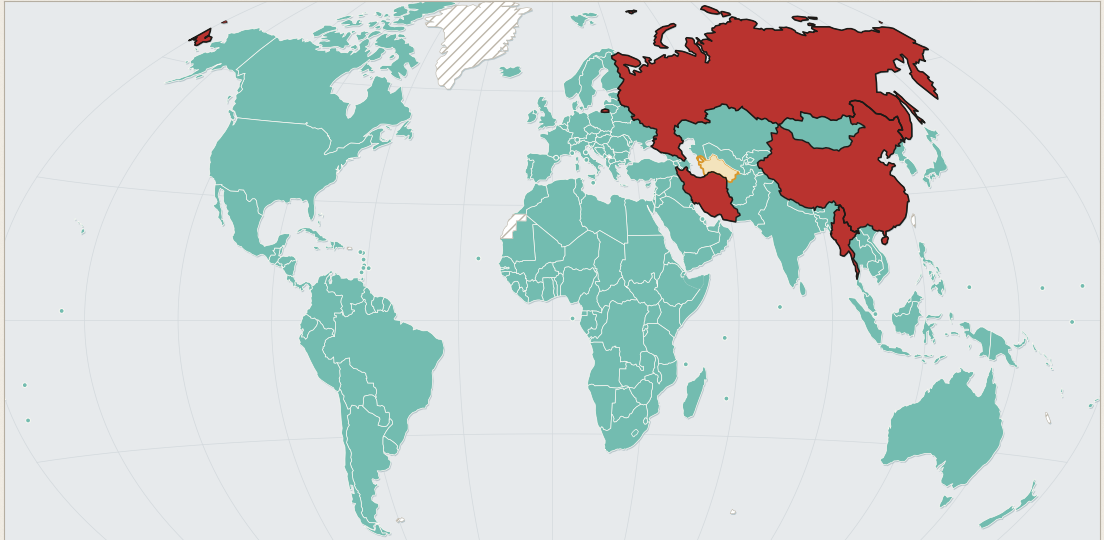
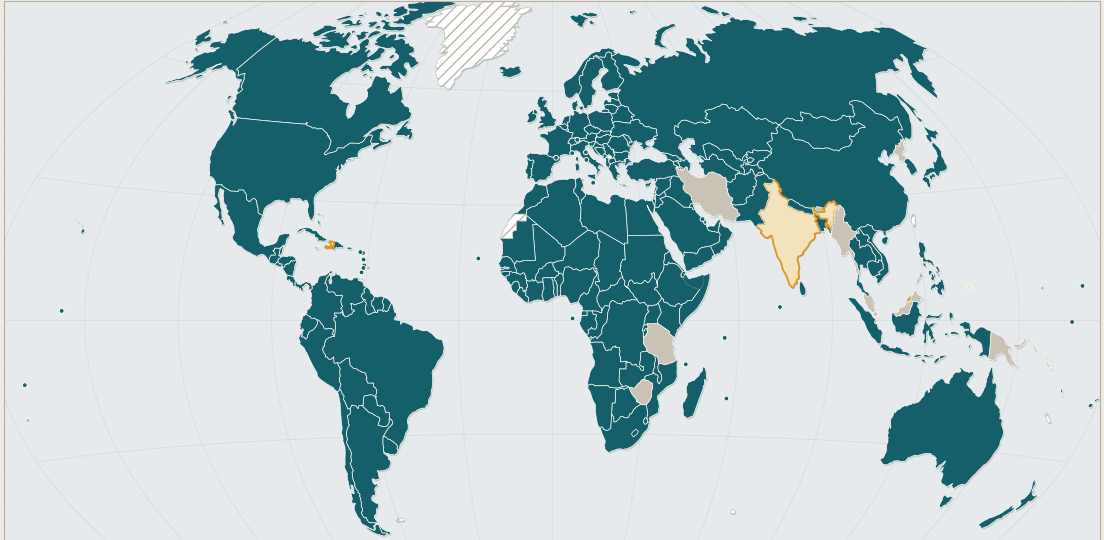
The 2026 map of where charging a 10-year-old is banned or restricted, aired Nov 9, 2026. Sources
 Watch on YouTube
The video shows the map as it aired on Nov 9, 2026. The counts on this page are kept up to date.
Sources: CRIN, Minimum ages of criminal responsibility around the world · UN Committee on the Rights of the Child · National laws and press 2019-26 · Primary statute texts read in the second pass, 5 Nov 2026 · How we rate it
Is it banned where you live? Check your countryBanned in 114 countries
The minimum age is 12, so a 10-year-old cannot be charged.
Source: Juvenile Justice Law 1999
Why we rate it this way
Qualified Law on Juvenile Justice 1999 art. 3: no charge under 12. CRIN table; no drop below 11 found, Nov 2026.
The minimum age is 12, so a 10-year-old cannot be charged.
Source: Criminal Code art. 10
Why we rate it this way
Criminal Code art. 10: no charge under 12. CRIN table; no drop below 11 found, Nov 2026.
The minimum age is 13, so a 10-year-old cannot be charged.
Source: State report to UN CRC
Why we rate it this way
Monaco's report to the UN CRC, CRC/C/28/Add.15 (2000): no charge under 13. CRIN table; no drop below 11 found, Nov 2026.
The minimum age is 14, so a 10-year-old cannot be charged.
Source: Juvenile Court Act 1998
Why we rate it this way
Jugendgerichtsgesetz 1998 s.2: no charge under 14. CRIN table; no drop below 11 found, Nov 2026.
The minimum age is 14, so a 10-year-old cannot be charged.
Source: Criminal Code art. 35
Why we rate it this way
Criminal Code art. 35(1), as amended 2014: no charge under 14. CRIN table; no drop below 11 found, Nov 2026.
The minimum age is 14, so a 10-year-old cannot be charged.
Source: Criminal Code (Am.) 2006
Why we rate it this way
Criminal Code (Amendment) Law 18(I)/2006: no charge under 14. CRIN table; no drop below 11 found, Nov 2026.
The minimum age is 15, so a 10-year-old cannot be charged.
Source: Penal Code art. 14
Why we rate it this way
General Penal Code art. 14: no charge under 15. CRIN table; no drop below 11 found, Nov 2026.
The minimum age is 14, so a 10-year-old cannot be charged.
Source: Criminal Law s.11
Why we rate it this way
Criminal Law s.11: no charge under 14. CRIN table; no drop below 11 found, Nov 2026.
The minimum age is 14, so a 10-year-old cannot be charged.
Source: Criminal Code art. 13
Why we rate it this way
Criminal Code art. 13: no charge under 14. CRIN table; no drop below 11 found, Nov 2026.
The minimum age is 14, so a 10-year-old cannot be charged.
Source: Penal Code s.33
Why we rate it this way
Penal Code s.33: no charge under 14. CRIN table; no drop below 11 found, Nov 2026.
The minimum age is 14, so a 10-year-old cannot be charged.
Source: Criminal Code art. 21-71
Why we rate it this way
Criminal Code (CRIN cites art. 71): no charge under 14. CRIN table; no drop below 11 found, Nov 2026.
The minimum age is 14, so a 10-year-old cannot be charged.
Source: Criminal Code s.22
Why we rate it this way
Criminal Code s.22: no charge under 14. CRIN table; no drop below 11 found, Nov 2026.
The minimum age is 14, so a 10-year-old cannot be charged.
Source: Criminal Code art. 31
Why we rate it this way
Criminal Code art. 31(2): no charge under 14. CRIN table; no drop below 11 found, Nov 2026.
The minimum age is 14, so a 10-year-old cannot be charged.
Source: Juvenile Courts Act
Why we rate it this way
Juvenile Courts Act art. 44; Criminal Code art. 10: no charge under 14. CRIN table; no drop below 11 found, Nov 2026.
The minimum age is 14, so a 10-year-old cannot be charged.
Source: Law on Juvenile Offenders
Why we rate it this way
Law on Juvenile Criminal Offenders art. 2: no charge under 14. CRIN table; no drop below 11 found, Nov 2026.
The minimum age is 14, so a 10-year-old cannot be charged.
Source: Criminal Code art. 8
Why we rate it this way
Criminal Code art. 8: no charge under 14. CRIN table; no drop below 11 found, Nov 2026.
The minimum age is 14, so a 10-year-old cannot be charged.
Source: Criminal Code art. 80
Why we rate it this way
Criminal Code art. 80: no charge under 14. CRIN table; no drop below 11 found, Nov 2026.
The minimum age is 14, so a 10-year-old cannot be charged.
Source: Criminal Code art. 71
Why we rate it this way
Criminal Code art. 71: no charge under 14. CRIN table; no drop below 11 found, Nov 2026.
The minimum age is 14, so a 10-year-old cannot be charged.
Source: Criminal Code art. 12
Why we rate it this way
Criminal Code art. 12: no charge under 14. CRIN table; no drop below 11 found, Nov 2026.
The minimum age is 14, so a 10-year-old cannot be charged.
Source: Criminal Code art. 21
Why we rate it this way
Criminal Code art. 21: no charge under 14. CRIN table; no drop below 11 found, Nov 2026.
The minimum age is 14, so a 10-year-old cannot be charged.
Source: Criminal Code
Why we rate it this way
Criminal Code (CRIN cites the 2003 code, art. 24): no charge under 14. CRIN table; no drop below 11 found, Nov 2026.
The minimum age is 14, so a 10-year-old cannot be charged.
Source: Criminal Code art. 18
Why we rate it this way
Criminal Code art. 18: no charge under 14. CRIN table; no drop below 11 found, Nov 2026.
The minimum age is 14, so a 10-year-old cannot be charged.
Source: Criminal Code art. 23
Why we rate it this way
Criminal Code art. 23: no charge under 14. CRIN table; no drop below 11 found, Nov 2026.
The minimum age is 14, so a 10-year-old cannot be charged.
Source: Criminal Code art. 21
Why we rate it this way
Criminal Code art. 21: no charge under 14. CRIN table; no drop below 11 found, Nov 2026.
The minimum age is 14, so a 10-year-old cannot be charged.
Source: Criminal Code art. 39
Why we rate it this way
Criminal Code art. 39: no charge under 14. CRIN table; no drop below 11 found, Nov 2026.
The minimum age is 15, so a 10-year-old cannot be charged.
Source: Penal Law art. 7, 17
Why we rate it this way
Penal Law arts. 7 and 17: no charge under 15. CRIN table; no drop below 11 found, Nov 2026.
The minimum age is 16, so a 10-year-old cannot be charged.
Source: Penal Code art. 20
Why we rate it this way
Penal Code art. 20: no charge under 16. CRIN table; no drop below 11 found, Nov 2026.
The minimum age is 14, so a 10-year-old cannot be charged.
Source: Penal Code art. 17
Why we rate it this way
Penal Code art. 17(1): no charge under 14. CRIN table; no drop below 11 found, Nov 2026.
The minimum age is 13, so a 10-year-old cannot be charged.
Source: Penal Code s.74
Why we rate it this way
Penal Code s.74: no charge under 13. CRIN table; no drop below 11 found, Nov 2026.
The minimum age is 15, so a 10-year-old cannot be charged.
Source: Penal Code 2009 art. 28
Why we rate it this way
Penal Code, Law 1/5 of 22 Apr 2009, art. 28: no charge under 15. CRIN table; no drop below 11 found, Nov 2026.
The minimum age is 16, so a 10-year-old cannot be charged.
Source: Criminal Code art. 17
Why we rate it this way
Criminal Code art. 17: no charge under 16. CRIN table; no drop below 11 found, Nov 2026.
The minimum age is 14, so a 10-year-old cannot be charged.
Source: Law 10.001 art. 9
Why we rate it this way
Penal Code, Law 10.001, art. 9: no charge under 14. CRIN table; no drop below 11 found, Nov 2026.
The minimum age is 13, so a 10-year-old cannot be charged.
Source: Law 007/PR/99 art. 22
Why we rate it this way
Law 007/PR/99 art. 22: no charge under 13. CRIN table; no drop below 11 found, Nov 2026.
The minimum age is 13, so a 10-year-old cannot be charged.
Source: Penal Code
Why we rate it this way
Penal Code (Sharia majority comes later, so 13 is the lower age): no charge under 13. CRIN table; no drop below 11 found, Nov 2026.
The minimum age is 13, so a 10-year-old cannot be charged.
Source: Law 4-2010 art. 73
Why we rate it this way
Child Protection Law 4-2010 art. 73: no charge under 13. CRIN table; no drop below 11 found, Nov 2026.
The minimum age is 14, so a 10-year-old cannot be charged.
Source: Law 09/001 art. 95
Why we rate it this way
Child Protection Law 09/001 of 10 Jan 2009 art. 95: no charge under 14. CRIN table; no drop below 11 found, Nov 2026.
The minimum age is 13, so a 10-year-old cannot be charged.
Source: Penal Code art. 32
Why we rate it this way
Penal Code art. 32: no charge under 13. CRIN table; no drop below 11 found, Nov 2026.
The minimum age is 12, so a 10-year-old cannot be charged.
Source: Penal Code art. 52
Why we rate it this way
Transitional Penal Code art. 52: no charge under 12. CRIN table; no drop below 11 found, Nov 2026.
The minimum age is 13, so a 10-year-old cannot be charged.
Source: Penal Code art. 57
Why we rate it this way
Penal Code, Law 21/63, art. 57: no charge under 13. CRIN table; no drop below 11 found, Nov 2026.
The minimum age is 12, so a 10-year-old cannot be charged.
Source: Criminal Code s.26
Why we rate it this way
Criminal Code s.26: no charge under 12. CRIN table; no drop below 11 found, Nov 2026.
The minimum age is 16, so a 10-year-old cannot be charged.
Source: Penal Code art. 10
Why we rate it this way
Penal Code, Decree-Law 4/93, art. 10: no charge under 16. CRIN table; no drop below 11 found, Nov 2026.
The minimum age is 13, so a 10-year-old cannot be charged.
Source: Ordinance 62-038 art. 35
Why we rate it this way
Ordinance 62-038 of 19 Sep 1962 art. 35: no charge under 13. CRIN table; no drop below 11 found, Nov 2026.
The minimum age is 13, so a 10-year-old cannot be charged.
Source: Ordinance 02-062 art. 98
Why we rate it this way
Ordinance 02-062/P-RM of 5 Jun 2002 art. 98: no charge under 13. CRIN table; no drop below 11 found, Nov 2026.
The minimum age is 13, so a 10-year-old cannot be charged.
Source: Penal Code art. 45
Why we rate it this way
Penal Code art. 45: no charge under 13. CRIN table; no drop below 11 found, Nov 2026.
The minimum age is 14, so a 10-year-old cannot be charged.
Source: Penal Code art. 77
Why we rate it this way
Penal Code art. 77: no charge under 14. CRIN table; no drop below 11 found, Nov 2026.
The minimum age is 16, so a 10-year-old cannot be charged.
Source: Penal Code art. 19
Why we rate it this way
Penal Code art. 19: no charge under 16. CRIN table; no drop below 11 found, Nov 2026.
The minimum age is 13, so a 10-year-old cannot be charged.
Source: Penal Code art. 52
Why we rate it this way
Penal Code art. 52: no charge under 13. CRIN table; no drop below 11 found, Nov 2026.
The minimum age is 12, so a 10-year-old cannot be charged.
Source: Penal Code s.30
Why we rate it this way
Penal Code s.30: no charge under 12. CRIN table; no drop below 11 found, Nov 2026.
The minimum age is 14, so a 10-year-old cannot be charged.
Source: Child Code 2007 art. 302
Why we rate it this way
Child Code 2007 art. 302: no charge under 14. CRIN table; no drop below 11 found, Nov 2026.
The minimum age is 13, so a 10-year-old cannot be charged.
Source: Child Prot. Code art. 68
Why we rate it this way
Child Prot. Code art. 68: no charge under 13. CRIN table; no drop below 11 found, Nov 2026.
The minimum age is 12, so a 10-year-old cannot be charged.
Source: Children Act s.3
Why we rate it this way
Children and Young Persons Act s.3: no charge under 12. CRIN table; no drop below 11 found, Nov 2026.
The minimum age is 12, so a 10-year-old cannot be charged.
Source: Child Justice Act 2018 s.5
Why we rate it this way
Child Justice Act 2018 s.5(1): a child under 12 is not capable of committing an offence (Revised Laws 2023). The capacity test only runs from 12 to 16, so 10 is out.
The age is 11, or 12 once the Child Justice law starts.
Source: Juvenile Offenders Act
Why we rate it this way
Juvenile Offenders Act ss.7-9: nothing punishable unless the child is over 11 with capacity (CRIN), so 10 is out. Child Justice Bill 2023 s.5 sets 12 and repeals that Act; commencement not confirmed.
The minimum age is 13, so a 10-year-old cannot be charged.
Source: Children's Code art. 223
Why we rate it this way
Children's Code art. 223: penalties from 13 (CRIN prints the law as 126/03; the law number could not be checked): no charge under 13. CRIN table; no drop below 11 found, Nov 2026.
The minimum age is 13, so a 10-year-old cannot be charged.
Source: Penal Code arts. 50-51
Why we rate it this way
Penal Code arts. 50 and 51: no charge under 13. CRIN table; no drop below 11 found, Nov 2026.
The minimum age is 13, so a 10-year-old cannot be charged.
Source: Child Protection Law art. 2
Why we rate it this way
Childhood and Adolescence Integral Protection Law art. 2: no charge under 13. CRIN table; no drop below 11 found, Nov 2026.
The minimum age is 12, so a 10-year-old cannot be charged.
Source: Childhood Code art. 180
Why we rate it this way
Childhood and Adolescence Code art. 180: no charge under 12. CRIN table; no drop below 11 found, Nov 2026.
The minimum age is 13, so a 10-year-old cannot be charged.
Source: Childhood Code art. 95
Why we rate it this way
Childhood and Adolescence Code art. 95: no charge under 13. CRIN table; no drop below 11 found, Nov 2026.
The minimum age is 12, so a 10-year-old cannot be charged.
Source: Juvenile Penal Law art. 2
Why we rate it this way
Juvenile Penal Law art. 2: no charge under 12. CRIN table; no drop below 11 found, Nov 2026.
The minimum age is 12, so a 10-year-old cannot be charged.
Source: Juvenile Penal Law art. 1
Why we rate it this way
Juvenile Penal Justice Law arts. 1 and 6: no charge under 12. CRIN table; no drop below 11 found, Nov 2026.
The minimum age is 12, so a 10-year-old cannot be charged.
Source: Law 40 arts. 7-8
Why we rate it this way
Law 40 (as amended by Law 6 of 2010) arts. 7-8: no charge under 12. CRIN table; no drop below 11 found, Nov 2026.
The minimum age is 12, so a 10-year-old cannot be charged.
Source: Child Care Act s.63
Why we rate it this way
Child Care and Protection Act s.63: no charge under 12. CRIN table; no drop below 11 found, Nov 2026.
The minimum age is 16, so a 10-year-old cannot be charged.
Source: Penal Code 2022 art. 18
Why we rate it this way
Penal Code, Law 151 of 2022, art. 18.1: criminal responsibility from 16 (Gaceta 93, 1 Sep 2022). Under 16 falls to the re-education system of Decree-Law 64 of 1982, which is not criminal law (Ambito Juridico). No court route found.
The minimum age is 14, so a 10-year-old cannot be charged.
Source: Childhood Code art. 194
Why we rate it this way
Childhood and Adolescence Code art. 194: no charge under 14. CRIN table; no drop below 11 found, Nov 2026.
Sources give 12 or 14. Either way, 10 cannot be charged.
Source: Child Code 2014
Why we rate it this way
Code of the Child and Adolescent 2014 is listed at 14; CRIN's older text has measures from 12. Law 548 could not be read. Every reading is above 10.
The minimum age is 13, so a 10-year-old cannot be charged.
Source: Childhood Code
Why we rate it this way
Childhood and Adolescence Code: no charge under 13. CRIN table; no drop below 11 found, Nov 2026.
Sources give 12 or 14. Either way, 10 cannot be charged.
Source: LOPNNA art. 528
Why we rate it this way
Organic Law for Children art. 528 (some lists say 14; red either way): no charge under 12. CRIN table; no drop below 11 found, Nov 2026.
The minimum age is 12, so a 10-year-old cannot be charged.
Source: Childhood Code art. 305
Why we rate it this way
Childhood and Adolescence Code art. 305: no charge under 12. CRIN table; no drop below 11 found, Nov 2026.
The minimum age is 12, so a 10-year-old cannot be charged.
Source: Penal Code art. 138
Why we rate it this way
Penal Code art. 138: a minor under 12 is criminally irresponsible for lack of judgment (ICMEC 2018; CRIN). No 2025-26 change found.
Raised from 10 to 12 by the Child Justice Amendment Act.
Source: Child Justice Amendment 2019
Why we rate it this way
Child Justice Amendment Act 28 of 2019 raised the minimum age of criminal capacity from 10 to 12; Parliament moved commencement regulations in Mar 2022 (Polity, 16 Mar 2022).
The Children Act 2022 lifted the floor from 8 to 12.
Source: Children Act 2022
Why we rate it this way
Children Act 2022: lower minimum age 12, higher level 14; the old regime was 8 and 12 (Kabarak Journal of Law and Ethics).
The Children's Code Act 2022 set the floor at 12.
Source: Children's Code 2022 s.45
Why we rate it this way
Children's Code Act 12 of 2022 s.45: age of criminal responsibility is 12 (Human Rights Commission guide, Jul 2026).
The minimum age is 12, so a 10-year-old cannot be charged.
Source: Children Act s.88
Why we rate it this way
Children (Amendment) Act 2016 s.88: minimum age of criminal responsibility is 12 (ICMEC 2018).
Since 2025 the floor is 14 for all offences.
Source: Child Rights Act 2025 s.47
Why we rate it this way
Child Rights Act 2025 s.47: age of criminal responsibility is 14 for all offences, replacing the 2007 Act (Sierra Leone LII article, 22 Jul 2026).
The minimum age is 12, so a 10-year-old cannot be charged.
Source: Penal Code s.75 (2018)
Why we rate it this way
Penal Code ss.75-76 as amended May 2018: no criminal responsibility under 12; capacity test from 12 to 14 (CRIN).
The minimum age is 12, so a 10-year-old cannot be charged.
Source: Juveniles Act 32/2014
Why we rate it this way
Juveniles Act 32 of 2014 raised the age from 7 to 12 (bill text via Penal Reform International, 9 Jul 2014; enacted law not read directly).
The 2019 acts set 15. A plan to cut it to 12 is not law.
Source: Juvenile Justice Act 2019
Why we rate it this way
Child Rights Protection Act and Juvenile Justice Act 2019 set the age at 15 (delegation to the UN CRC, Jan 2026). A plan to lower it to 12 is not law.
The minimum age is 12, so a 10-year-old cannot be charged.
Source: Penal Law s.34F
Why we rate it this way
Penal Law s.34F: no criminal responsibility under 12; Military Order 1651 s.191 uses the same age in the West Bank (CRIN). Text not re-read.
The general age is 14, or 12 for the gravest violent crimes.
Source: Criminal Code s.16
Why we rate it this way
Criminal Code (Act C of 2012) s.16: 14 in general, 12 for homicide and a few violent crimes (CRIN). No offence at 10.
The minimum age is 14, so a 10-year-old cannot be charged.
Source: Criminal Code art. 113
Why we rate it this way
Criminal Code art. 113: no criminal liability under 14 (CRIN). UN CRC reviewed Romania May 2025; no lowering found.
Nobody aged 10 can be held criminally liable.
Source: Penal Code arts. 126-127
Why we rate it this way
Penal Code arts. 126-127: sources give 12 or higher after the 2019 code; the 2019 text was not read. Every reading is above 10.
The minimum age is 12, so a 10-year-old cannot be charged.
Source: Youth Protection Act 1965
Why we rate it this way
Law of 8 Apr 1965 on youth protection: young offenders handled from 12 (Cipriani via CRIN).
The minimum age is 12, so a 10-year-old cannot be charged.
Source: Code Crim. Procedure s.486
Why we rate it this way
Code of Criminal Procedure s.486: criminal liability from 12 (CRIN).
The minimum age is 14, so a 10-year-old cannot be charged.
Source: Youth Court Act s.1
Why we rate it this way
Jugendgerichtsgesetz 1988 s.1: no punishment under 14 (CRIN).
The minimum age is 15, so a 10-year-old cannot be charged.
Source: Criminal Code s.15
Why we rate it this way
Criminal Code s.15: 15; cut to 14 in Jul 2010, raised back Mar 2012 (CRIN).
The minimum age is 15, so a 10-year-old cannot be charged.
Source: Criminal Code ch. 3 s.4
Why we rate it this way
Criminal Code ch. 3 s.4: no liability under 15 (CRIN).
The minimum age is 15, so a 10-year-old cannot be charged.
Source: Penal Code
Why we rate it this way
Penal Code: no punishment under 15 (CRIN).
The minimum age is 14, so a 10-year-old cannot be charged.
Source: Criminal Code art. 33
Why we rate it this way
Criminal Code art. 33: 14. It fell to 12 in 2007 and returned to 14 (CRIN). No 2026 change found.
The minimum age is 14, so a 10-year-old cannot be charged.
Source: Criminal Code art. 20
Why we rate it this way
Criminal Code art. 20: 14 for named crimes, 16 otherwise (CRIN). No 2026 change found.
The minimum age is 14, so a 10-year-old cannot be charged.
Source: Criminal Code art. 27
Why we rate it this way
Criminal Code art. 27: 14 for named crimes, 16 otherwise (CRIN). No 2026 change found.
The minimum age is 14, so a 10-year-old cannot be charged.
Source: Criminal Code art. 15
Why we rate it this way
Criminal Code art. 15: 14 for listed crimes, 16 otherwise (CRIN). An MP's idea of 12 is not law.
13 for murder, 14 for named crimes, 16 for the rest.
Source: Criminal Code art. 17
Why we rate it this way
Criminal Code art. 17: 13 for intentional killing, 14 for named crimes, 16 otherwise (CRIN).
The minimum age is 14, so a 10-year-old cannot be charged.
Source: Criminal Code art. 22
Why we rate it this way
Criminal Code art. 22: 14 for listed crimes, 16 otherwise; last amended 2021, no wartime change (legal-aid and press pages, 2025-26).
The floor is 14. A June 2026 call to cut it to 12 got no backing.
Source: Criminal Code art. 20
Why we rate it this way
Criminal Code art. 20: 14 for listed crimes, 16 otherwise. The Investigative Committee's call for 12 (26 Jun 2026) won no support and is not law.
An August 2026 reform toughened penalties but kept the floor at 12.
Source: Turkish Penal Code art. 31
Why we rate it this way
Law 5237 art. 31: no criminal liability under 12. The Aug 2026 reform reworked penalties for ages 12-18, not the floor (Evrensel, 8 Aug 2026).
Criminal liability starts at 16; youth measures start at 12.
Source: Lei Tutelar Educativa 1999
Why we rate it this way
Criminal Code art. 19: criminal liability from 16; Lei Tutelar Educativa 1999 applies only from 12 (CRIN).
The minimum age is 14, so a 10-year-old cannot be charged.
Source: Penal Code art. 97
Why we rate it this way
Penal Code art. 97: no liability under 14. The government's bill on charging 14-year-olds does not lower the age (Obozrevatel on the bill, 2026).
The minimum age is 14, so a 10-year-old cannot be charged.
Source: Organic Law 5/2000
Why we rate it this way
Organic Law 5/2000 art. 1 and 3: under 14 only protection measures (CRIN).
The minimum age is 14, so a 10-year-old cannot be charged.
Source: StGB s.19
Why we rate it this way
Strafgesetzbuch s.19: a person under 14 is not criminally responsible (CRIN).
The minimum age is 14, so a 10-year-old cannot be charged.
Source: Law 1098/2006 art. 139
Why we rate it this way
Childhood and Adolescence Code, Law 1098 of 2006, arts. 139 and 159: youth penal system from 14 (CRIN).
The minimum age is 14, so a 10-year-old cannot be charged.
Source: Law 20.084 art. 3
Why we rate it this way
Law 20.084 art. 3: adolescents answer from 14 (CRIN).
The minimum age is 14, so a 10-year-old cannot be charged.
Source: Childhood Code art. 242
Why we rate it this way
Childhood and Adolescence Code art. 242 (CRIN): under 14 only protective measures. Legislative Decree 1348 could not be read, so it is not cited.
The national youth justice law applies only from age 12.
Source: Law SIJPA art. 5
Why we rate it this way
National Law on the Integral Criminal Justice System for Adolescents (last reform 20 Dec 2022) art. 5: age groups start at 12; art. 113: a person found to be under 12 goes to the child protection office.
The minimum age is 14, so a 10-year-old cannot be charged.
Source: Penal Code 2015 art. 12
Why we rate it this way
Penal Code 2015 art. 12: 14 for very serious crimes, 16 otherwise (LawNet). Law 59/2024/QH15, in force 1 Jan 2026, defines juvenile offenders as 14 to under 18.
The minimum age is 14, so a 10-year-old cannot be charged.
Source: Penal Code art. 41
Why we rate it this way
Penal Code art. 41: no punishment under 14 (CRIN prints art. 40; not re-read). Training-school placement starts at about 12, and under 14 only if specially needed (Justice Ministry papers), so a 10-year-old stays out of it.
Raised from 10 to 12 in May 2022.
Source: Criminal Code s.73 (2022)
Why we rate it this way
Criminal Code Amendment No. 29, in force 9 May 2022: section 73 lifted the age from 10 to 12 (Nation Thailand, 8 May 2022).
The new Penal Code of January 2026 keeps the floor at 12.
Source: Penal Code 2023 art. 40
Why we rate it this way
Law 1 of 2023 (new Penal Code), in force 2 Jan 2026, art. 40: a child under 12 cannot be held liable.
Since 2021 the floor is 12, and only for the gravest killings.
Source: Criminal Law art. 17
Why we rate it this way
Criminal Law art. 17 as amended 1 Mar 2021: 12 for the gravest killings with prosecutor approval, 14 for listed crimes, 16 otherwise.
The minimum age went from 7 to 12 in 2022.
Source: Decree-Law 6 of 2022 art. 5
Why we rate it this way
Federal Decree-Law 6 of 2022 art. 5: a delinquent juvenile under 12 at the time of the act is not criminally liable (official text, uaelegislation.gov.ae), replacing the 1976 law's age 7 (Mondaq).
Under 12 only protection measures. Penal age is 18.
Source: ECA Law 8.069/1990 art. 105
Why we rate it this way
ECA art. 105 sends an act by a child (under 12) to art. 101 protection measures, applied by the Conselho Tutelar, not a youth court. Constitution art. 228 sets penal age 18 (not re-read). Oct 2026 PEC debate is not law (Jornal do Comercio).
Nobody can be convicted for anything done under age 12.
Source: Criminal Code s.13
Why we rate it this way
Criminal Code s.13: no person shall be convicted for an act done under 12 (Justice Laws site, current to 19 Oct 2026).
Cut from 16 to 14 in 2026. A 10-year-old still cannot be charged.
Source: Law 27.801 (2026)
Why we rate it this way
Law 27.801, promulgated 9 Mar 2026 (Decree 138/2026), in force 5 Sep 2026, cut the age from 16 to 14; regulated by Decree 875/2026 (Boletin Oficial, 7 Sep). A Lomas de Zamora court suspended it in Buenos Aires province for 60 days; red either way.
Cut from 15 to 14 in Sept 2026, only for the gravest crimes.
Source: Riksdag vote, 13 Aug 2026
Why we rate it this way
Riksdag decision 13 Aug 2026 (JuU41): 14 for crimes with a 4-year minimum, from 10 Sep 2026, 5-year limit; otherwise 15 (riksdagen.se; government press release, 2026).
No charges under 15: a higher bar than Germany, Japan or China.
Source: RA 9344 s.6 (RA 10630)
Why we rate it this way
Juvenile Justice and Welfare Act, RA 9344 s.6 as amended by RA 10630 (2013): exempt at 15 or under (Lawphil text). June 2026 calls to cut it to 10 or 12 are not law (The Star, 23 Jun 2026).
Everywhere not listed here, charging a 10-year-old is allowed.
Restricted in 66 countries
We could not confirm a minimum age here.
Source: No text found
Why we rate it this way
No text on a minimum age was found, so this is amber as not confirmed, under the amber definition (the law could not be fully confirmed).
Reported as 16, but the law could not be verified.
Source: State report to UN CRC
Why we rate it this way
State told the UN CRC the age is 16 (CRC/C/SR.990, 2005); CRIN could not verify it. Unverified, so amber.
Sources give 8 or 12; the newer law could not be read.
Source: Juveniles Act s.3
Why we rate it this way
Juveniles Act s.3 set 8 (CRIN); an undated news item says a later law set 12. Not read. Amber until read.
Age 8 on paper; officials describe a limit of 12.
Source: Juvenile Act s.3
Why we rate it this way
Juvenile Act s.3 sets 8 (CRIN); at the UN CRC in Jan 2025 officials discussed prosecutors acting on under-12s. Unclear, so amber.
Sources give 8 or 12, with a capacity test under 14.
Source: Child Justice Act 2015
Why we rate it this way
Child Justice Act 2015 s.5: CRIN reads 8; a minister described 12, with a capacity test under 14. Conflict, so amber.
Under 14 presumed incapable, unless an evaluation shows otherwise.
Source: Juvenile Justice Act
Why we rate it this way
Juvenile Justice Act: a child under 14 is presumed incapable, but a charge can proceed after a court-ordered evaluation (Kaieteur News, 28 May 2023).
Age 10 only if a court finds enough maturity.
Source: Penal Code s.91
Why we rate it this way
Penal Code s.91: under 10 no liability; under 12 only with proven maturity (CRIN).
Floor of 9, then a maturity test up to 12.
Source: Criminal Code s.25
Why we rate it this way
Criminal Code s.25: floor 9; from 9 to 12 only with proven maturity (CRIN).
Floor of 7, then the state must prove capacity under 12.
Source: Juvenile Justice Act 2012
Why we rate it this way
Criminal Code s.50 floor 7; Juvenile Justice Act 2012 requires the state to prove capacity under 12 (CRIN).
Common-law capacity test up to 14.
Source: Common law (C v DPP 1996)
Why we rate it this way
No statute age: common law floor 7, and capacity must be proved under 14 (CRIN; C (A Minor) v DPP [1996]).
Rules differ by state.
Source: FSM Code Title 12
Why we rate it this way
FSM Code Title 12 and state laws differ: Chuuk floor 10, others set no age for delinquency (CRIN).
From 10 only for murder or rape.
Source: National Code 17.106
Why we rate it this way
Palau National Code 17.106: from 10 to 14 only murder or rape (CRIN).
From 10 only for murder or rape, after a capacity test.
Source: Criminal Code s.107
Why we rate it this way
Criminal Code s.107: floor 10; presumption of incapacity to 14, rebuttable only for murder and rape (CRIN).
Floor of 10, then a capacity test up to 14.
Source: Criminal Code s.29
Why we rate it this way
Queensland Criminal Code 1899 as used in Nauru s.29: floor 10, capacity test to 14 (CRIN).
Floor of 10, then a capacity test up to 14.
Source: Penal Code s.14
Why we rate it this way
Penal Code s.14: floor 10, capacity test to 14 (CRIN).
Floor of 10, then a capacity test up to 14.
Source: Penal Code s.14
Why we rate it this way
Penal Code s.14: floor 10, capacity test to 14 (CRIN; RNZ, 28 Nov 2023).
Floor of 10, then a capacity test up to 14.
Source: Penal Code s.17
Why we rate it this way
Penal Code ss.14, 17: floor 10, capacity test to 14 (CRIN).
Floor of 10, then a capacity test up to 14.
Source: Crimes Act 2009 s.26
Why we rate it this way
Crimes Decree 2009 ss.26-27: floor 10, knowledge of wrong must be proved to 14 (CRIN).
Floor of 10, then a capacity test up to 12.
Source: Crimes Act 2013 s.12
Why we rate it this way
Crimes Act 2013 s.12: floor 10, capacity test to 12 (CRIN).
Floor of 7, then a maturity test up to 12.
Source: Criminal Offences Act s.16
Why we rate it this way
Criminal Offences Act s.16: floor 7, maturity test to 12 (CRIN; RNZ, 28 Nov 2023).
Floor of 8, then a capacity test up to 12.
Source: Penal Code s.14
Why we rate it this way
Penal Code s.14: floor 8, capacity test to 12 (CRIN).
Floor of 7, then a capacity test up to 14.
Source: Criminal Code s.30
Why we rate it this way
Criminal Code s.30: floor 7, capacity test to 14 (CRIN; RNZ, 28 Nov 2023).
From 10 only if the state proves capacity.
Source: Child Prot. Act 2011 s.79
Why we rate it this way
Children's Protection and Welfare Act 2011 s.79: floor 10; capacity must be proved from 10 to 14 (CRIN).
Floor of 7, then a capacity test up to 12.
Source: Penal Code s.15
Why we rate it this way
Penal Code s.15: floor 7, capacity test to 12 (CRIN); state told the UN CRC the age is 12.
Floor of 7, then a capacity test up to 14.
Source: State report to UN CRC
Why we rate it this way
Floor 7, capacity must be shown from 7 to 14 (initial report to the UN CRC, via CRIN).
Under 14 only if the state proves capacity.
Source: Children's Act 2009 s.82
Why we rate it this way
Children's Act 2009 s.82 presumes incapacity under 14 unless proved; Penal Code s.13 floor 8 (CRIN).
Floor of 7, then a capacity test up to 14.
Source: Common law; CCPA 2015
Why we rate it this way
Floor 7, capacity must be proved to 14 (report to the UN CRC, via CRIN; ICMEC 2018). Child Justice Bill status not confirmed.
Floor of 7 or 10, with a capacity test up to 12.
Source: Child Care Act 2010
Why we rate it this way
Child Care, Protection and Justice Act 2010 reported as floor 10; Penal Code s.14 floor 7, capacity to 12. Text not read. Conflict.
Under 12 only if the state proves capacity.
Source: Penal Code s.15
Why we rate it this way
Penal Code s.15: capacity test up to 12; floor 7 (CRIN). Sources conflict on a later rise to 10.
Capacity test up to 14. A bill for 12 was unsigned when last seen.
Source: Criminal Code ss.6-7
Why we rate it this way
Criminal Law Code ss.6-7: floor 7, capacity test to 14. Child Justice Bill (floor 12) passed 2023; assent not confirmed (CITE).
A discernment test applies; the 2020 Act's age was not confirmed.
Source: Criminal Code ss.44-45
Why we rate it this way
Criminal Code ss.44-45: no floor, discernment test under 14 (CRIN). The Children's Act 2020 age was not confirmed.
Reported as 16, but the current code could not be read.
Source: Penal Code
Why we rate it this way
Old code had no clear floor (CRIN). The 2014-19 Penal Code was not read; a compilation lists 16. Amber until read.
Floor of 10, then only protective measures up to 13.
Source: Child Code 2008 art. 345
Why we rate it this way
Penal Code art. 64: floor 10, under 13 only protective measures (CRIN). Later codes not read.
Delinquency cases from 7; criminal responsibility from 16.
Source: Penal Code s.4.1
Why we rate it this way
Penal Code s.4.1: not criminally responsible under 16, yet delinquency runs from 7 (Juvenile Court Code s.11.1, CRIN).
Age 7 and puberty, or 12, depending on the law used.
Source: Child Act 2010
Why we rate it this way
Criminal Act 1991 reaches children from 7 who have reached puberty (CRIN); the Child Act 2010 is listed as 12. Text not read. Two-tier.
Code says 12; whether it still applies is unclear.
Source: Juvenile Code 2005 art. 5
Why we rate it this way
Juvenile Code art. 5: 12 (CRIN). Whether the code still applies under current rule could not be confirmed, so amber.
Sources give 10 or 12.
Source: Penal Code art. 114
Why we rate it this way
Penal Code 2004 art. 114: 10 (CRIN). A South Asia table lists 12. The Child Care and Protection Act 2011 was not read.
Older law gave 7 or 15; the 2021 law could not be read.
Source: Restorative Justice Law 2021
Why we rate it this way
Penal Code art. 32 says 15; the UN CRC called the real age 7 in 2019. The 2021 Restorative Justice Law was not read.
Listed as 14, but no 2026 text could be checked.
Source: Criminal Code art. 21
Why we rate it this way
Penal Code art. 21 is listed as 14 (CRIN; UN CRC review, Aug 2024). No 2026 published text, so amber under our source rule.
The Children's Act says 12, but an old code allowed 7 with a test.
Source: Children's Act 2005 s.209
Why we rate it this way
Children's Act 2005 s.209: 12 (CRIN). Criminal Code s.12 was not expressly repealed: from 7 to 12 a child is liable if capacity is proved (M. Jallow lecture, The Point, 27 Oct 2016). Same error as Guyana. Later code reform not read.
No conviction under 13, but education measures can still apply.
Source: Ordinance 69-23 art. 23
Why we rate it this way
Ordinance 69-23 art. 23: no conviction under 13, yet guardianship or education measures can be taken against younger children (CRIN). A floor on conviction, not on the case. The 2015 Child Code was not read.
No liability under 14, but children can be sent to reformatories.
Source: Penal Code 1962
Why we rate it this way
Somali Penal Code 1962: 14, yet under-14s can still be sent to reformatories; Somaliland's 2007 law says 15 but is not fully applied; the 1970 juvenile law may never have started (CRIN). Amber on the reformatory route.
No liability under 14, but from 7 a judge can order a reformatory.
Source: Penal Code arts. 80, 151
Why we rate it this way
Penal Code art. 80: no criminal responsibility under 14, but from 7 the judge may take protective measures. Art. 151: a dangerous child under 14 who commits an intentional offence goes to a reformatory or supervision (DCAF translation of the code).
The old code says 10. The 2015 code treats juveniles from 12.
Source: Penal Code 2015 (S.B. 44)
Why we rate it this way
Old Penal Code art. 56: no prosecution under 10 (dna.sr text; CRIN). State Decree S.B. 2025 no. 2 on the 2015 code defines a juvenile suspect as 12 to 18. The 2015 floor text was not read, so amber.
The age is 7, but a bill for 14 went to Parliament in August.
Source: Law 422 of 2002 art. 3
Why we rate it this way
Law 422 of 2002: 7. Cabinet approved a bill for 14 on 7 Feb 2026, on the agenda of Parliament's August session (Al-Modon, 9 Aug 2026). Passage could not be confirmed, so amber until read.
West Bank says 12; Gaza runs on separate legal processes.
Source: Child Law art. 67
Why we rate it this way
West Bank Child Law art. 67: 12 (CRIN); Gaza runs several legal processes (Criminal Behaviour and Mental Health, 2026). Differs by region.
No lower age for youth court today. A bill for 14 is pending.
Source: Youth Protection Law 1992
Why we rate it this way
Law of 10 Aug 1992: Youth Court measures with no lower age. Bill 7991 (minimum 14) still in Parliament per Jul-Aug 2026 opinions.
A maturity test applies up to 12.
Source: Child Rights Law 2019
Why we rate it this way
Child Law: floor 7, maturity test to 12 (CRIN). Later Child Rights Law 2019 reported as 10; not read. Amber either way.
Floor of 7, then a maturity test up to 12.
Source: Penal Code ss.82-83
Why we rate it this way
Penal Code ss.82-83: floor 7, maturity test to 12; Syariah Penal Code 2013 has no fixed age (ICJ 2015; CRIN).
Floor of 10, then a maturity test up to 12.
Source: Penal Code ss.82-83
Why we rate it this way
Penal Code s.82 floor 10 since 2019-20 reform, s.83 maturity test to 12 (NUS and SMU law papers).
Age 9 nationally, but 11 in the Kurdistan Region.
Source: Juvenile Care Law 76/1983
Why we rate it this way
Juvenile Care Law 76 of 1983: 9 nationally, 11 in the Kurdistan Region (UN CRC, 30 May 2025, CRC/C/IRQ/CO/5-6).
Floor of 9, then a maturity test up to 12.
Source: Penal Code ss.82-83
Why we rate it this way
Penal Code s.82 floor 9 (2004 amendment), s.83 maturity test to 12 (Dhaka Tribune, May 2024; UNHCR, Sep 2025).
Floor of 10, then a maturity test up to 14.
Source: PPC ss.82-83 (2016)
Why we rate it this way
Criminal Law (Second Amendment) Act 2016: s.82 floor 10, s.83 maturity test from 10 to 14 (SLD, Mar 2024).
At 10 or 11 a court must find enough maturity.
Source: Penal Code ss.82-83
Why we rate it this way
Penal Code s.82 floor 10, s.83 maturity test to 12; delegation said no plans to raise it (UN CRC review, Jan 2026, Jurist).
Floor of 7, then a maturity test up to 12.
Source: BNS 2023 ss.20-21
Why we rate it this way
Bharatiya Nyaya Sanhita 2023 s.20 floor 7, s.21 maturity test from 7 to 12, same wording as IPC ss.82-83.
No criminal case under 15, but a youth court can rule on the act.
Source: Law 218/2003 ss.89-96
Why we rate it this way
Law 218/2003: a child is under 15 and criminal cases start at 15 (CRIN). Ss.89-96: youth courts rule on acts otherwise criminal by under-15s, and s.93 measures include protective upbringing (Plzen regional court ruling, 2009). Criminal Code s.25 not read.
No liability under 12, but from 7 the Child Court hears the case.
Source: Child Law 12/1996 art. 94
Why we rate it this way
Child Law 12 of 1996 art. 94 (2008 text): no criminal responsibility under 12, but for a felony or misdemeanour at 7-12 the Child Court alone hears the case and can order a reprimand, handover, hospital or care-home placement (Law 126/2008 text, CRIN; ICMEC 2018).
Offence cases start at 13, but from 10 a family court can rule.
Source: Juvenile Act 2022 arts. 1, 4
Why we rate it this way
Act of 9 Jun 2022 (Dz.U. 2026 poz. 163) art. 1: punishable-act cases from 13, demoralisation cases from 10. Art. 4 counts a prohibited act as demoralisation, art. 23 sends it to the family court, art. 7 measures include a youth educational centre. No correctional facility under 13.
No charge under 14, but from 10 a youth court can rule on the act.
Source: Criminal Act art. 9
Why we rate it this way
Criminal Act art. 9: no punishment under 14. From 10 a child who breaks a criminal law goes to the family court's juvenile division, which can order a reformatory stay of up to 6 months (No. 9). The 2-year order (No. 10) is for 12 and over (law-firm guides; Juvenile Act art. 32 not read). Plan for 13 not law (Korea Times, 28 Jun 2026).
The rule differs by state.
Source: Criminal Code s.30
Why we rate it this way
Criminal Code and Penal Code set 7, the Child Rights Act 2003 is adopted state by state, and Sharia states use puberty (CRIN; ACERWC).
At 10 or 11 only for murder or manslaughter.
Source: Oranga Tamariki Act s.272
Why we rate it this way
Crimes Act 1961 ss.21-22 and Oranga Tamariki Act 1989 s.272: at 10-11 only murder or manslaughter, if the child knew it was wrong.
At 10 or 11 only for murder, manslaughter or the gravest sex crimes.
Source: Children Act 2001 s.52
Why we rate it this way
Children Act 2001 s.52: 12 in general; at 10-11 only murder, manslaughter, rape or aggravated sexual assault (CRIN; UN CRC 2023). No 2026 change found.
Under 13 presumed not to understand, but a court can rule otherwise.
Source: CJPM art. L11-1 (2021)
Why we rate it this way
Code de la justice penale des mineurs art. L11-1, in force 30 Sep 2021: under 13 presumed without discernment, but the presumption can be rebutted. No sentence under 13.
Age 10 in most states, 12 in Victoria, 14 in the ACT.
Source: Criminal Code Act 1995 s.7.1
Why we rate it this way
Commonwealth Crimes Act s.4M and most states: 10, with doli incapax to 14. Victoria 12 (Youth Justice Act 2024), ACT 14 (Jul 2025), NT back to 10 (2024).
England, Wales and N. Ireland: 10. Scotland: 12.
Source: CYPA 1933 s.50; 2019 Act s.1
Why we rate it this way
Children and Young Persons Act 1933 s.50: 10 in England and Wales. N. Ireland 10 under the 1998 Order (NIHRC, Jun 2026). Scotland 12: 2019 Act s.1, in force 17 Dec 2021. Stormont's amendment for 14 is stalled (NIHRC, Jun 2026).
Many states have no minimum age. Others set their own.
Source: State juvenile codes
Why we rate it this way
Set state by state: many have no minimum; Arkansas 10, Maine 11, Hawaii and Vermont 12 in 2025 (NCSL 2025 brief).
Allowed in 14 countries
No prosecution under 10. From 10 to 13, measures only.
Source: Law 15-12 arts. 56-57
Floor of 10, with special measures only up to 14.
Source: Penal Code 2016 art. 80
Floor of 10, with penalties only from 13.
Source: Penal Code 2019 art. 116
The age is 9.
Source: Criminal Code 2004 art. 52
Maturity for girls starts at 9 lunar years.
Source: Islamic Penal Code 2013
The age is 7. A 2026 decree changed court panels, not the age.
Source: Juvenile Act; DL 70/2026
The age is 7.
Source: Ordinance 2005-015 art. 2
No case under 10. From 10 a child court can order a correction home.
Source: Children Act 2018 s.36
The age is 9.
Source: Penal Code art. 104
The age is 7. A draft child law would raise it to 12.
Source: Penal Code 2004 art. 53
The 2018 Juveniles Law covers children from age 7.
Source: Juveniles Law 2018 arts. 1, 15
Youth criminal law applies from age 10.
Source: Juvenile Criminal Law art. 3
The age is 10.
Source: Juvenile Act 1974 art. 10
The age is 7.
Source: Law 12 of 1994 s.31
All 194 countries: is charging a 10-year-old banned?
 AfghanistanRestricted
 AlbaniaBanned
 AlgeriaAllowed
 AndorraBanned
 AngolaBanned
 Antigua & BarbudaRestricted
 ArgentinaBanned
 ArmeniaBanned
 AustraliaRestricted
 AustriaBanned
 AzerbaijanBanned
 BahamasRestricted
 BahrainRestricted
 BangladeshRestricted
 BarbadosBanned
 BelarusBanned
 BelgiumBanned
 BelizeRestricted
 BeninRestricted
 BhutanRestricted
 BoliviaBanned
 Bosnia & HerzegovinaBanned
 BotswanaRestricted
 BrazilBanned
 BruneiRestricted
 BulgariaBanned
 Burkina FasoBanned
 BurundiBanned
 CambodiaBanned
 CameroonAllowed
 CanadaBanned
 Cape VerdeBanned
 Central African RepublicBanned
 ChadBanned
 ChileBanned
 ChinaBanned
 ColombiaBanned
 ComorosBanned
 Congo - BrazzavilleBanned
 Congo - KinshasaBanned
 Costa RicaBanned
 CroatiaBanned
 CubaBanned
 CyprusBanned
 CzechiaRestricted
 Côte d’IvoireAllowed
 DenmarkBanned
 DjiboutiBanned
 DominicaBanned
 Dominican RepublicBanned
 EcuadorBanned
 EgyptRestricted
 El SalvadorBanned
 Equatorial GuineaRestricted
 EritreaBanned
 EstoniaBanned
 EswatiniRestricted
 EthiopiaAllowed
 FijiRestricted
 FinlandBanned
 FranceRestricted
 GabonBanned
 GambiaRestricted
 GeorgiaBanned
 GermanyBanned
 GhanaBanned
 GreeceBanned
 GrenadaRestricted
 GuatemalaBanned
 GuineaRestricted
 Guinea-BissauBanned
 GuyanaRestricted
 HaitiBanned
 HondurasBanned
 HungaryBanned
 IcelandBanned
 IndiaRestricted
 IndonesiaBanned
 IranAllowed
 IraqRestricted
 IrelandRestricted
 IsraelBanned
 ItalyBanned
 JamaicaBanned
 JapanBanned
 JordanBanned
 KazakhstanBanned
 KenyaBanned
 KiribatiRestricted
 KuwaitAllowed
 KyrgyzstanBanned
 LaosBanned
 LatviaBanned
 LebanonRestricted
 LesothoRestricted
 LiberiaRestricted
 LibyaRestricted
 LiechtensteinBanned
 LithuaniaBanned
 LuxembourgRestricted
 MadagascarBanned
 MalawiRestricted
 MalaysiaRestricted
 MaldivesBanned
 MaliBanned
 MaltaBanned
 Marshall IslandsRestricted
 MauritaniaAllowed
 MauritiusRestricted
 MexicoBanned
 MicronesiaRestricted
 MoldovaBanned
 MonacoBanned
 MongoliaBanned
 MontenegroBanned
 MoroccoBanned
 MozambiqueRestricted
 Myanmar (Burma)Restricted
 NamibiaRestricted
 NauruRestricted
 NepalAllowed
 NetherlandsBanned
 New ZealandRestricted
 NicaraguaBanned
 NigerBanned
 NigeriaRestricted
 North MacedoniaBanned
 NorwayBanned
 OmanAllowed
 PakistanRestricted
 PalauRestricted
 Palestinian TerritoriesRestricted
 PanamaBanned
 Papua New GuineaRestricted
 ParaguayBanned
 PeruBanned
 PhilippinesBanned
 PolandRestricted
 PortugalBanned
 QatarAllowed
 RomaniaBanned
 RussiaBanned
 RwandaBanned
 SamoaRestricted
 San MarinoBanned
 Saudi ArabiaAllowed
 SenegalBanned
 SerbiaBanned
 SeychellesRestricted
 Sierra LeoneBanned
 SingaporeRestricted
 SlovakiaBanned
 SloveniaBanned
 Solomon IslandsRestricted
 SomaliaRestricted
 South AfricaBanned
 South KoreaRestricted
 South SudanBanned
 SpainBanned
 Sri LankaBanned
 St. Kitts & NevisRestricted
 St. LuciaBanned
 St. Vincent & GrenadinesRestricted
 SudanRestricted
 SurinameRestricted
 SwedenBanned
 SwitzerlandAllowed
 SyriaAllowed
 São Tomé & PríncipeBanned
 TajikistanBanned
 TanzaniaRestricted
 ThailandBanned
 Timor-LesteBanned
 TogoBanned
 TongaRestricted
 Trinidad & TobagoRestricted
 TunisiaBanned
 TurkmenistanRestricted
 TuvaluRestricted
 TürkiyeBanned
 UgandaBanned
 UkraineBanned
 United Arab EmiratesBanned
 United KingdomRestricted
 United StatesRestricted
 UruguayBanned
 UzbekistanBanned
 VanuatuRestricted
 Vatican CityRestricted
 VenezuelaBanned
 VietnamBanned
 YemenAllowed
 ZambiaBanned
 ZimbabweRestricted
Sources
Red means national law sets the minimum age of criminal responsibility at 11 or higher for every offence, so a 10-year-old cannot be charged. Amber means partly: only some serious crimes, only after a court finds the child understood, a youth court can still rule on the act, the rule differs by state or region, or the law could not be fully confirmed. Green means a 10-year-old can be charged. A decision by a welfare body does not count as a charge.
- CRIN, Minimum ages of criminal responsibility around the world: Country tables citing each statute (Africa, Americas, Asia, Europe, Oceania), posted Jan 2015 with later edits, read 5 Nov 2026
- UN Committee on the Rights of the Child: Concluding observations on Iraq and Qatar (May 2025), reviews of Malaysia and Maldives (Jan 2026), General Comment 24 (2019)
- National laws and press 2019-26: Argentina Law 27.801 (Mar 2026), Sweden vote (13 Aug 2026), Indonesia Law 1/2023 (Jan 2026), Sierra Leone Child Rights Act 2025, UAE Decree-Law 6/2022, Thailand Code Amendment 29 (May 2022), NCSL 2025 brief; second pass adds Korea Times, Al-Modon, NIHRC and CITE reports
- Primary statute texts read in the second pass, 5 Nov 2026: Canada Criminal Code s.13, UK CYPA 1933 s.50 and Scotland's 2019 Act s.1, Riksdag JuU41, Philippines RA 10630, Poland Act of 2022, Libya Penal Code (DCAF), Nepal Act 2018 s.36, Algeria Law 15-12, Mexico LNSIJPA, St Lucia Child Justice Act, Barbados Child Justice Bill 2023, Suriname S.B. 2025 no. 2
Each country in the lists names the source for its rule; countries not listed had no qualifying national law in these sources. Laws as of November 2026. We map the law on the books, not how well it is enforced.
Free for articles, lessons and videos. Just credit One Map with a link.
Press, teachers & creators →